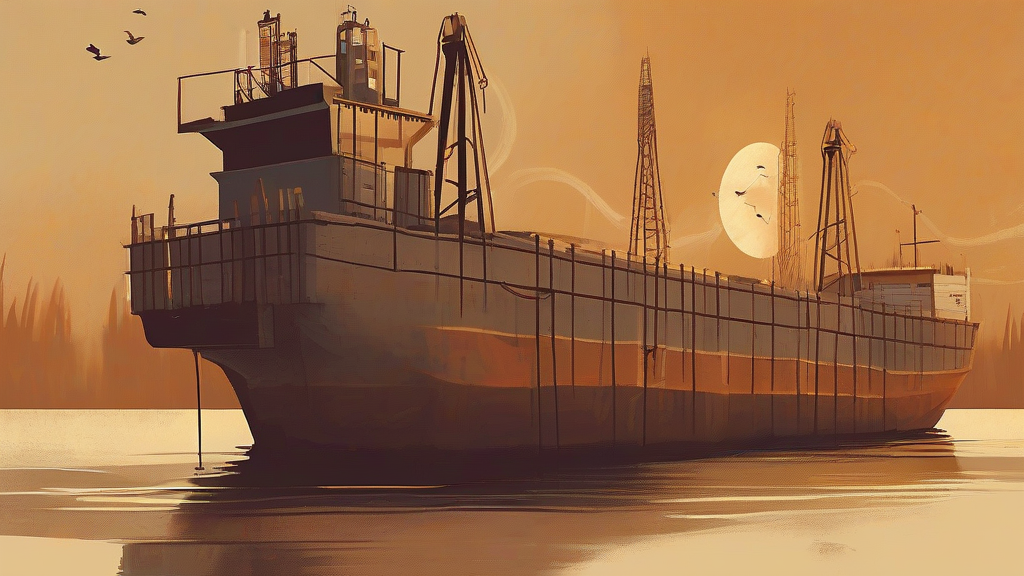
What does crare mean?
A crare is an obsolete English term for a small, light merchant vessel used in the maritime trade of medieval and early modern northern Europe. Lighter and smaller than the heavy cargo ships known as cogs, the crare was well suited to coastal passages and shallow harbours, ferrying goods such as wool between England and the Low Countries. The word is best remembered today through its appearance in Middle English literature, most notably in Chaucer, where it lends authenticity to scenes of seaborne commerce. By the early modern period it had fallen out of everyday use, surviving mainly in nautical histories and glossaries. For modern readers, encountering "crare" is almost always a signal of historical writing rather than contemporary speech. Though long retired from the language, the word offers a compact window into the vocabulary of medieval trade, when dozens of specialized terms distinguished vessels by size, rig, and purpose along the busy coasts of the North Sea and the Channel.
nounAn obsolete term for a small, light merchant vessel or boat, especially one used in coastal trade in medieval and early modern northern Europe.
- A small, light merchant ship or boat of medieval northern Europe, used chiefly in coastal and cross-Channel trade.
"The merchant loaded his wool aboard a crare bound for the Flemish coast."
"The cargo was transferred at Bruges to a nimble crare that could negotiate the shallow estuaries."
"In the Shipman's Tale, Chaucer's merchants trust their goods to a crare crossing to Flanders."
The plural follows the regular English pattern and appears in historical accounts describing fleets of these small trading vessels.
"Several crares lay at anchor off the Hanseatic quay."
Chaucer put the humble crare to work carrying wool across the North Sea — a word that sailed out of English almost as quickly as it arrived.
Reviewed by Deb Chak, Editor. AI-assisted content curated by RJS Tech Solutions LLP.
Etymology of crare
"Crare" entered Middle English, probably in the fourteenth century, from a Low Countries source such as Middle Dutch or Middle Low German (compare Dutch "kraier"), reflecting the close trading ties between England and the Hanseatic and Flemish ports where such vessels were common. It is attested in Chaucer's writing, which preserves some of its earliest literary appearances. The word had become obsolete by the early modern period, surviving only as a historical term for the small coastal merchantmen of the medieval North Sea world.
How crare is actually used
"Crare" is fully obsolete and appears only in historical, literary, or nautical-archaeological contexts discussing medieval shipping. It carries no living colloquial use.
Easily confused with crare
"Craze" means a short-lived fashion or madness, while "crare" is an archaic noun for a small merchant vessel; the words are unrelated despite a superficial visual similarity.