What does creakingly mean?
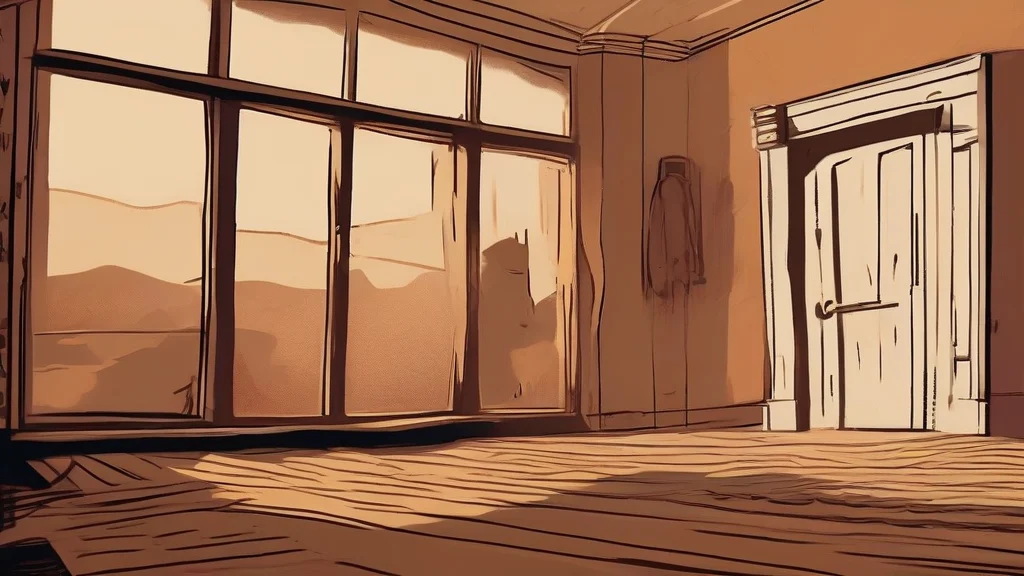
Creakingly is an adverb formed from the verb 'creak', which describes the long, harsh, high-pitched sound made by unoiled hinges, aged floorboards, or strained wood. Used literally, it characterises movement that produces this sound — a door swinging creakingly open, stairs groaning creakingly underfoot. It also carries a well-established figurative sense, describing processes that advance slowly, laboriously, or with obvious strain, as when talks move creakingly toward agreement. The word has a distinctly literary, slightly old-fashioned flavour: contemporary writers tend to prefer constructions such as 'with a creak' or the adjective 'creaky', so encountering 'creakingly' often signals descriptive or period prose. Its connotations lean atmospheric rather than alarming — evoking age, disuse, decay, or effortful motion. For vocabulary learners, it offers a compact way to convey both sound and struggle in a single word, whether painting an eerie scene or describing an institution grinding reluctantly into action.
With a creaking sound; in a manner producing a long, harsh, high-pitched squeak.
"The rocking chair shifted creakingly whenever he leaned forward."
Most at home in narrative and descriptive writing.
Slowly, stiffly, or with visible strain or difficulty.
"The old tram climbed the hill creakingly, its engine labouring at every turn."
A figurative extension of the literal sense, common in journalism and formal prose.
It's one of English's rare adverbs built entirely out of a sound — say it slowly enough and you can almost hear the floorboards.
Reviewed by Deb Chak, Editor. AI-assisted content curated by RJS Tech Solutions LLP.
Etymology of creakingly
Creakingly derives from the verb 'creak', formed by adding the adverbial suffix '-ly' to its present participle 'creaking'. 'Creak' itself dates back to Middle English, where it appeared in forms such as 'creken', and is generally considered an imitative (onomatopoeic) coinage echoing the sound it describes. It is related in sound and likely in origin to older dialectal words for croaking or rasping noises, though its precise deeper ancestry is obscure, as is common with sound-imitative words.
Related word forms
How creakingly is actually used
Literary and somewhat old-fashioned in tone; modern writers more often use 'with a creak' or describe something as 'creaky'. The figurative sense appears chiefly in formal or descriptive prose.
Easily confused with creakingly
'Creaking' is a verb form or adjective describing the thing making the sound ('a creaking door'), whereas 'creakingly' is the adverb describing how an action is performed.