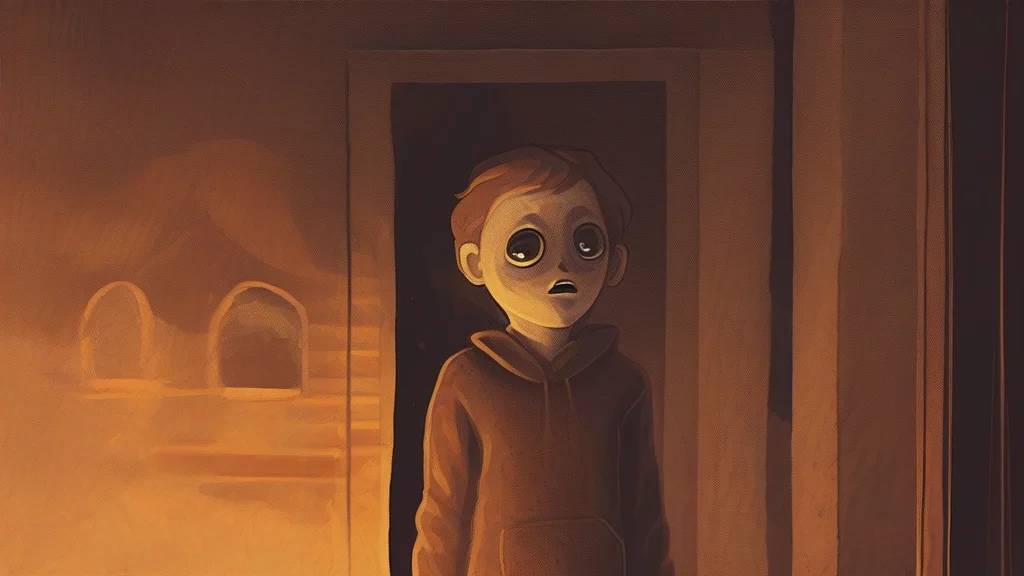
What does creeped mean?
"Creeped" serves primarily as the simple past tense and past participle of the English verb "creep", which means to move forward slowly, quietly, and deliberately — often with the aim of going unnoticed. A burglar may have creeped through a dark hallway; prices may have creeped upward over months; doubt may have creeped into someone's mind. Alongside the older, more formally favoured form "crept", the -ed variant is thoroughly established in everyday speech on both sides of the Atlantic, though careful writers often prefer "crept" outside fixed expressions. Crucially, "creeped" is the obligatory choice in the popular phrase "creeped out", which describes feeling unsettled, unnerved, or vaguely disgusted by something: a strange noise, an unsettling stranger, or a sinister film scene can leave you completely creeped out. This blend of physical stealth, gradual change, and emotional unease gives the word unusual range for such a small piece of language.
verb"Creeped" is the simple past tense and past participle of the verb "creep", meaning to move slowly, quietly, and stealthily so as not to be noticed. In informal usage, "creeped" also appears in "creeped out", meaning to be made to feel uneasy or frightened.
- Past tense of creep: to move quietly and stealthily, as to avoid being noticed.
- Past tense of creep: to advance or increase gradually and imperceptibly (e.g., prices crept up).
- In the informal phrase 'creeped out': caused or felt an uneasy sense of fear or revulsion.
"The cat crept across the room without making a sound."
"The detective crept along the corridor, careful not to wake anyone."
"Something about that abandoned house totally creeped her out."
English has two acceptable past tenses of "creep" — but if someone says you were "crept out," they've got it backwards; only "creeped out" will do.
Reviewed by Deb Chak, Editor. AI-assisted content curated by RJS Tech Solutions LLP.
Etymology of creeped
The verb "creep" derives from Old English "crēopan", meaning to bend down or crawl, a word shared with other Germanic languages such as Old Norse "krjúpa". Its past-tense forms reflect the verb's history as a strong (irregular) verb, producing "crept" by analogy with similar verbs like sleep/slept. The regularised "creeped" arose later through normal patterns of English verb formation and became especially entrenched in the modern colloquial phrase "creeped out", which emerged in American English in the twentieth century.
Related word forms
How creeped is actually used
In standard British and American usage, "crept" is the preferred past tense of "creep" in formal writing; "creeped" is widely accepted in casual contexts. However, the phrasal expression "creeped out" always takes "-ed": one says "I was creeped out," never "crept out."
Easily confused with creeped
Both are past-tense forms of "creep", but "crept" is the standard form in formal writing, while "creeped" is common in speech and is required in the phrase "creeped out".
"Crêpe" is a thin pancake or fabric, unrelated in meaning to the verb creep despite a superficial sound resemblance.