What does cribbing mean?
Cribbing is a mass noun referring to frameworks of heavy timber (or sometimes steel) built in interlocking layers to support the walls of mines, trenches, excavations, and even structures after collapse. Rescue workers and miners rely on cribbing because it is strong, stable, and quick to assemble under pressure. The word has other lives as well: in some regions, especially South Asia, cribbing means copying or cheating during an examination, deriving from the older use of a 'crib' as a smuggled set of notes. In equestrian contexts, cribbing names a stable vice in which a horse grips an object with its teeth, arches its neck, and swallows air. All these senses trace back to the word crib, originally meaning a manger or enclosure. Whether describing shoring timbers, exam-room misconduct, or equine behaviour, cribbing consistently conveys something built, gripped, or borrowed for support.
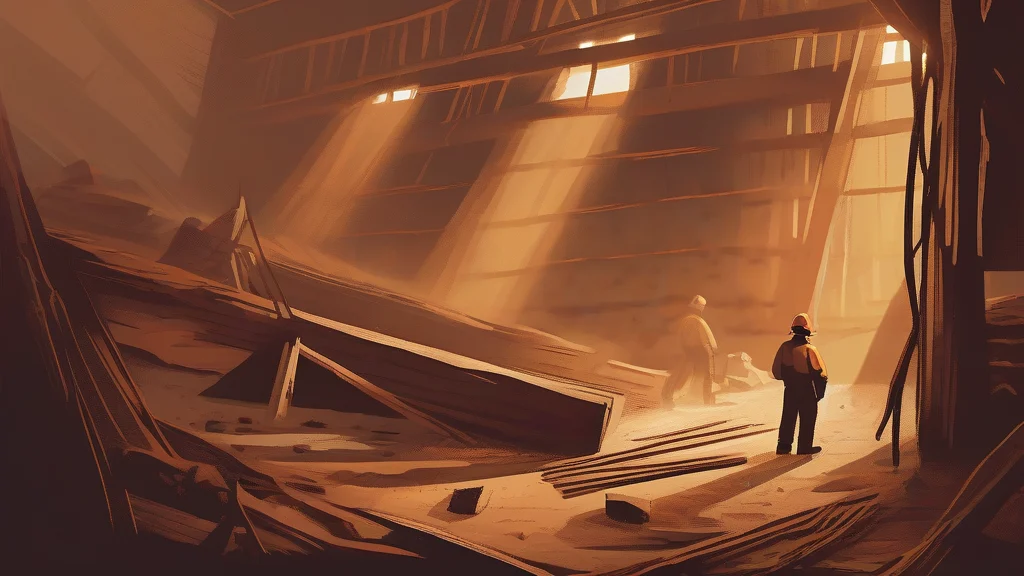
Timber or steel framing laid in interlocking courses to support the walls of a mine shaft, trench, or excavation.
"The crew stacked fresh cribbing beneath the sagging beam before removing the damaged post."
Standard technical term in mining, civil engineering, and structural rescue work.
The act of copying or cheating, particularly in an examination.
"Invigilators confiscated several sheets of paper used for cribbing during the test."
Common in South Asian English; less widely used in Britain and North America.
A stable vice in which a horse grips an object with its teeth, arches its neck, and swallows air.
"The gelding developed cribbing after months confined to his stall."
Used mainly in veterinary and equestrian literature; often called 'crib-biting'.
The same word describes both the oak frames holding up mine tunnels and a horse nervously gnawing its stall while gulping down air.
Reviewed by Deb Chak, Editor. AI-assisted content curated by RJS Tech Solutions LLP.
Etymology of cribbing
Cribbing derives from crib, which entered Old English as cribb meaning a manger or food trough, ultimately traced to Germanic roots. From the idea of a small enclosed frame came the mining and carpentry sense of interlocking support timbers, attested by the early nineteenth century alongside American frontier log-crib construction. The examination-cheating sense grew out of seventeenth- and eighteenth-century student slang in which a 'crib' meant a translated text or set of notes used illicitly. Related forms include cribbage, named for the game's 'crib' hand, and French crèche, a distant cognate.
Related word forms
How cribbing is actually used
In construction and mining contexts, cribbing is standard technical vocabulary across British and American English. The 'copying/cheating' sense is common in South Asian English but less frequent elsewhere, where 'cribbing' more often means grumbling or complaining informally. The horse-related sense appears mainly in veterinary and equestrian writing.
Easily confused with cribbing
A crib is the structure itself (a baby's bed or a copy of source material), while cribbing is either that structure's material as a mass noun or the act of copying or of a horse biting and gulping air.
Cribbage is a card game played with a scoring board, unrelated in meaning though sharing the same root.