
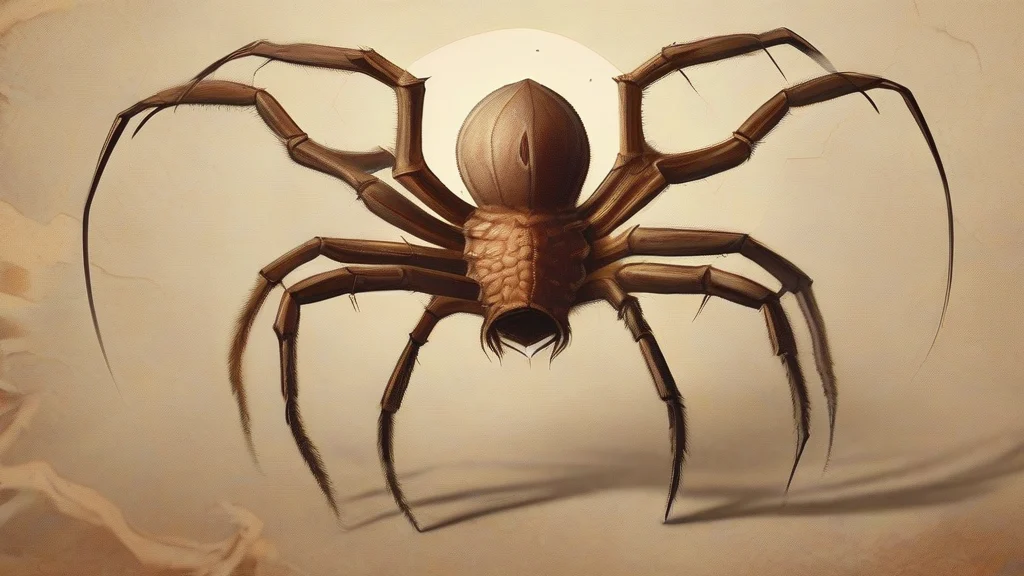
What does cribellum mean?
Cribellum is a specialist zoological term for a small plate-like structure found in two quite different groups of arthropods. In many hymenopterans—especially wasps, bees, and ants—it is a structure on the upper surface of the first abdominal segment, often marked with teeth and separated from the thorax by a groove. In some spiders, the same zoological name denotes a divided, sieve-like plate on the underside of the abdomen, bearing minute spigils. The word is therefore not a general term for any filter, grille, or mesh. It belongs primarily to entomological and arachnological description, where the shape, texture, and position of the structure are useful for identifying and classifying specimens. Its Latin name means “little sieve,” an apt description of its perforated appearance in spiders and of the term's zoological history. Although relatively uncommon outside specialist writing, cribellum illustrates how precise vocabulary preserves distinctions that general-purpose words collapse.
nounA small, often toothed plate on the upper surface of the first abdominal segment in many hymenopteran insects, separated from the thorax by a deep groove. The term is also used for a divided, sieve-like plate on the underside of the abdomen in certain spiders.
- In entomology, the toothed or grooved plate on the dorsal side of the first abdominal segment of many hymenopteran insects, such as wasps, bees, and ants.
- In arachnology, the divided, sieve-like plate on the ventral surface of the abdomen in certain spiders, often bearing minute silk-producing spigils.
"The wasp's cribellum was edged with a row of small teeth."
"The wasp's cribellum was edged with a row of small teeth."
"The preserved spider still showed the divided cribellum beneath its abdomen."
The plural is used in both the hymenopteran and spider senses.
"The researchers photographed the toothed cribella of several wasps."
A wasp's cribellum can look like decorative bodywork; its name, however, literally means “little sieve.”
Reviewed by Deb Chak, Editor. AI-assisted content curated by RJS Tech Solutions LLP.
Where does cribellum come from?
The noun comes from Latin cribellum, the neuter diminutive of cribrum, meaning “sieve,” and therefore literally means “little sieve.” Zoologists adopted the term for sieve-like or toothed structures on insects and spiders. The same Latin root underlies English words such as cribriform and cribrose and also lies behind the French word crible, while cribellum preserves the Latin diminutive ending -ellum.
Related word forms
How cribellum is actually used
This is specialist zoological vocabulary used chiefly in entomology and arachnology. In entomology it usually denotes the hymenopteran abdominal plate, whereas in arachnology it denotes the spider's sieve-like abdominal plate.