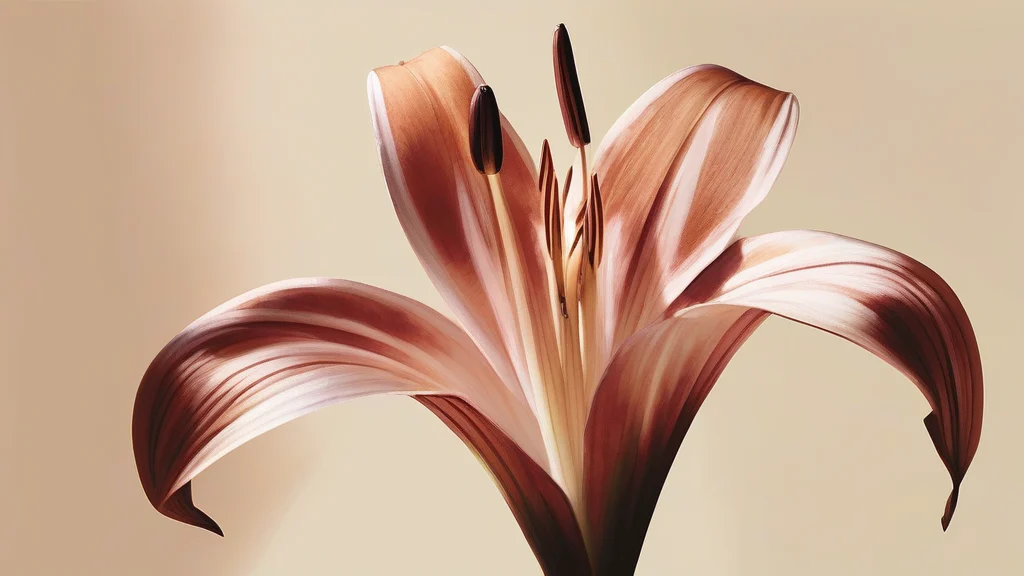
What does crinum mean?
Crinum is a noun referring to any member of a genus of bulbous flowering plants belonging to the amaryllis family, found naturally across tropical and subtropical regions of Africa, Asia, Australia, and the Americas. A typical crinum produces a large bulb from which arise long, strap-shaped leaves and stout flower stalks crowned with several big, funnel- or trumpet-shaped blooms, often white or pink and frequently fragrant; many species open their flowers in the evening and are pollinated by moths. Gardeners value crinums for their dramatic size and tolerance of wet conditions, which has earned some of them common names such as swamp lily, while other species carry names like poison bulb owing to their toxicity. In usage, crinum belongs primarily to horticultural and botanical contexts, appearing in garden writing, nursery catalogues, and scientific description, sometimes italicized when cited strictly as a genus name. The word derives from Greek krinon, meaning lily, reflecting how much these plants resemble true lilies despite being only distantly related to them. For anyone interested in ornamental bulbs, crinum is a rewarding term to know.
nounA plant of a genus (Crinum) of bulbous flowering plants in the amaryllis family, native chiefly to tropical and subtropical regions, bearing large, often fragrant, trumpet- or lily-shaped flowers on tall stalks.
- Any plant of the genus Crinum, comprising bulbous herbs of the amaryllis family with long strap-like leaves and large showy flowers.
- The genus Crinum itself as a taxonomic group.
"The swampy edge of the garden was brightened by a cluster of pink-flowered crinums."
"A massive crinum lily, its white trumpets glowing in the evening light, anchored the corner of the tropical border."
"Botanists surveyed the riverbank where several native crinum species grew in the shallow water."
The anglicized plural 'crinums' is standard in gardening and general writing; the Latinate plural 'crina' is occasionally seen in formal botanical contexts.
"Several crinums lined the walkway, their pink trumpets nodding in the breeze."
Some crinums are nicknamed 'poison bulb' because every part of the plant is toxic — yet gardeners prize them for huge, sweetly scented flowers that can open at night.
Reviewed by Deb Chak, Editor. AI-assisted content curated by RJS Tech Solutions LLP.
Etymology of crinum
The word crinum comes directly from the Latin crinum, which itself was borrowed from Greek krinon, meaning 'lily.' Botanists adopted it as a formal genus name in the eighteenth century when classifying the large, lily-like amaryllids of the tropics. Its root thus reflects an ancient comparison between these striking flowers and the true lilies they superficially resemble.
How crinum is actually used
Crinum is used mainly in gardening, horticulture, and botanical writing rather than everyday conversation. It functions both as the scientific genus name (often italicized in formal taxonomic contexts) and, less formally, as a common name for the plants themselves, frequently qualified as 'crinum lily.'
Easily confused with crinum
A crinum is a flowering bulbous plant, whereas a crinoid is a marine animal (such as a sea lily) related to starfish.