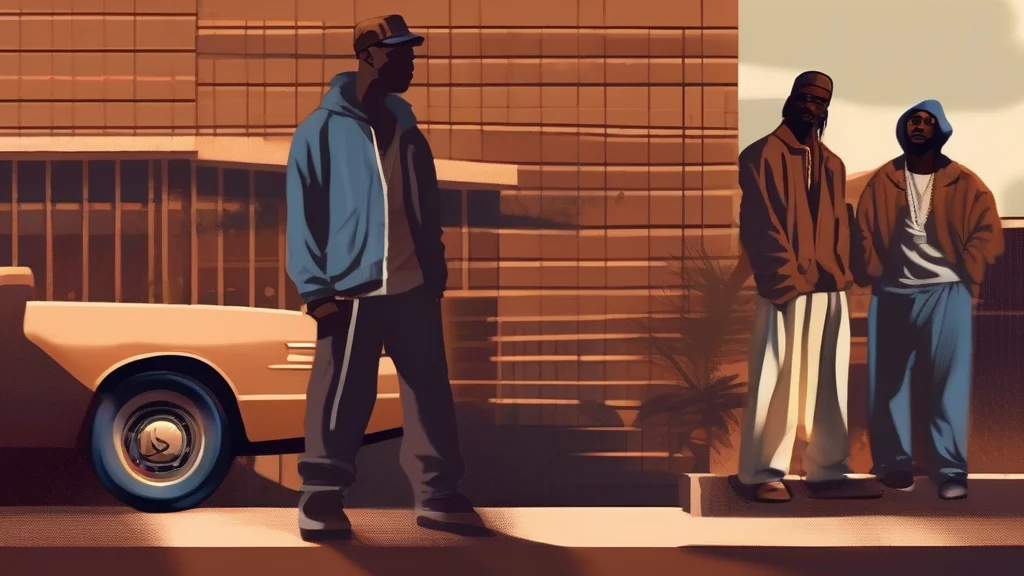
What does crip mean?
Crip is a noun with two distinct meanings that share a single root. Its most prominent modern sense denotes a member of the Crips, an African-American street gang that emerged in Los Angeles around 1969 and became known through its rivalry with the Bloods; the plural 'Crips' typically names the gang collectively. The word's older sense derives from 'cripple': a shortened, informal term for a disabled person that was long used as a taunt but has been deliberately reclaimed by segments of the disability community. Activists and scholars speak of 'crip culture', 'crip pride' and 'crip theory', turning a slur into a statement of solidarity. Because of this charged history, outsiders should treat the word with great care — it is acceptable mainly when used by those it describes, or when referring neutrally to the gang. Understanding 'crip' therefore requires grasping both its street-history and its role in contemporary debates about language, identity and reclamation.
nounA member of the Crips, a predominantly African-American street gang founded in Los Angeles in the late 1960s. It is also a shortened form of 'cripple', used as a term for a disabled person — historically derogatory, but reclaimed as a self-descriptor by some within disability communities.
- A member of the Crips, an African-American street gang originating in Los Angeles in the late 1960s.
- Shortened form of 'cripple': a disabled person; once purely derogatory, now used as a self-identifier by many in disability activism ('crip' culture, crip theory).
"He grew up in South Central Los Angeles, where joining the Crips seemed like the only path available to him."
"Tensions between the Crips and the Bloods shaped life in the neighbourhood for decades."
"She embraces the label 'crip' on her own terms, refusing to let others define her disability for her."
When referring to multiple individual members informally, 'crips' is common; however, when naming the gang as an organisation, the capitalised form 'the Crips' is standard and strongly preferred.
"Several crips gathered at the corner as the patrol car rolled past."
The word 'crip' carries two wildly different histories: it names one of America's most notorious gangs, yet it has also been proudly reclaimed by disabled activists who use it as a badge of identity.
Reviewed by Deb Chak, Editor. AI-assisted content curated by RJS Tech Solutions LLP.
Etymology of crip
The word originated as an informal shortening of 'cripple', a term for a disabled person recorded in English since Old English. In the late 1960s in Los Angeles, this shortened form was adopted as the name of a new street gang, the Crips, though the precise reason for choosing the name remains disputed among historians. From these two sources flow its modern uses: as a gang identifier and as a reclaimed disability identity, the latter popularised from the 1990s onward in disability activism and later formalised in academic work such as 'crip theory'.
Related word forms
How crip is actually used
As a reference to a gang member, the plural form 'Crips' (often capitalised) is standard when naming the gang itself. As a descriptor of a disabled person, this word has a painful history of use as an insult; it should never be applied to someone else unless they have made clear they embrace it as a self-description. In academic contexts such as disability studies, terms like 'crip theory' and 'crip time' are established scholarly usage.
Easily confused with crip
'Creep' means an unpleasantly strange or detestable person, whereas 'crip' refers either to a Crips gang member or, as a reclaimed term, to a disabled person.