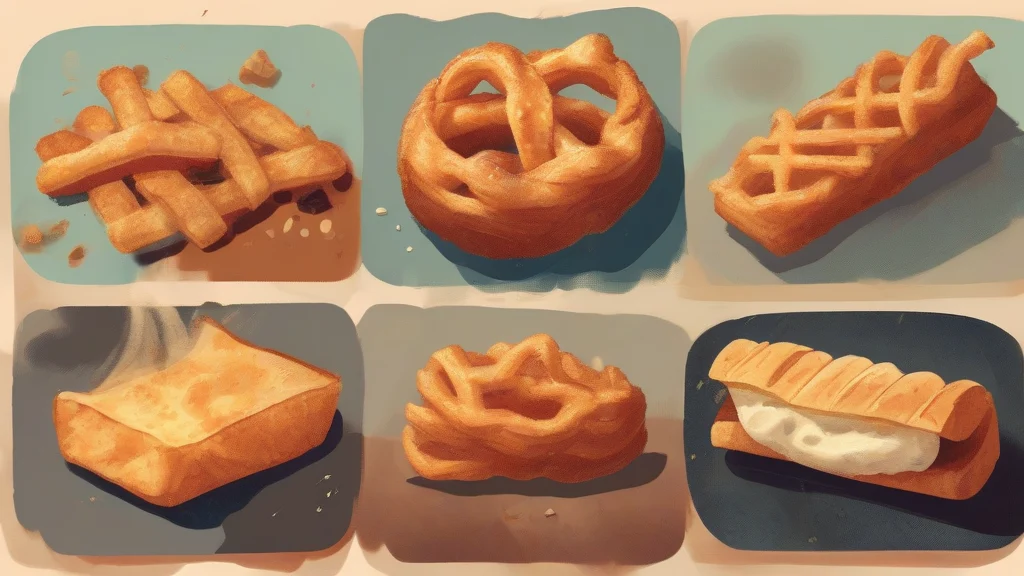
What does crispy mean?
Crispy is an adjective describing something that is pleasingly firm, dry, and brittle — so that it crackles or crunches when broken or bitten. Though it can describe any such texture, from autumn leaves to crumpled paper, it is used overwhelmingly of food: crispy bacon, crispy fried chicken, crispy roast potatoes. In culinary contexts the word is almost invariably positive, signaling freshness, careful preparation, and appetizing contrast between a crunchy exterior and a tender interior. It derives from the older adjective 'crisp', which itself traces back through Latin 'crispus' (curled, wavy) into English, and it functions as the more vivid, sensory member of that word family. Because texture is central to how we enjoy eating, 'crispy' has become one of the most commercially potent words in food writing and advertising, appearing constantly on menus and packaging. Its informal, evocative tone makes it a staple of everyday speech about cooking and eating across all varieties of English.
adjectiveHaving a firm, dry, and brittle texture that breaks or crunches easily when bitten or pressed; pleasantly crisp.
- (of food) Having a pleasantly firm, dry, brittle surface that crunches when bitten — e.g. crispy bacon, crispy pastry.
- (extended use) Describing things that resemble this texture in stiffness or brittleness.
"The fried chicken came out of the kitchen golden and crispy."
"She served the potatoes roasted until crispy on the outside and fluffy within."
"The autumn leaves lay crispy underfoot along the path."
Crispy is one of the most powerful words in food marketing — studies suggest people will pay more for food simply described as 'crispy'.
Reviewed by Deb Chak, Editor. AI-assisted content curated by RJS Tech Solutions LLP.
Etymology of crispy
Crispy is formed by adding the adjectival suffix '-y' to 'crisp', an adjective that entered Middle English from Old English 'crisp' or directly from Latin 'crispus', meaning curled, wavy, or wrinkled. The underlying sense of tight curling gradually shifted in English toward firmness and brittleness of texture. The derivative 'crispy' arose later, likely in the early modern period, and became especially widespread in the nineteenth and twentieth centuries as fried and baked foods grew prominent in popular cuisine. Related words from the same Latin root include 'crimp' and 'crepe' (the fabric and the thin pancake), both reflecting the original notion of curling.
Related word forms
How crispy is actually used
Crispy is informal to neutral in register and carries strongly positive connotations in food contexts, suggesting freshness and skillful cooking. It typically applies to the outer surface or texture of cooked foods rather than to raw produce, where 'crisp' is preferred. The word is common in both British and American English with no meaningful regional variation.
Easily confused with crispy
'Crisp' is the older base adjective meaning firm and fresh (or cool and bracing), while 'crispy' is its derivative emphasizing an appealingly crunchy texture, especially of cooked food.