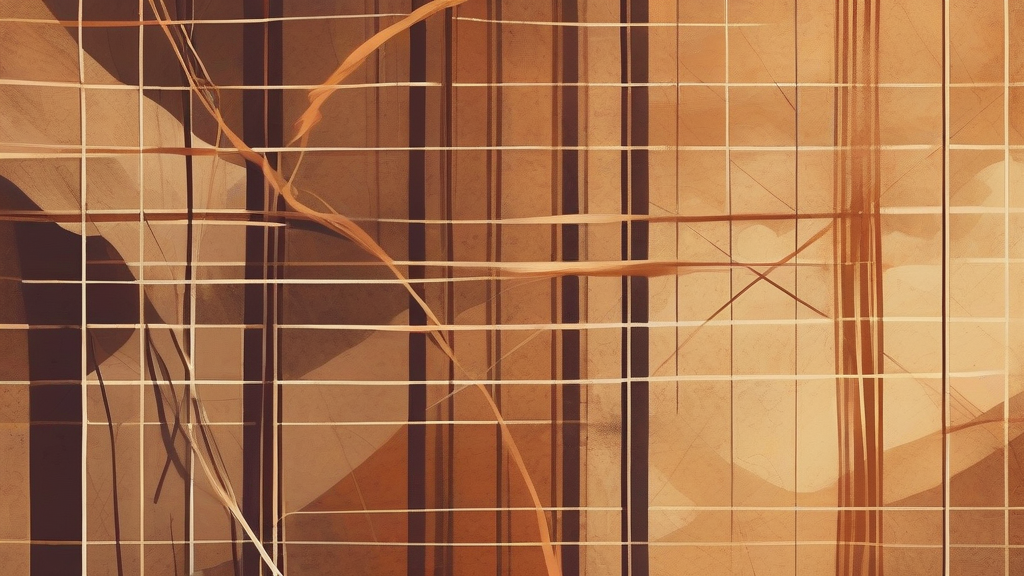
What does crisscrossed mean?
"Crisscrossed" is the past tense and past participle of the verb "crisscross," meaning to be marked with intersecting lines that cross each other in an X pattern, or to have travelled repeatedly across an area along different routes. A map might be described as crisscrossed with roads, a river delta as crisscrossed by channels, or a reporter as having crisscrossed the country on assignment. The word evokes complexity and interconnection: a crisscrossed surface suggests many overlapping paths or patterns woven together, which is why it appears so often in descriptions of landscapes, networks, scars, and flight paths. Its origins lie in the older noun "crisscross," which named the letter X itself — once called a "Christ-cross." Both figurative and literal uses are standard in British and American English, making it a versatile descriptive term for anything laced through with crossing lines or journeys.
verb (past participle and past tense)Marked or covered with intersecting lines that cross one another in an X pattern; also, to have moved back and forth over an area repeatedly along different paths.
- Covered with or marked by lines that intersect repeatedly, forming an X-shaped pattern.
- (Of a person or vehicle) Having travelled repeatedly across an area along different routes.
- Having been mutually crossed, opposed, or frustrated (rare).
"The old map was crisscrossed with pencil marks tracing every route he had ever taken."
"The delta was crisscrossed with narrow channels that made navigation treacherous."
"Over three decades she crisscrossed the continent reporting from every major city."
"Crisscross" began life as a written mark: the letter X, once called the "Christ-cross" because it stood at the head of the alphabet children learned to recite.
Reviewed by Deb Chak, Editor. AI-assisted content curated by RJS Tech Solutions LLP.
Etymology of crisscrossed
The word derives from the noun "crisscross," formed in English in the late sixteenth century from "criss" (from "Christ") plus "cross," originally denoting the letter X, which stood at the start of the hornbook's "Christ-cross row" — the alphabet children learned before reading. The verb developed from this noun, first attested around the early seventeenth century, meaning to mark with crosses or move in crossing lines. It shares its ultimate root with "cross," from Latin "crux", which also gave rise to "crucifix," "crucify," and "cruise."
Related word forms
How crisscrossed is actually used
Almost always used as a past tense or passive form rather than attributively. The pattern sense carries no strong connotation of its own, though describing a landscape as crisscrossed often suggests density, complexity, or human intervention. In the travel sense, the verb is typically used with "the country," "the globe," or similar large-scale objects.
Easily confused with crisscrossed
"Crossed" describes two things meeting at a single point, while "crisscrossed" implies multiple lines or paths crossing one another repeatedly to form a lattice-like pattern.