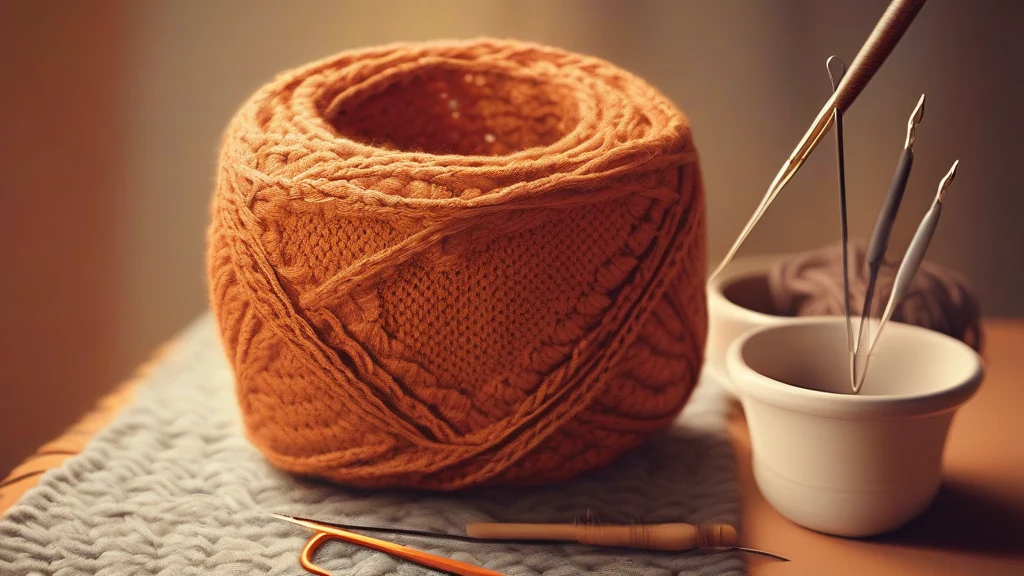
What does crocheting mean?
Crocheting is the craft of creating fabric by pulling loops of yarn through one another with a single hooked needle, called a crochet hook. Unlike knitting, which relies on two or more needles working rows of stitches simultaneously, crocheting builds each stitch individually, allowing for intricate textures, three-dimensional forms, and free-form designs. The word can refer both to the activity itself — as in taking up crocheting as a hobby — and to the resulting handmade fabric or garment. Derived from the French 'crochet', meaning 'small hook', it entered English in the nineteenth century and quickly became associated with domestic skill, patience, and frugality. Today crocheting enjoys a strong revival among crafters worldwide, valued for its portability, low cost, meditative rhythm, and endless creative possibilities.
The craft or process of creating fabric by interlocking loops of yarn with a hooked needle.
"Crocheting became popular in Victorian England as an affordable way to imitate fine lace."
Also used for the finished product: 'That crocheting on the tablecloth is exquisite.'
Present participle of 'to crochet': to make fabric or garments using a crochet hook.
"She sat by the fire, crocheting quietly while the others talked."
Crochet is one of the few major textile crafts with no ancient evidence behind it — most historians trace it back no earlier than the early 19th century, despite its old-fashioned reputation.
Reviewed by Deb Chak, Editor. AI-assisted content curated by RJS Tech Solutions LLP.
Etymology of crocheting
Crocheting derives from the French word 'crochet', meaning 'little hook', a diminutive formed from 'croche' ('hook'), which ultimately traces back to the Germanic root that also gave English 'crook'. The technique entered Britain in the early nineteenth century, where it was promoted as an inexpensive alternative to lace-making, and the term spread rapidly across Europe and America. Cognates appear across European languages, all reflecting the central role of the hook: French 'crochet', German 'Häkeln' (from 'Haken', hook), and Spanish 'ganchillo' (from 'gancho'). The English verb 'to crochet' and its present participle 'crocheting' follow directly from the borrowed noun.
Related word forms
How crocheting is actually used
Crocheting functions as a gerund/noun derived from the verb 'crochet', which is pronounced identically to the noun but spelled without the -ing. The word carries warm, domestic, and craft-associated connotations; it is neutral register and common in everyday British and American usage. The final 't' in 'crochet' is silent.
Easily confused with crocheting
Knitting uses two or more needles to form interlocking loops in open rows, whereas crocheting uses a single hook to build fabric from individual loops.