
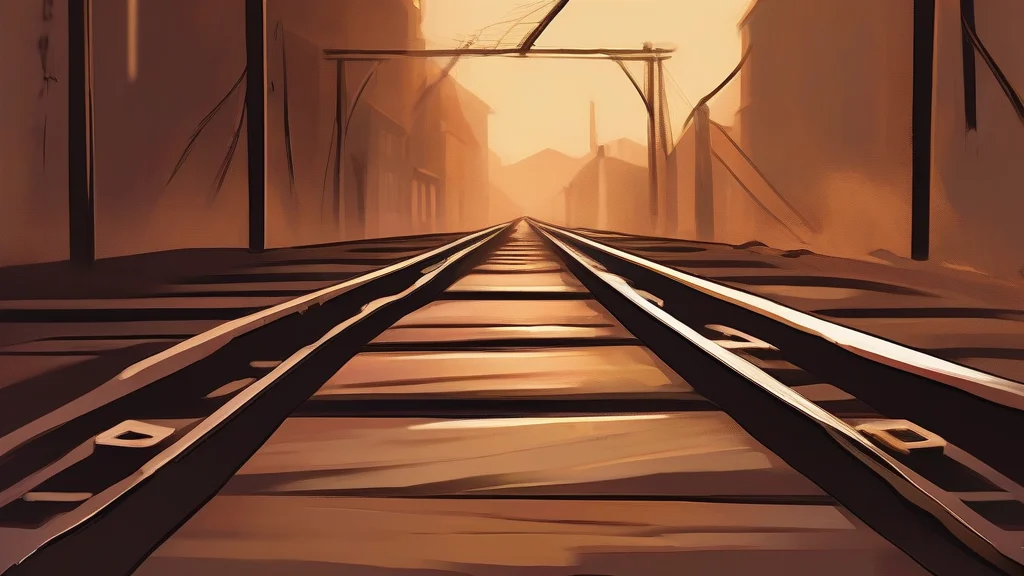
What does crosstie mean?
Crosstie is the chiefly North American name for a railroad sleeper: a transverse structural member placed beneath railway tracks to support the rails and maintain their spacing and gauge. Timber was historically the most common material, but concrete and steel are also widely used. Railway engineers, track crews, construction workers, and journalists discussing infrastructure routinely use the term, while sleeper is more common in British English and tie is widely understood in North American railroad usage. A crosstie is the support below the rails rather than the rail itself, and its dimensions and material are selected according to track design, traffic loads, environmental conditions, and maintenance requirements. The word is especially useful because it distinguishes a central railway component that can be discussed technically without implying that it is made of wood or belongs to a particular country. It also remains part of everyday railroad vocabulary in reports about track renewal, installation, replacement, and deterioration.
nounA crosstie is a transverse structural member, usually made of timber, concrete, or steel, placed beneath railway tracks to support the rails and maintain their spacing. It is also called a tie or, in British English, a sleeper.
- A transverse structural member laid beneath railway tracks to support the rails, maintain their spacing, and transfer loads into the track bed.
"The maintenance crew replaced the rotten wooden crossties beneath the busiest section of track."
"The maintenance crew replaced the rotten wooden crossties beneath the busiest section of track."
"Concrete crossties are commonly used on modern high-speed railway lines."
The regular plural is formed by adding -s.
"Engineers replaced several thousand crossties along the line."
Crossties are the quiet foundation of a railway: without them, the rails would have nothing to rest on and would wander apart.
Reviewed by Deb Chak, Editor. AI-assisted content curated by RJS Tech Solutions LLP.
Where does crosstie come from?
Crosstie is a compound of cross and tie, describing a tie set crosswise beneath the rails. It emerged in nineteenth-century American railway vocabulary, with earlier usage often written hyphenated as cross-tie. The elements are separately inherited: cross entered English through Old English cros from Latin crux, while tie is associated with Old English tīgan, meaning to tie.
How crosstie is actually used
This is standard technical terminology in railway engineering, construction, maintenance, and infrastructure reporting. It denotes the transverse support beneath the rails, not the rails themselves.
Easily confused with crosstie
A sleeper and a crosstie are largely equivalent railway-support terms, but sleeper is the usual British term whereas crosstie is characteristic of American usage.