What does cruiser mean?
A cruiser is fundamentally something that cruises — that travels steadily over a course rather than dashing in straight lines. Its oldest and most imposing sense is naval: a cruiser is a fast, heavily armed warship of intermediate size, bigger than a destroyer but smaller than a battleship, historically used for scouting, escorting fleets, and independent patrols across distant oceans. In everyday American English, however, the word more often means a police patrol car, as when two cruisers pull up outside a building. A third common sense applies to leisure: a cruiser or cabin cruiser is a motorboat equipped with cabins for comfortable overnight voyaging, and by extension 'cruiser' can describe bicycles built for relaxed riding along boardwalks. Across all these senses, the word carries connotations of range, endurance, and steady motion rather than speed alone, making it a versatile term spanning military, civic, and recreational life.
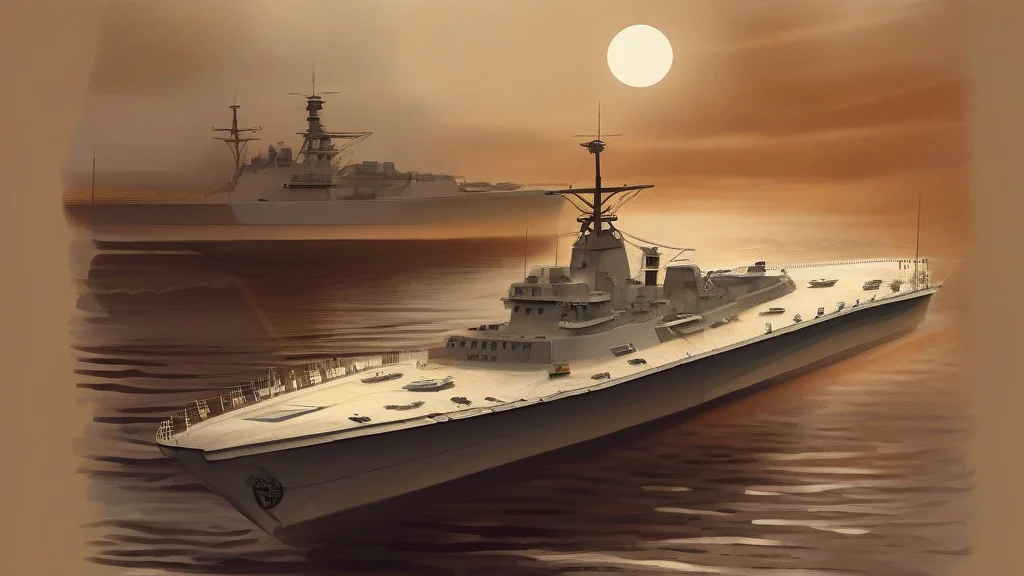
A large, fast warship of intermediate size, typically armed with heavy guns or guided missiles, used for fleet escort, scouting, and independent operations.
"The cruiser fired a warning salvo across the smuggler's bow."
Naval terminology distinguishes classes such as battle cruiser and guided-missile cruiser.
A police patrol vehicle, especially in American English.
"A marked cruiser idled at the corner watching traffic."
A motorboat with sleeping accommodations, built for leisurely voyages rather than speed.
"They spent the summer aboard their cabin cruiser exploring the coast."
A type of sturdy, comfortable bicycle designed for casual riding on flat terrain.
"He rode his beach cruiser along the boardwalk each morning."
Standard pluralization; used identically across all senses of the word.
"Three cruisers anchored offshore just before dawn."
The word 'cruiser' comes from the Dutch 'kruisen' — to cross — so every cruiser is literally named for criss-crossing the seas.
Reviewed by Deb Chak, Editor. AI-assisted content curated by RJS Tech Solutions LLP.
Etymology of cruiser
Cruiser derives from the verb cruise, which entered English in the mid-17th century from the Dutch kruisen, meaning 'to cross', itself rooted in kruis, 'cross'. A cruising ship was one sent out to cross the seas on independent patrol rather than sail in formation, and by the late 17th century cruiser named such a vessel. The word's core root is ultimately Latin crux, meaning cross, which also gives English words like crucial, crucify, and crusade. As steam and then engine-powered vessels developed, the term spread naturally to pleasure boats and police vehicles designed for extended travel.
How cruiser is actually used
In naval contexts, 'cruiser' denotes a specific class of warship and is formal/technical. In everyday speech it most often refers to a police patrol car (especially in American English) or to recreational boats ('cabin cruiser'). The compound 'beach cruiser' refers to a style of bicycle.
Easily confused with cruiser
Cruise is the verb or noun for sailing about or taking a sea voyage, while cruiser is the noun for the ship, boat, or vehicle that cruises.