
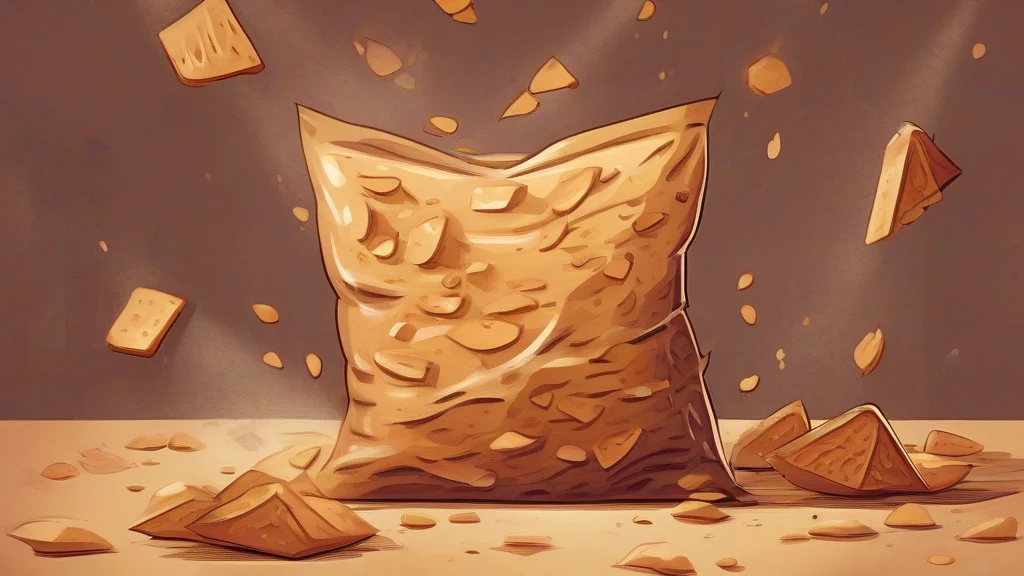
What does crunchiest mean?
"Crunchiest" is the superlative form of "crunchy," an adjective describing something that produces a crisp, crackling sound and firm resistance when bitten or crushed. To call an apple, a pickle, or a slice of toast the "crunchiest" is to rank it above all others in this quality, making the word especially common in food writing, cooking, and product advertising, where crispness signals freshness and appeal. The word derives from "crunch," an onomatopoeic term imitating the sound of hard things being crushed, combined with the suffix "-y." Its comparative form is "crunchier," and its noun counterpart is "crunchiness." While firmly rooted in descriptions of texture, "crunchiest" can occasionally be used figuratively, much as "crunch" describes pressure moments like "crunch time." Informal yet vivid, it remains a favourite among anyone who prizes that satisfying snap.
adjectiveSuperlative form of "crunchy": most crunchy, i.e. having the crispest, most audible texture when bitten or crushed.
- Most crunchy in texture — having the greatest crispness or resistance when bitten, chewed, or crushed.
"These freshly picked apples are the crunchiest I've tasted all season."
"Grandma's pickles are always the crunchiest at the county fair."
"Of all the granolas on the shelf, this one is by far the crunchiest."
It's the only word in English where the spelling practically makes a sound — say "crunchiest" and you can almost hear the bite.
Reviewed by Deb Chak, Editor. AI-assisted content curated by RJS Tech Solutions LLP.
Etymology of crunchiest
"Crunchiest" combines "crunch," an onomatopoeic word imitating the sound of crushing, with the adjective-forming suffix "-y." The verb "crunch" emerged as an imitative formation around the early eighteenth century, alongside similar sound-based forms such as "scrunch." From "crunchy" came the regular superlative "crunchiest," following standard English patterns.
Related word forms
How crunchiest is actually used
"Crunchiest" is informal to neutral in register and appears overwhelmingly in food-related contexts. It carries positive connotations of freshness and quality, which is why it features heavily in food marketing and reviews.
Easily confused with crunchiest
"Crunchier" is the comparative form used to compare exactly two things, while "crunchiest" is the superlative used to single out one item as the most crunchy of three or more.