What does crusher mean?
A crusher is a machine or tool designed to reduce materials to smaller pieces by applying pressure or impact. Industrial crushers break down rock, ore, coal, and construction debris in mining and demolition work, while household versions handle more modest tasks: garlic crushers press cloves through small holes to release their flavour, ice crushers produce crushed ice for drinks, and can crushers flatten aluminium tins for easier recycling. Beyond machinery, the word carries figurative weight in informal English, describing anything that delivers a crushing blow or overwhelming force — a sports team might be called a "crusher" of its opponents. In casual American slang, it can even refer to someone on whom one has a romantic crush. Derived from the verb "crush," the word connotes compression, destruction, or decisive force, and its many hyphenated forms (rock-crusher, garlic-crusher) reflect how deeply it is embedded in both industry and everyday life.
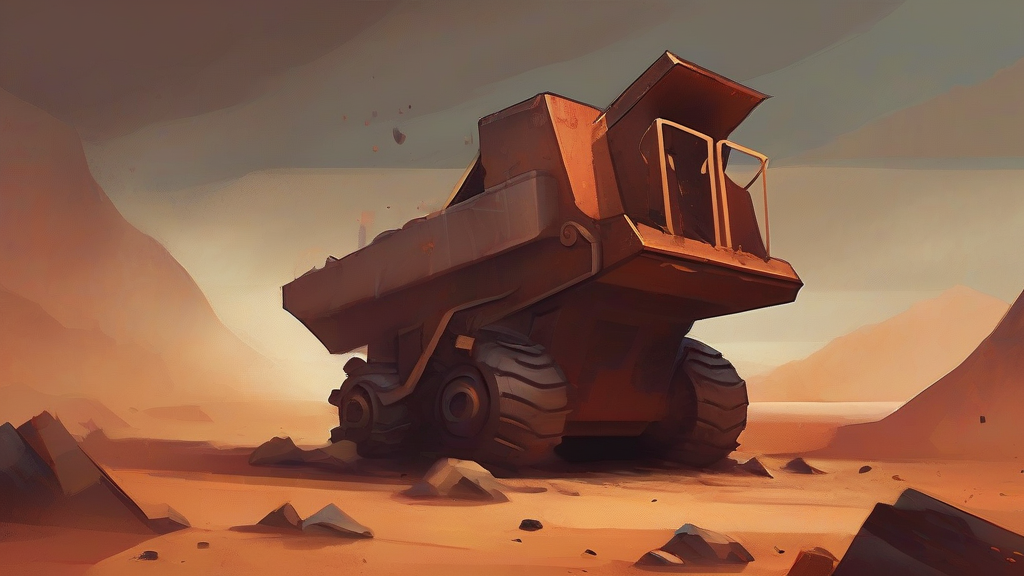
A machine or device that crushes material into smaller pieces.
"The mine's new ore crusher doubled daily output."
Most common sense; typically used in industrial, mining, or domestic contexts.
A person or thing that crushes or subdues; informally, a source of a crushing blow or defeat.
"Her closing argument was a real crusher for the defence."
Figurative/informal usage.
Regular plural formation by adding -s; used when referring to multiple machines, tools, or figurative instances.
"The factory operates three separate crushers along the production line."
"Crusher" is the nickname of Star Trek: The Next Generation's ship's doctor, Beverly Crusher — proof that an industrial machine name can double as an iconic character name.
Reviewed by Deb Chak, Editor. AI-assisted content curated by RJS Tech Solutions LLP.
Etymology of crusher
The word "crusher" derives from the verb "crush," which entered Middle English from Old French "croissir" or "croisir" in the late medieval period, with uncertain ultimate origins possibly imitative or related to Germanic roots. The agentive suffix "-er" was added to form a noun denoting something that performs the action of crushing. Cognates appear across Germanic languages, reflecting shared Proto-Germanic roots connected with breaking and grinding.
How crusher is actually used
"Crusher" is primarily concrete and mechanical in register — neutral, technical. The informal sense referring to a person one is attracted to is casual/slangy and mostly North American colloquial.
Easily confused with crusher
A crusader fights for a cause, while a crusher is a machine that compresses or grinds material — they share only the 'crus' sound, not meaning.