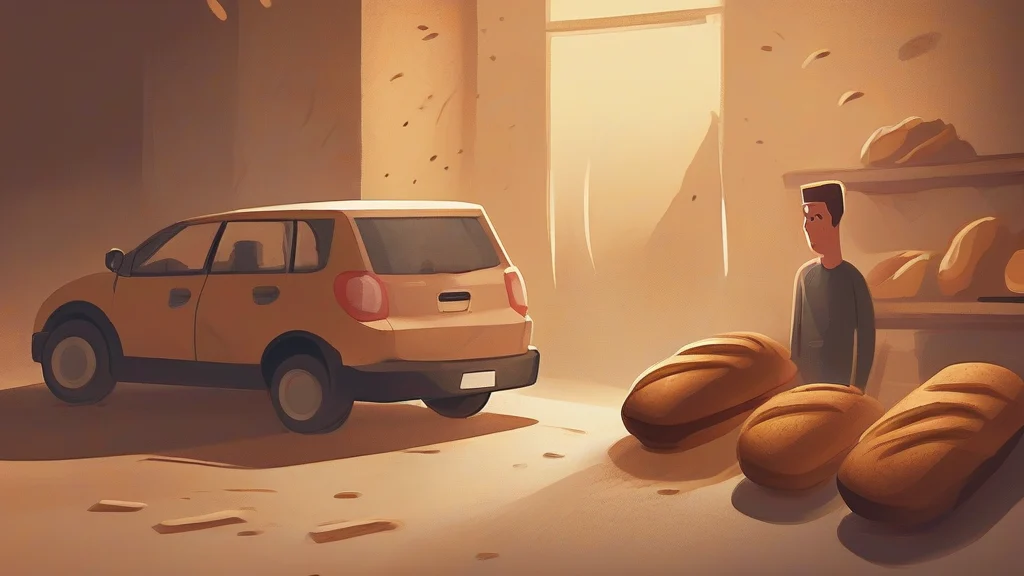
What does crusty mean?
Crusty is an adjective with two main uses. Literally, it describes something having a firm, crisp, or hardened outer layer — most commonly bread fresh from the oven, but also surfaces coated with a dried or solidified substance. Figuratively and more colloquially, it describes a person who is irritable, gruff, or short-tempered, often with the implication of an abrasive exterior hiding a warmer nature beneath. The word derives from 'crust', which traces back through Old French to the Latin 'crusta', meaning a hard outer shell or rind. In everyday speech, phrases like 'a crusty loaf' or 'a crusty old man' are firmly established in both British and American English. The term carries an informal tone: calling bread crusty is straightforwardly appetizing, while calling a person crusty may be mildly critical or even fondly teasing depending on context. Its dual application — to food and to temperament — makes it a versatile and vividly descriptive word.
Having a hard, crisp outer layer, especially of bread; covered with a hardened coating.
"He sliced the crusty baguette and served it with olive oil."
Most often used of baked goods.
Irritable, gruff, or bad-tempered in manner.
"The crusty old janitor scared off every student who tried to chat with him."
Informal; often affectionate rather than hostile.
The same word that describes your morning baguette has described grumpy old men since the 16th century — apparently a hard exterior and a hard temperament have always gone together.
Reviewed by Deb Chak, Editor. AI-assisted content curated by RJS Tech Solutions LLP.
Etymology of crusty
Crusty derives from 'crust', entering Middle English from Old French 'crouste', which itself came from Latin 'crusta', meaning shell, rind, or hard outer surface. The adjective form developed in English during the late Middle Ages, first applied literally to bread and other foods with hardened exteriors. The figurative sense describing an irritable person emerged later, drawing on the metaphorical idea of a hard outer layer concealing what lies within. Cognates include French 'croûte' and related Romance forms sharing the Latin root.
Related word forms
How crusty is actually used
Informal register throughout. When applied to people — especially 'crusty old man' — it can be affectionate as well as critical, implying a rough manner concealing warmth.
Easily confused with crusty
'Crufty' is informal computing jargon meaning poorly designed or badly written code, whereas 'crusty' means having a hard outer layer or being irritable.