What does cruzado mean?
The cruzado was the official monetary unit of Brazil from 1986 until 1989, when it was succeeded by the cruzado novo. Introduced under President José Sarney's stabilization program known as the Plano Cruzado, the new currency replaced the heavily devalued cruzeiro at par and was accompanied by an unprecedented general freeze on prices and wages. Although the plan initially won enormous popular support, the freeze could not be sustained, inflation returned with force, and the cruzado itself was revalued and renamed within three years. Before its Brazilian use, the term referred to an older Portuguese coin whose design featured the cross that gives the word its name. Today "cruzado" survives mainly in economic history, numismatics, and retrospective accounts of one of the most memorable anti-inflation experiments of the twentieth century.
nounA cruzado is a former coin of Portugal and, later, a monetary unit of Brazil, introduced in 1986 as part of an anti-inflation plan and replaced in 1989 by the cruzado novo.
- The Brazilian monetary unit introduced in 1986 (replacing the cruzeiro) and replaced by the cruzado novo in 1989.
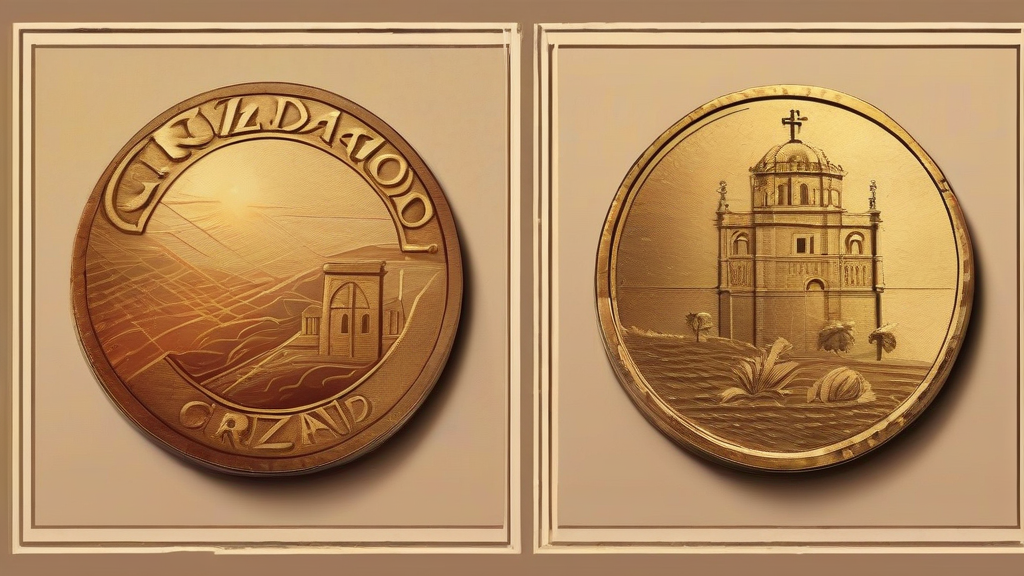
- A former Portuguese coin bearing the figure of a cross.
"Prices that once cost a few hundred cruzados were suddenly quoted in the millions."
"Under the Plano Cruzado, wages and prices were pegged in cruzados to break the inflationary spiral."
"The museum's coin collection includes a sixteenth-century Portuguese cruzado struck under João III."
English texts typically form the plural regularly as "cruzados."
"A cup of coffee that had cost fifty cruzados in January cost five hundred by December."
Brazil's cruzado was named for a medieval coin stamped with a cross — but its real legacy was being frozen: the government literally froze prices and even bank accounts to make it work.
Reviewed by Deb Chak, Editor. AI-assisted content curated by RJS Tech Solutions LLP.
Etymology of cruzado
The word "cruzado" comes from Portuguese and ultimately from Latin crux (stem cruc-), meaning "cross," via the past participle of the verb cruzar, "to cross." It originally denoted a Portuguese coin distinguished by the image of a cross on its reverse, a name parallel to other European coins named for their designs. When Brazil launched its 1986 currency reform, planners revived this historic name for the new unit. Cognates sharing the Latin root include English "cross" (from Old Norse) and "crusade" (via French croisade).
How cruzado is actually used
"Cruzado" is now chiefly a historical term, encountered in economics writing, journalism about 1980s Brazil, and numismatics. The plural is usually anglicized as "cruzados" in English text. The currency is strongly associated with President José Sarney's Plano Cruzado, making the word carry connotations of ambitious but ultimately failed economic policy.
Easily confused with cruzado
'Crusado' is a variant historical name for the Portuguese gold or silver coin marked with a cross, whereas 'cruzado' is the standard spelling for both the old Portuguese coin and the modern Brazilian currency of 1986–89.