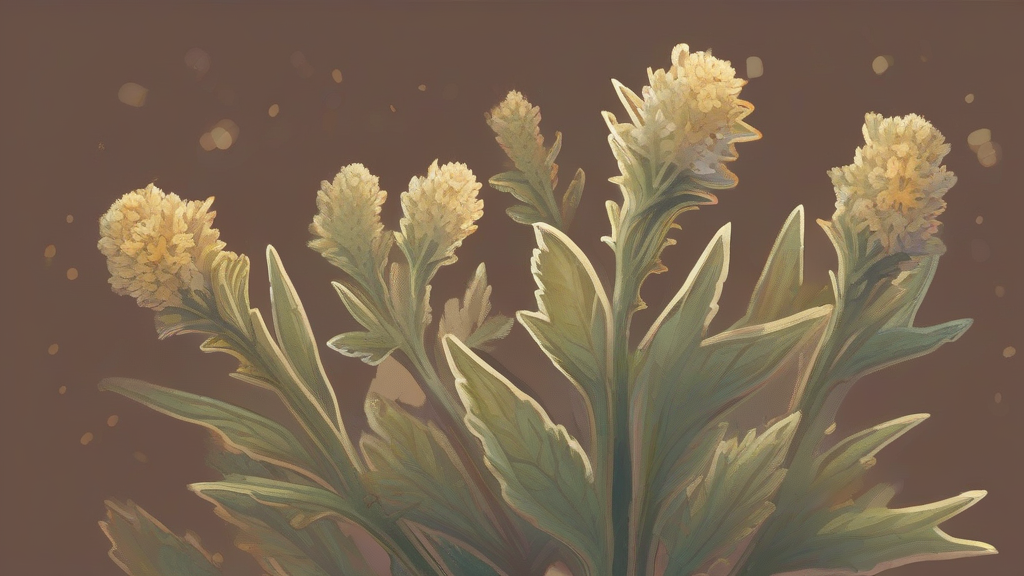
What does cudweed mean?
Cudweed is the common name for a group of low-growing, woolly herbs in the daisy family, most familiarly members of the genus Gnaphalium and closely related genera such as Pseudognaphalium. The plants are covered in dense, cottony hairs that give their leaves a grey-green, felt-like texture, and they bear small flower heads whose dry, papery bracts hold their colour and form long after picking — a quality that has earned several species the alternative name 'everlasting'. Different kinds grow in a wide range of habitats, from damp marsh ground (marsh cudweed) to arable fields and chalky slopes (broad-leaved cudweed). The word belongs mainly to botanical and countryman vocabulary, appearing in wildflower guides rather than daily speech, yet the plant itself is widespread across temperate regions of Europe and North America. Its unassuming appearance conceals a long history of folk use, and its preserved flower heads were once gathered for winter posies.
nounAny of various woolly, greyish herbaceous plants of the daisy family, especially those of the genus Gnaphalium and related genera, bearing small flower heads with dry, papery bracts that retain their shape when dried.
- A woolly plant of the genus Gnaphalium or related genera in the daisy family, with small everlasting flower heads.
"The marshy hollow was silvered over with clumps of cudweed, its fuzzy leaves soft as felt to the touch."
"She pressed a sprig of cudweed between the pages of her field guide, its silvery leaves already drying like paper."
"Botanists recorded broad-leaved cudweed thriving on the old chalk quarry floor."
Standard plural, used when referring to multiple plants or multiple species collectively.
"The meadow was dotted with cudweeds of every local variety."
Its flowers feel like felt and never fade — dry a cudweed in autumn and you'll still be holding its 'everlasting' blooms years later.
Reviewed by Deb Chak, Editor. AI-assisted content curated by RJS Tech Solutions LLP.
Etymology of cudweed
The name combines 'cud' — the food that cattle chew repeatedly, from Old English — with 'weed', reflecting the plant's soft, chewable-looking foliage or its use as fodder for grazing animals. It arose as an English folk name, first recorded in the early modern period, and was later formalised by botanists for members of Gnaphalium. The generic name Gnaphalium itself derives from Greek gnaphalon, meaning a tuft or lock of wool, an apt description of the plant's downy leaves. Related common names such as 'cottonweed' and 'everlasting' grew up alongside it for the same papery-flowered plants.
How cudweed is actually used
Cudweed is chiefly a botanical and naturalist term, encountered in wildflower guides and regional floras rather than everyday conversation. The name is shared by several similar-looking species across different genera, so identification often requires noting leaf shape and habitat.
Easily confused with cudweed
Cottonweed is a folk name applied to several downy plants including some cudweeds, but it can also refer to unrelated species such as sea cottonweed, so the names overlap without being identical.
Cudbear is a violet-red dye made from lichens, whereas a cudweed is a woolly flowering plant of the daisy family.