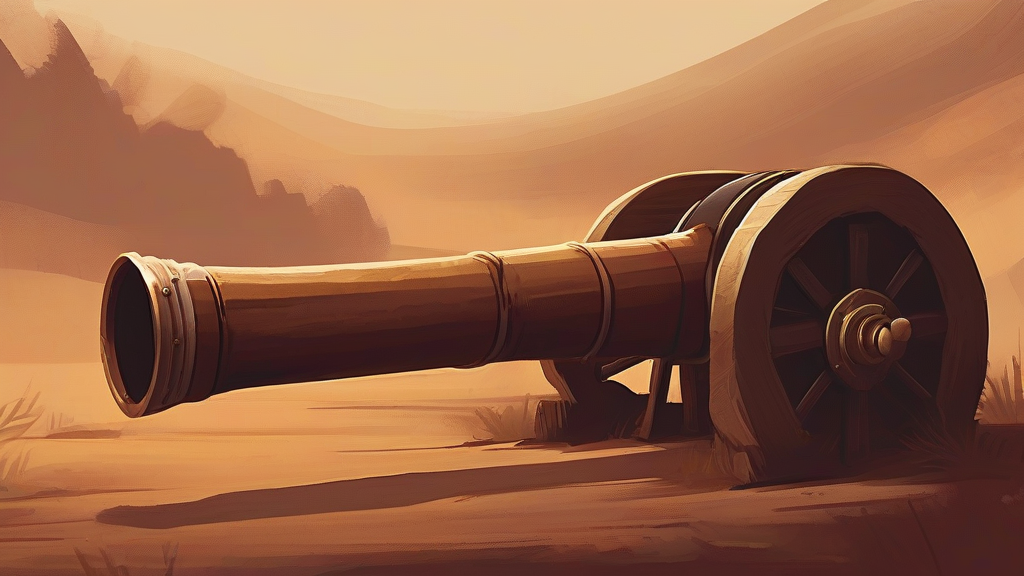
What does culverin mean?
A culverin was a class of long-barrelled cannon that dominated European battlefields and warships from the fifteenth to the seventeenth centuries. Lighter and longer than most guns of its day, the culverin fired solid iron or stone shot with unusual accuracy and at extended range, making it prized for naval engagements and siege work alike. Smaller versions, sometimes called hand culverins, served as early shoulder firearms operated by one or two soldiers. The name comes from the French couleuvrine, meaning 'snake-like', a nod to the weapon's long, slender barrel. Today the word survives almost entirely in military history books, museum collections, and archaeological reports, where it helps historians distinguish these elegant, snake-named guns from heavier bombards and mortars of the same era.
nounA culverin is a long-barrelled, relatively light cannon used from the 15th to 17th centuries, firing a solid shot over a comparatively long range with good accuracy. The term also referred to a lightweight hand firearm of the early Renaissance period.
- A long-barrelled light cannon of the 15th–17th centuries, valued for range and accuracy.
- A light hand firearm of the early Renaissance period, a forerunner of the musket.
"The gunners ran out the bronze culverins along the ship's upper deck before dawn."
"Elizabethan warships mounted culverins on their lower decks to batter enemy hulls at a distance."
"The museum's armoury displayed a hand culverin, an early matchlock gun operated by two soldiers."
Standard plural; used when referring to multiple guns or to the class of weapon collectively.
"The Spanish galleon carried thirty culverins along her broadsides."
The word 'culverin' literally means 'little snake' in French — because its long, winding barrel looked like a serpent gliding through the grass.
Reviewed by Deb Chak, Editor. AI-assisted content curated by RJS Tech Solutions LLP.
Etymology of culverin
Culverin entered English from Middle French couleuvrine in the late Middle Ages, derived from couleuvre ('grass snake'), which traces back through Latin coluber ('snake'). The name evoked the weapon's long, sinuous barrel. It shares this Latin root with the modern herpetological terms colubrine and colubrid.
How culverin is actually used
A historical term now found mainly in military history, archaeology, and museum contexts rather than everyday speech.
Easily confused with culverin
A caliver was a standardized light matchlock musket carried by infantrymen, whereas a culverin was a larger long-range artillery piece.
A culvert is a structure carrying a road or path across a stream or drain, while a culverin is an early cannon.