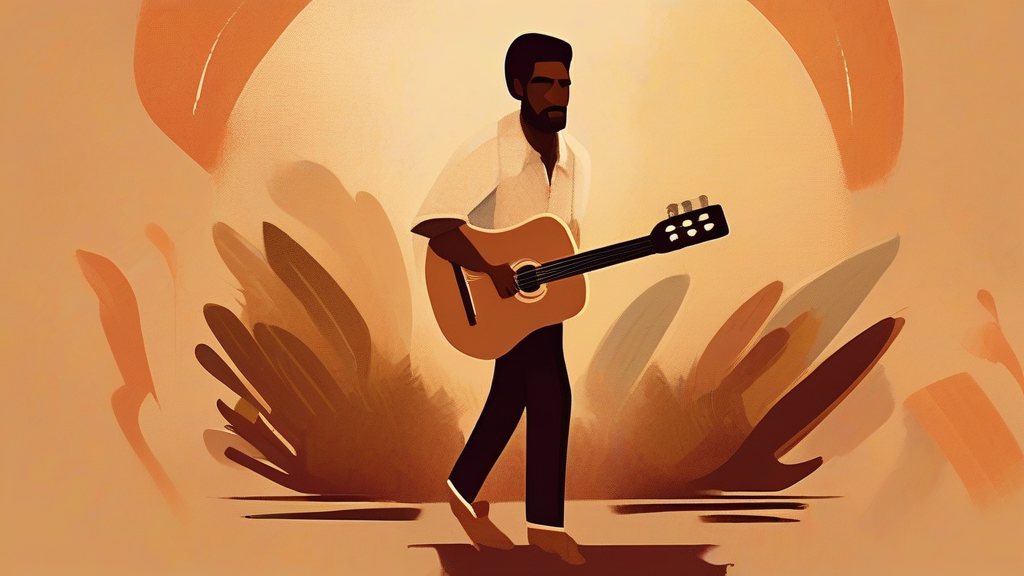
What does cumbia mean?
Cumbia is a noun denoting both a style of music and its accompanying partner dance, which originated among Afro-Colombian communities on Colombia's Caribbean coast. Traditionally performed with hand drums, gaita reed flutes, and maracas, cumbia features a hypnotic, syncopated rhythm and a characteristic side-to-side shuffle said to evoke courtship. Over the twentieth century the genre spread far beyond Colombia, absorbing regional influences across Mexico, Argentina, Peru, and elsewhere, and giving rise to countless local variants such as Mexican cumbia sonidera and Argentine cumbia villera. Today it stands among the most widely danced genres in Latin America and enjoys growing international popularity through electronic fusion acts. In English writing the word appears mainly in discussions of world music, dance culture, and Latin American heritage, and it carries warm connotations of festivity, community, and cultural pride.
nounA popular dance and musical genre originating on Colombia's Caribbean coast, characterized by a repetitive syncopated rhythm and traditionally performed with drums, gaita flutes, and maracas.
- The traditional Colombian music and dance form, marked by a distinctive shuffling step and percussion-driven rhythm
- The broader modern musical genre descended from it, popular throughout Latin America and its diaspora
"The band closed the festival with an extended cumbia that had everyone dancing in the street."
"Her grandfather taught her to dance cumbia at family gatherings in Barranquilla."
"The playlist mixed vintage Colombian cumbia with contemporary electro-cumbia remixes."
Used when counting individual pieces or performances of the music; the plural is rare in general prose.
"The album compiles twelve classic cumbias from the 1960s."
Born from African drum rhythms on Colombia's Caribbean coast, cumbia is now arguably the most widely danced genre in Latin America — from Bogotá ballrooms to Mexico City street parties.
Reviewed by Deb Chak, Editor. AI-assisted content curated by RJS Tech Solutions LLP.
Etymology of cumbia
Cumbia comes to English via Colombian Spanish, where the word has long named the coastal dance-music tradition; its ultimate origin is generally traced to African roots brought by enslaved communities to Colombia's Caribbean coast, though the precise source language remains debated and should not be stated definitively. The word spread through Latin America alongside the genre's regional variants and entered broader English usage in the later twentieth century as world-music audiences grew.
How cumbia is actually used
In English usage, 'cumbia' functions as both a countable noun (a piece or performance of the music) and as a mass/genre term ('cumbia music'). The word entered English primarily through Latin American cultural contexts, so it retains its Spanish pronunciation more often than anglicized forms.
Easily confused with cumbia
Cumbre is a Spanish word meaning 'summit' or 'peak,' whereas cumbia refers to the Colombian music-and-dance genre.