What does cumin mean?
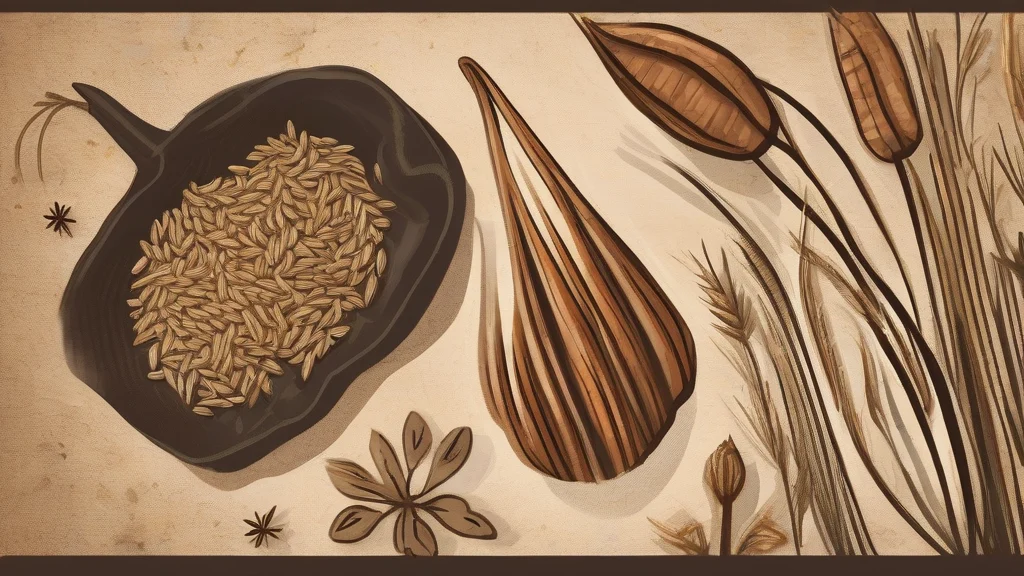
Cumin is a culinary spice made from the dried seed of Cuminum cyminum, a slender flowering plant of the parsley family native to the eastern Mediterranean and Southwest Asia. The seeds are small, oblong, ridged, and brownish-yellow, and may be used whole or ground into a powder. Cumin has a warm, earthy, slightly bitter flavor that deepens when toasted, making it indispensable in chili con carne, curries, Mexican and Middle Eastern dishes, and countless spice blends such as garam masala and taco seasoning. It is one of the most widely consumed spices in the world and has been cultivated since antiquity — cumin seeds were even placed in Egyptian tombs. Beyond cooking, cumin oil has traditional uses in perfumery and folk medicine, and in some regions the term also denotes the plant itself. In South Asian kitchens the identical spice is commonly known as jeera.
The aromatic dried seed of the Mediterranean plant Cuminum cyminum, used whole or ground as a warm, pungent spice.
"Add a teaspoon of ground cumin to the stew along with the paprika."
The slender annual herb (Cuminum cyminum) of the parsley family that bears these seeds, native to the eastern Mediterranean region.
"Cumin grows best in hot, arid climates with a long growing season."
This sense refers to the living plant rather than the harvested spice.
Usually uncountable when referring to the spice in bulk; the plural appears chiefly when naming distinct varieties or individual seeds.
"The market sold several cumins, including black cumin from Iran."
Cumin seeds were found in the tomb of the Egyptian pharaoh Tutankhamun — the spice has flavored food for well over three thousand years.
Reviewed by Deb Chak, Editor. AI-assisted content curated by RJS Tech Solutions LLP.
Etymology of cumin
Cumin entered Middle English by way of Old French 'cumin', which came from Latin 'cuminum'. The Latin word was borrowed from Greek 'kyminon' ('κύμινον'), and the Greek term ultimately traces back to a Semitic source — compare Arabic 'kammūn' — reflecting the spice's spread through the ancient trade routes of the Near East. The word has therefore traveled alongside the spice itself for millennia, arriving in English during the medieval period.
How cumin is actually used
In British English both /ˈkjuːmɪn/ and /ˈkuːmɪn/ pronunciations are heard, with /ˈkjuːmɪn/ generally more common; American speakers typically say /ˈkjuːmɪn/. In South Asian cookery the same spice is widely called 'jeera' or 'zeera'. The plural 'cumins' appears mainly when referring to different varieties or to individual seeds.
Easily confused with cumin
Caraway seeds look similar to cumin but are paler, taste sharper and more anise-like, and come from a different plant (Carum carvi).
Curcumin is the yellow pigment compound found in turmeric, not a spice itself; it merely resembles 'cumin' in sound.