What does curette mean?
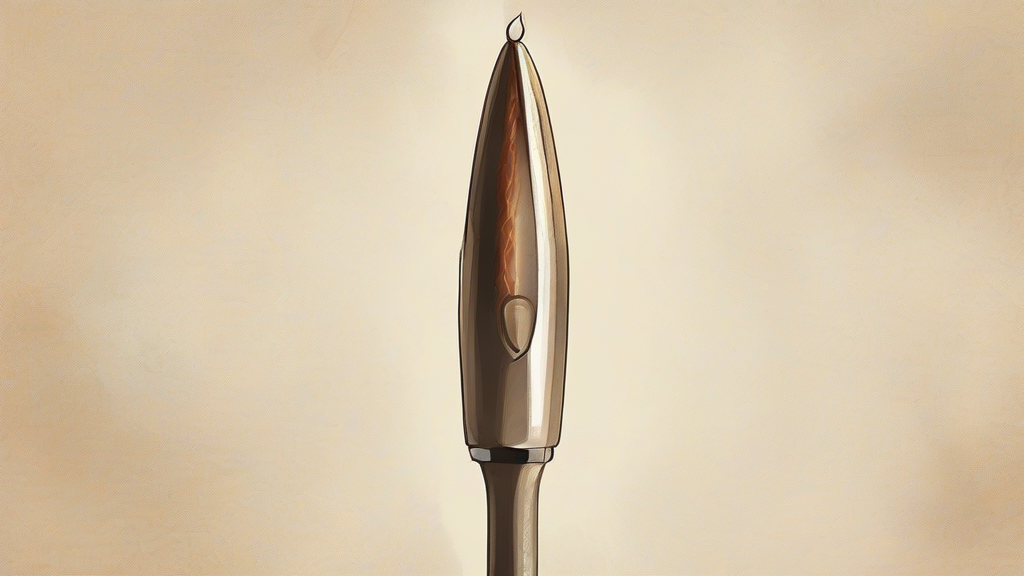
A curette is a surgical instrument consisting of a slender handle ending in a small scoop, spoon, ring, or loop, designed to scrape away tissue from cavities, wounds, or bone surfaces. Its name derives from the French word for a small scraper, ultimately rooted in the Latin 'cura', meaning care — making it, literally, a 'little cure'. Curettes appear across many specialties: gynaecologists use them in dilatation and curettage (D&C) of the uterus, dermatologists scrape off skin lesions with them, dentists clean tooth roots and gums, and orthopaedic surgeons remove tumours from bone. The associated term 'curettage' names the scraping procedure itself. Because it belongs firmly to clinical vocabulary, 'curette' rarely appears outside medical settings, yet its vivid etymology and distinctive shape make it a memorable example of how surgical language often borrows from everyday French.
A surgical instrument with a scoop, ring, or loop at one end, used to scrape tissue from a body cavity, wound, or bone surface.
"The pathologist examined the tissue collected by the curette during the procedure."
Usually appears in plural when referring to a set of instruments; singular when discussing a specific instrument type such as a 'bone curette'.
To scrape or cleanse a body cavity or lesion with a curette.
"The surgeon curetted the cyst to ensure all abnormal cells were removed."
This verbal sense is considerably less frequent than the noun; writers typically prefer the noun 'curettage' to describe the procedure.
The standard plural adds -s without accent change. The variant spelling 'curet' also pluralises as 'curets'.
"The tray held several sterile curettes of different sizes."
Its name literally means 'little cure' — a fitting label for an instrument designed to scrape away disease.
Reviewed by Deb Chak, Editor. AI-assisted content curated by RJS Tech Solutions LLP.
Etymology of curette
The word curette comes from French, where 'curette' means a small broom or scraper, formed as a diminutive of 'cure', itself from Latin 'cura' meaning care or concern. It entered English medical usage around the late eighteenth or early nineteenth century as surgical practice expanded. Its cognates include 'cure', 'curable', and 'manicure', all descending from that same Latin root concerned with care and attention.
Related word forms
How curette is actually used
Curette is a technical medical term, encountered almost exclusively in clinical and surgical contexts. The related noun 'curettage' denotes the procedure itself. Both British and American English use the spellings 'curette' and 'curet'; 'curette' is more common. As a verb it is comparatively rare, with 'curettage' usually preferred to describe the action.
Easily confused with curette
'Curet' is simply an alternative spelling of the same word; both refer to the same surgical instrument.
Though derived from the same root meaning 'to care for', 'cure' refers to restoring health while 'curette' is the physical scraping instrument used in surgery.