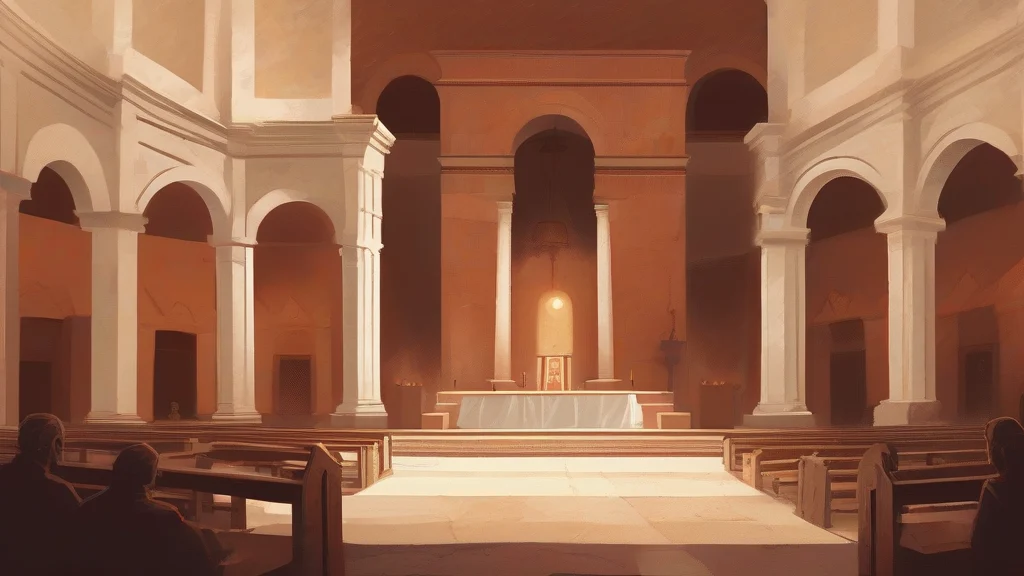
What does curia mean?
A curia is a council or assembly, a word whose meaning has evolved across more than two millennia. In earliest use it denoted one of the traditional divisions of the Roman citizen body — conventionally thirty in number — each with its own meeting hall and role in religious and political life; the Senate itself met in the celebrated Curia Julia in the Forum. From this Roman root the term passed into medieval Europe, where a king's court of advisers was known as the curia regis, and it survives most prominently today in the phrase 'Roman Curia', the network of congregations, tribunals and offices through which the Pope governs the Catholic Church. Formal in register, the word appears mainly in history, canon law and church journalism, often accompanied by its adjective 'curial'. For readers interested in how ancient institutions echo into the present, few words bridge antiquity and modernity so directly.
nounIn ancient Rome, a curia was a political division of the citizen body and the assembly or meeting place associated with it; in modern usage, especially as the Roman Curia, it denotes the administrative bodies and courts through which the Pope governs the Catholic Church.
- (historical) In ancient Rome: one of the thirty divisions of the citizen body established by tradition, and by extension the assembly or meeting hall belonging to such a division.
- (in modern use) The Roman (Papal) Curia: the complex of congregations, tribunals and offices through which the Pope administers the Catholic Church.
- More generally, any royal or ecclesiastical court or council of advisers, e.g. the medieval curia regis of English kings.
"The cardinal had served in the Roman Curia for two decades before his appointment as bishop."
"Under Servius Tullius the Roman people were traditionally divided into thirty curiae."
"After the conclave he returned to his post in the Roman Curia."
Both plural forms are accepted; 'curiae' preserves the Latin form and is standard in scholarly and ecclesiastical contexts, while 'curias' is a natural anglicisation seen in general writing.
"The early republic's thirty curiae each contributed centuries to the comitia curiata."
The word that names both an ancient Roman voting district and the Vatican's central government traces back over two thousand years — and 'curial' still describes cardinals who work inside the Pope's administration today.
Reviewed by Deb Chak, Editor. AI-assisted content curated by RJS Tech Solutions LLP.
Etymology of curia
'Curia' comes directly from Latin, where it named a division of the Roman people and the assembly hall associated with it. Its ultimate origin within Latin is debated — one long-standing suggestion derives it from a compound meaning roughly 'an assembly of men' — so any deeper Indo-European ancestry remains uncertain. The word entered English in the early modern period via scholarly and legal writing about Roman and medieval institutions. Related English words such as 'curate', 'curator' and 'sinecure' descend from the Latin noun 'cura' ('care'), a root frequently linked to 'curia' though not identical with it.
Related word forms
How curia is actually used
'Curia' is formal and largely restricted to historical, legal-historical and ecclesiastical writing. It is most often capitalised when referring to the Roman Curia; lowercase usage predominates for the ancient Roman sense. The adjective 'curial' is common in Vatican-related journalism.
Easily confused with curia
A curio is a rare or unusual object of interest, whereas a curia is a council or governing assembly.