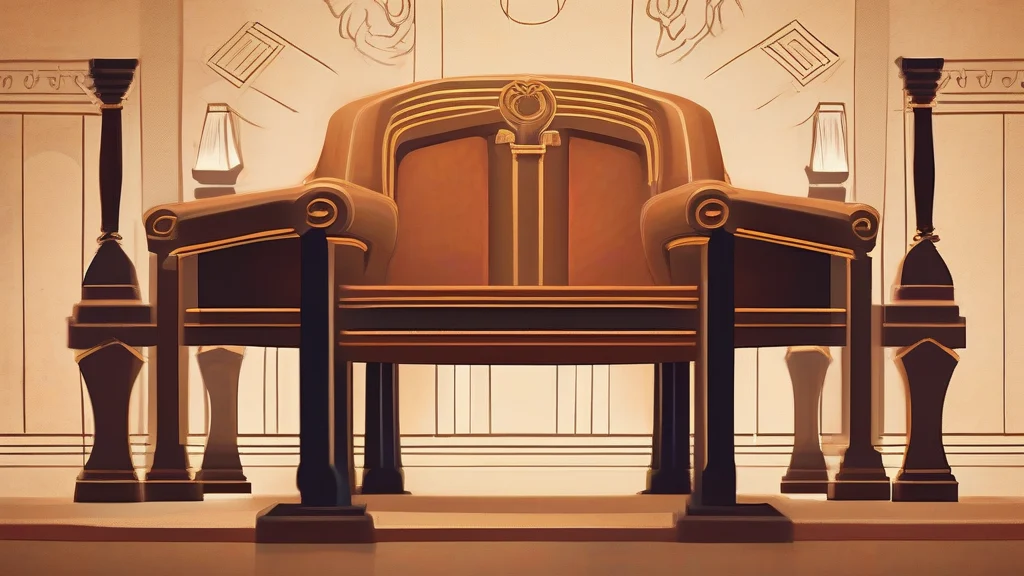
What does curule mean?
"Curule" is an adjective used almost exclusively in connection with ancient Rome. It describes the sella curulis, or curule chair — a distinctive X-framed folding stool, traditionally fitted with ivory inlay, that served as the official seat of Rome's highest magistrates, including consuls, praetors, censors, and curule aediles. The chair was more than furniture: it functioned as a visible emblem of legitimate civil authority, and the right to occupy one marked a politician's rank within the Roman state. In modern usage the word appears mainly in classical scholarship, museum catalogues, and discussions of Roman art and archaeology, where "curule" may also describe later imitations of the design, such as Renaissance and Neoclassical chairs modeled on the Roman original. Because of its narrow historical focus, "curule" is rare in general conversation, but for readers interested in antiquity it is an evocative term that links a piece of furniture to the grandeur and hierarchy of Roman public life.
adjectiveRelating to or denoting the curule chair, an ornate folding seat that symbolized political and judicial power in ancient Rome.
- Designating the ornate folding stool (sella curulis) reserved for high-ranking Roman magistrates such as consuls, praetors, and censors.
- By extension, relating to high magisterial office or authority in ancient Rome.
"The newly elected consul was entitled to sit upon a curule throne during public ceremonies."
"The curule chair, inlaid with ivory, was carried into the senate on days of ceremony."
"He was elected curule aedile at the unusually young age of twenty-eight."
In ancient Rome, your chair could outrank you: sitting in the curule chair was itself a badge of supreme authority.
Reviewed by Deb Chak, Editor. AI-assisted content curated by RJS Tech Solutions LLP.
Etymology of curule
"Curule" derives from Latin curulis, the epithet attached to the sella curulis, which in turn comes from currus, meaning "chariot." The connection reflects the chair's origins in the seat used by chariot drivers, adopted over time as a symbol of magisterial rank. The root currus belongs to the same Indo-European family as currere, "to run," making "curule" a distant relative of English words such as "current," "courier," and "course." The term entered English through Latin learning in the early modern period, when classical antiquity became a central subject of European scholarship.
How curule is actually used
A scholarly and largely historical term, encountered chiefly in classical history, archaeology, and art-history writing. It is almost always used attributively, as in "curule chair" or "curule magistrate," and carries connotations of civic dignity and formal authority rather than everyday informality.
Easily confused with curule
"Curfew" is a regulation requiring people to be off the streets by a certain hour, while "curule" refers to the ceremonial chair of high Roman magistrates.