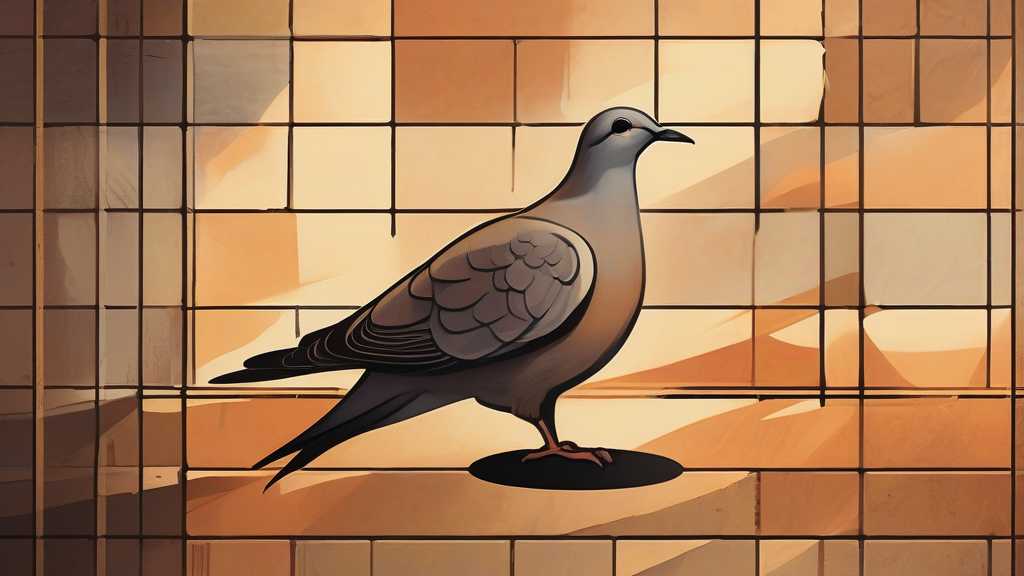
What does cushat mean?
The cushat is an old British vernacular name for the common wood pigeon (Columba palumbus), the large grey pigeon with a white neck patch that is widespread across Europe. The term belongs chiefly to Scottish and Northern English speech, where for centuries it served as the everyday country word for the bird, alongside related forms such as 'cushie-doo'. Today the word is rarely heard in ordinary conversation; it survives mainly in poetry, dialect literature, and regional writing, where it lends a distinctly pastoral, traditional flavour. Writers reach for 'cushat' when they want to evoke the countryside of earlier generations rather than merely identify a bird. For readers, encountering the word is a reminder of how richly local English naming of familiar wildlife once was, and of how many such names have quietly faded as standard terms like 'wood pigeon' spread nationwide.
nounA common wood pigeon (Columba palumbus) of Britain and Europe; the word is a chiefly Scottish and Northern English name for this bird.
- The wood pigeon (Columba palumbus), especially as named in Scottish and Northern English dialect.
"The old yew was alive with cushats, their cooing carrying across the quiet glen."
"A cushat strutted along the drystone wall, its white neck-patch catching the morning light."
"In Burns's Scotland, the ploughman knew every cushat by its drowsy summer cooing."
Regular plural; the word is countable when referring to individual birds.
"Flocks of cushats gathered in the stubble fields after the harvest."
Before it became a dictionary curiosity, the cushat was simply what farmers in Scotland and northern England called the fat wood pigeon raiding their crops.
Reviewed by Deb Chak, Editor. AI-assisted content curated by RJS Tech Solutions LLP.
Etymology of cushat
Cushat derives from Old English, appearing in early forms such as 'cuscete', and has been applied to the wood pigeon since the medieval period. The word took firm root in Scots and northern English dialects, where it remained the standard rural name for the bird into modern times, spawning affectionate variants including 'cushie-doo' in Scots. Its history reflects the broader pattern of Germanic bird names that predate French-derived vocabulary entering the language.
How cushat is actually used
The word is now largely literary, dialectal, and historical; outside Scotland and northern England it survives mainly in poetry and older rural writing. It carries a rustic, pastoral connotation rather than any technical ornithological use.
Easily confused with cushat
A cushion is a soft pad for support or comfort, while a cushat is a bird — the two share similar sounds but nothing else.