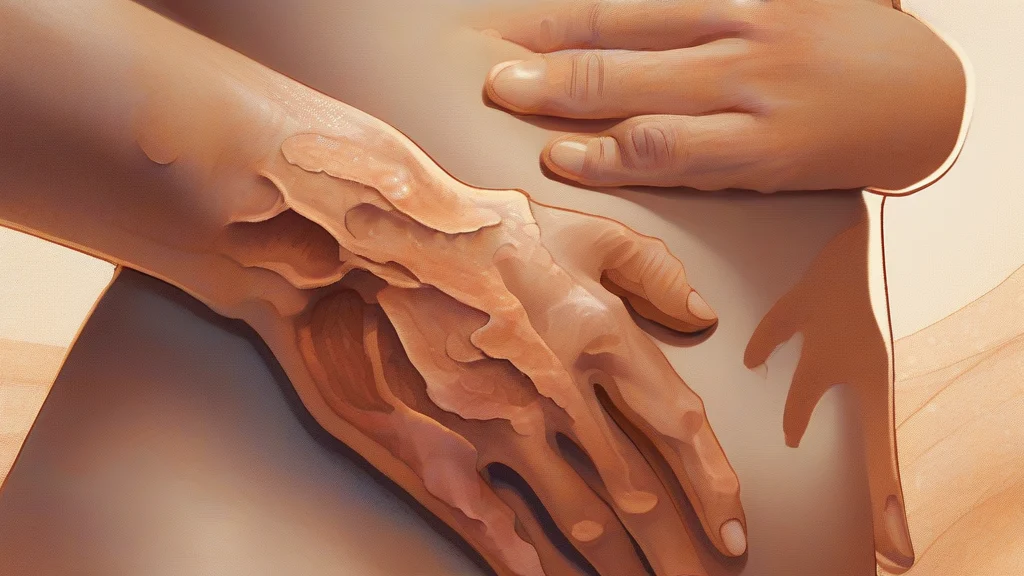
What does cutis mean?
Cutis is the anatomical term for the true skin — specifically the dermis, the tough layer of connective tissue that lies beneath the thin outer epidermis. Borrowed directly from Latin, where cutis meant simply 'skin', it survives today chiefly in medicine, dermatology, and zoology, where precision about skin layers matters. Clinicians still use classical compounds built on it: cutis laxa describes skin that has lost elasticity and hangs in loose folds, while cutis anserina is the formal name for goose bumps, so called because bumpy plucked goose skin resembles the effect. Outside these specialist contexts, ordinary speakers almost never reach for cutis, preferring the everyday word skin; yet the term underlies familiar vocabulary such as subcutaneous (beneath the skin) and cutaneous (relating to the skin). For students of anatomy or readers of medical writing, knowing cutis makes those related terms immediately transparent.
nounThe true skin of the body, consisting of the dermis; in anatomical and zoological usage, the layer of tissue lying beneath the epidermis.
- Anatomy and zoology: the dermis, or true skin, the layer of connective tissue beneath the epidermis.
- Historical/general use: the skin as a whole.
"The tattoo needle deposits ink into the cutis, where it remains permanently."
"Histology slides showed dense collagen fibres throughout the cutis."
"In cold water, cutis anserina appears as tiny raised bumps across the arms."
Pluralized only when referring to multiple specimens or animals, as in histological or veterinary contexts; singular use is overwhelmingly the norm.
"The study compared the elastic fibres of cutises taken from several mammal species."
Doctors borrowed 'cutis' straight from Latin — it's why 'goose bumps' are technically called cutis anserina, literally 'skin like a plucked goose.'
Reviewed by Deb Chak, Editor. AI-assisted content curated by RJS Tech Solutions LLP.
Etymology of cutis
Cutis comes directly from Latin, where it was the ordinary word for the skin of humans and animals. It entered English scientific writing during the early modern period, when anatomists routinely adopted Latin terminology for precise description. The same root gives English cutaneous and subcutaneous, and through medieval culinary practice it also lies behind cutlet, from French côtelette, a small rib of meat with its skin.
Related word forms
How cutis is actually used
A technical term used mainly in anatomy, dermatology, zoology, and medicine rather than everyday speech; lay speakers simply say 'skin'. In medical Latin, compound terms such as cutis laxa and cutis anserina remain in active clinical use.
Easily confused with cutis
The cuticle is the thin dead layer of skin at the base of a nail, whereas the cutis is the deeper living tissue of the skin itself.