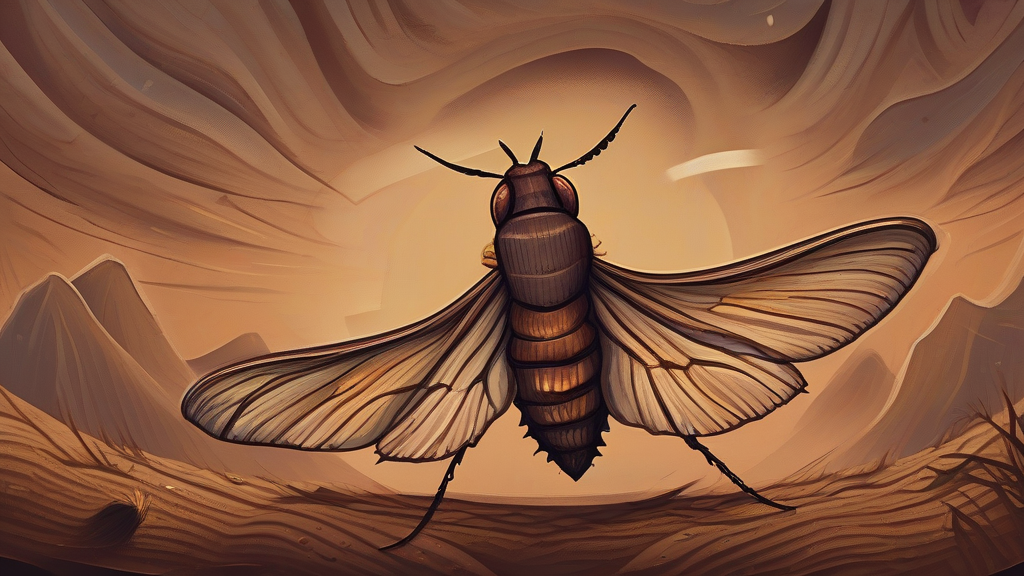
What does cutworm mean?
A cutworm is the caterpillar — the larval stage — of various noctuid moths, and despite its name it is not a true worm. Cutworms are notorious garden and farm pests: they hide curled in the soil or under plant debris during the day and emerge at night to feed on the stems and leaves of young plants, frequently severing seedlings cleanly at ground level, which is the source of their common name. Because a single cutworm can fell several seedlings in one night, infestations can devastate vegetable gardens and crop rows before damage is even noticed. Gardeners manage them through tilling, handpicking after dark, protective stem collars, and biological controls such as beneficial nematodes. The word belongs chiefly to agricultural and horticultural vocabulary, where 'cutworm control' and 'cutworm damage' are standard phrases.
nounA cutworm is the caterpillar (larva) of certain noctuid moths, which hides in soil or debris by day and feeds on plants at night, often severing young seedlings at ground level.
- The caterpillar of various noctuid moths, a common agricultural and garden pest that feeds at night and severs young plants at ground level.
"The gardener lost an entire row of tomato seedlings overnight to cutworms."
"Collars of cardboard around each seedling are a simple defence against cutworms."
"Farmers often till fields in late summer to expose cutworm larvae to birds and frost."
Standard plural; 'cutworm' is occasionally used as a collective term for the group of species.
"Several cutworms were found coiled just beneath the soil surface."
Named for their habit of literally cutting young plants down at the soil line, cutworms can destroy a row of seedlings in a single night — and the 'worm' isn't even a worm, it's a moth caterpillar.
Reviewed by Deb Chak, Editor. AI-assisted content curated by RJS Tech Solutions LLP.
Etymology of cutworm
The word cutworm is a straightforward English compound formed from the verb 'cut' and the noun 'worm', coined to describe the caterpillars' signature behaviour of cutting off young plants at the base. It emerged in agricultural English, with usage attested from around the early seventeenth century onward as farming manuals catalogued crop pests. The compound follows the same pattern as other English formations pairing an action with 'worm' to describe small creeping creatures, reflecting a long tradition of naming larvae by what they do rather than by taxonomy.
How cutworm is actually used
Cutworm is used almost exclusively in agricultural, horticultural, and entomological contexts. Despite the name, a cutworm is not a worm but a caterpillar; the plural is usually given as 'cutworms', though 'cutworm' can function collectively when referring to the group of species.
Easily confused with cutworm
Armyworms are also noctuid caterpillar pests, but they move in large groups devouring foliage above ground, whereas cutworms feed singly at night and typically sever seedlings at the soil line.
A grub is the larva of a beetle (such as a chafer), feeding mainly on roots underground, while a cutworm is a moth caterpillar that attacks stems at or above the soil surface.