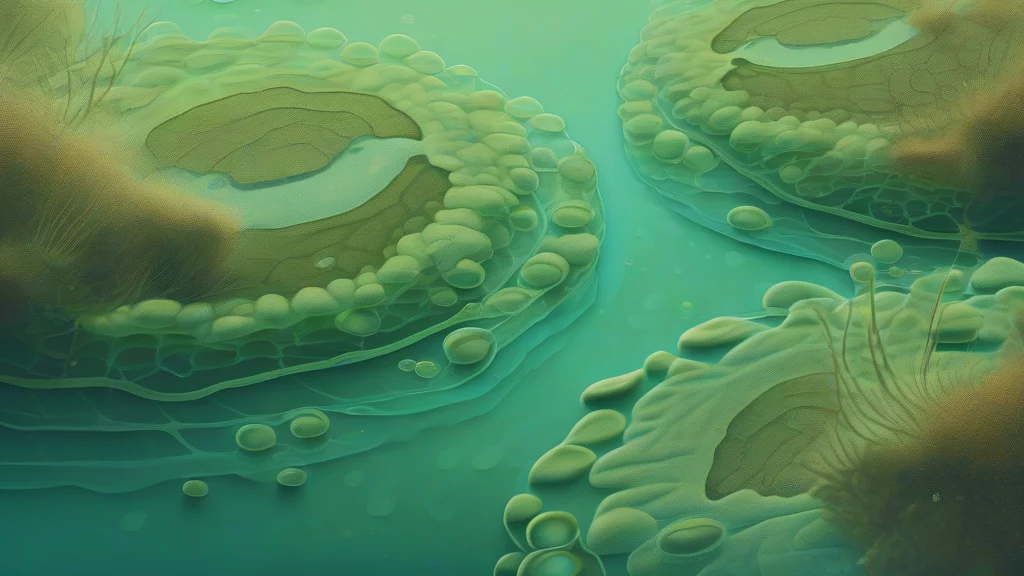
What does cyanobacteria mean?
Cyanobacteria are a phylum of single-celled, photosynthetic bacteria once known as blue-green algae because of their pigmentation and aquatic habitats. Found in freshwater, marine environments, soil, and even extreme settings such as hot springs, they capture sunlight to produce energy and release oxygen as a by-product — a trait that made them pivotal in Earth's history. Roughly two and a half billion years ago, their photosynthesis drove the Great Oxidation Event, transforming the planet's atmosphere and making complex life possible. Today they remain ecologically vital while also posing challenges: nutrient pollution can trigger dense blooms, sometimes called harmful algal blooms, which may release toxins dangerous to people, pets, and livestock. The word functions as a plural noun, with the singular form cyanobacterium used when discussing individual organisms.
nounA phylum of photosynthetic bacteria that obtain energy through photosynthesis and release oxygen as a by-product; commonly known as blue-green algae.
- A phylum of oxygen-producing photosynthetic bacteria, historically called blue-green algae.
"The lake's summer algal bloom was caused by an overgrowth of cyanobacteria."
"Ancient cyanobacteria transformed the planet by flooding the atmosphere with oxygen during the Great Oxidation Event."
"Scientists monitor reservoirs for cyanobacteria because some species produce toxins harmful to humans and livestock."
Cyanobacteria is already plural in standard usage; the singular cyanobacterium refers to one organism.
"Each cyanobacterium is capable of photosynthesis."
Cyanobacteria oxygenated Earth's atmosphere billions of years ago — every breath you take traces back to these microscopic pioneers.
Reviewed by Deb Chak, Editor. AI-assisted content curated by RJS Tech Solutions LLP.
Etymology of cyanobacteria
The word cyanobacteria combines the Greek-derived prefix 'cyano-', meaning blue (from kyanos), with 'bacteria', itself from the Greek bakterion, a diminutive meaning small staff or rod. The name reflects the blue-green pigment, particularly phycocyanin, that gives many species their characteristic color. The organisms were long classified as algae under the name Cyanophyta before molecular evidence confirmed they are true bacteria, prompting adoption of the modern term in scientific literature during the twentieth century.
Related word forms
How cyanobacteria is actually used
Cyanobacteria is a plural form; the singular is cyanobacterium. In formal scientific writing it is treated strictly as bacteria, while older or popular sources may still refer to them as blue-green algae — a term now considered taxonomically outdated but still widely used.
Easily confused with cyanobacteria
Although traditionally called blue-green algae, cyanobacteria are prokaryotic bacteria and lack the membrane-bound organelles found in true algae, which are eukaryotes.