What does cyclostome mean?
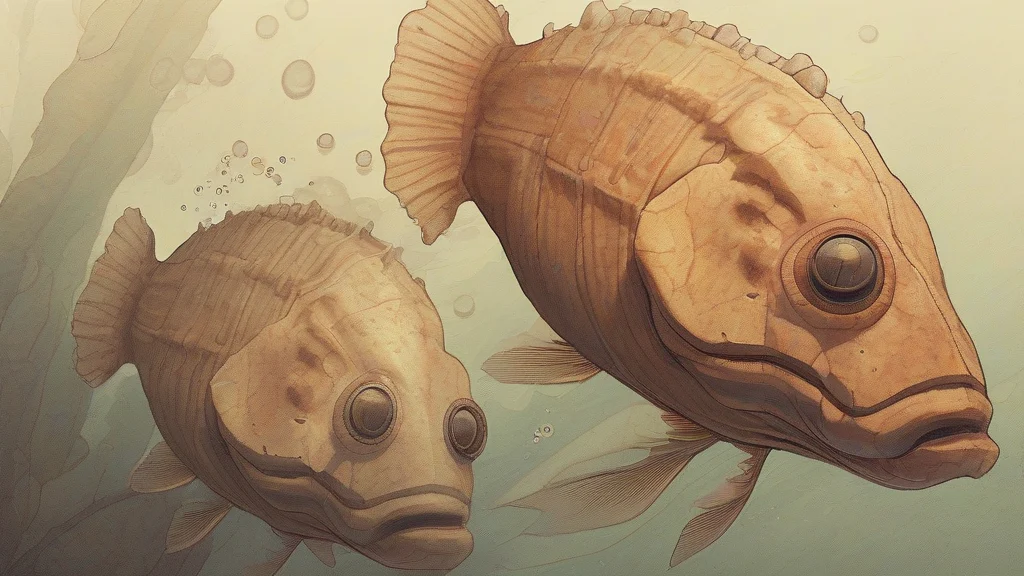
A cyclostome is a member of one of two distinct animal groups whose names derive from the Greek words for 'circle' and 'mouth'. In vertebrate zoology, the term refers to the jawless fishes — lampreys and hagfishes — which possess a round, sucker-like mouth ringed with horny teeth rather than true jaws. These creatures are of great scientific interest because they represent the most ancient surviving branch of the vertebrate family tree, offering clues about the anatomy of early fish-like ancestors. Separately, in the study of bryozoans (colonial aquatic invertebrates known as moss animals), 'cyclostome' designates members of the order Cyclostomatida, recognized by their delicate, tubular calcium-carbonate skeletons. The word appears mainly in academic and scientific writing, carrying no strong emotional connotation. Its value lies in precision: using it signals familiarity with evolutionary biology or paleontology, fields where these jawless survivors and colonial reef-builders each hold an important place.
nounA cyclostome is any member of the class Cyclostomata, a group of primitive jawless fishes comprising the lampreys and hagfishes, characterized by a round, suctorial mouth. The term also refers to certain bryozoans (moss animals) of the order Cyclostomatida.
- Any of the primitive jawless fishes constituting the class Cyclostomata, namely the lampreys and hagfishes, having a round suctorial mouth instead of jaws.
- Any bryozoan of the order Cyclostomatida, marine moss animals with calcified, tubular zooecia.
"Lampreys and hagfishes are the best-known living cyclostomes, survivors of an ancient jawless lineage."
"Biologists study cyclostomes closely because they offer a window into what the earliest vertebrates may have looked like."
"Under the microscope, the lacy skeleton of a fossil cyclostome bryozoan revealed its intricate network of feeding tubes."
Standard English pluralization; used both for multiple jawless fishes and for multiple bryozoan colonies.
"Several species of cyclostomes were collected during the deep-sea survey."
Strip away every jawed vertebrate on Earth and the humble cyclostomes — lampreys and hagfishes — would still be holding the fort: they are the last living heirs of a lineage that predates jaws entirely.
Reviewed by Deb Chak, Editor. AI-assisted content curated by RJS Tech Solutions LLP.
Etymology of cyclostome
The word "cyclostome" comes from the Greek roots "kyklos," meaning circle, and "stoma," meaning mouth, joined via scientific Latin to describe animals whose mouths are circular openings rather than hinged jaws. It was coined in nineteenth-century zoological literature when naturalists formalized the classification of lampreys and hagfishes under the class Cyclostomata. The same root "stoma" recurs across biology in terms such as "stomata," the pores on plant leaves, reflecting how productive this Greek element has been in naming structures that open or serve as mouths. A parallel application arose in bryozoology, where the order Cyclostomatida was named for the round apertures of its members' skeletons.
Related word forms
How cyclostome is actually used
"Cyclostome" is primarily a technical term used in zoology, paleontology, and evolutionary biology; it rarely appears in casual conversation. In modern taxonomy the grouping "Cyclostomata" has been debated, since molecular evidence suggests lampreys and hagfishes may not form a single natural clade, so some authors prefer "agnathans" as an umbrella term. The bryozoan sense belongs to a different field entirely and should be flagged by context.
Easily confused with cyclostome
A stoma is a microscopic pore in plant tissue, whereas a cyclostome is an animal — the two share only the Greek root for 'mouth'.
A cyclops is a one-eyed giant of Greek myth (or a genus of tiny crustaceans), not a jawless fish; the shared 'circle' element misleads more than it illuminates.