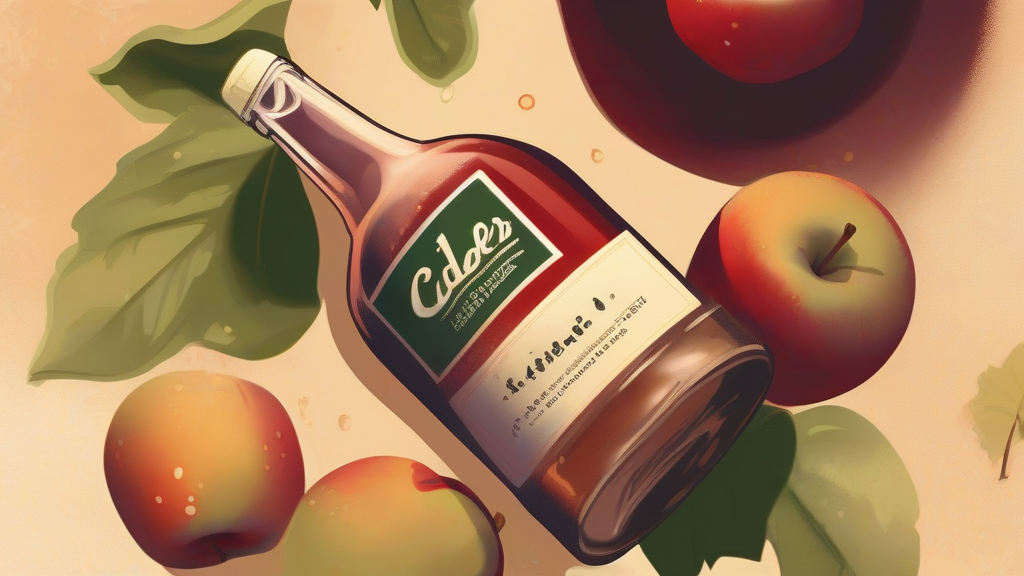
What does cyder mean?
Cyder is simply an older spelling of cider, the alcoholic drink made by fermenting apple juice. The two spellings refer to exactly the same beverage, and both were common in English from the early modern period onward, when apple cultivation and pressing spread across southern England. Over time 'cider' became the universal standard form, while 'cyder' faded into regional and historical use. It now survives chiefly as a deliberate touch of tradition: West Country producers in Somerset, Devon, and Herefordshire often label their products 'cyder' to evoke heritage methods, farmhouse presses, and rustic authenticity. In historical texts the word appears routinely, describing everything from farm labourers' rations to tavern fare. For a modern reader, encountering 'cyder' should signal nothing about a different recipe or strength — only that the writer or brand is reaching back to an earlier era of English drinking culture.
nounAn archaic or chiefly British variant spelling of 'cider': an alcoholic drink made from fermented apple juice.
- Fermented alcoholic beverage made from apples; used identically to 'cider' but as an older or traditional-spelling variant.
"The farm press still bottles its traditional cyder each autumn, just as it has for generations."
"The tavern's menu proudly listed a local cyder pressed from orchard apples."
"In eighteenth-century accounts, farm labourers were often paid partly in cyder."
Rarely pluralised; when used, refers to different varieties or servings of the drink, exactly as 'ciders' does.
"The festival featured cyders from a dozen local orchards."
'Cyder' isn't a different drink at all — it's the same word as 'cider', kept alive on West Country labels to make a bottle feel centuries old.
Reviewed by Deb Chak, Editor. AI-assisted content curated by RJS Tech Solutions LLP.
Etymology of cyder
Like 'cider', the word descends from Old French 'cidre' (also appearing as 'civre'), which came from Late Latin 'sicera', itself borrowed from Greek 'sikera' and ultimately from Hebrew 'shekhar', meaning strong drink. Both spellings entered English in the medieval period, with 'cyder' reflecting French-influenced spelling conventions before standardisation settled on 'cider'. Cognates include French 'cidre', Spanish 'sidra', and Portuguese 'sidra'.
How cyder is actually used
Today 'cyder' survives mostly as a deliberate archaism on British cider labels and in historical writing; using it elsewhere reads as quaint or affected rather than standard.
Easily confused with cyder
'Cider' is the standard modern spelling in both British and American English, while 'cyder' is an older or deliberately traditional variant of exactly the same word.