What does cytoskeleton mean?
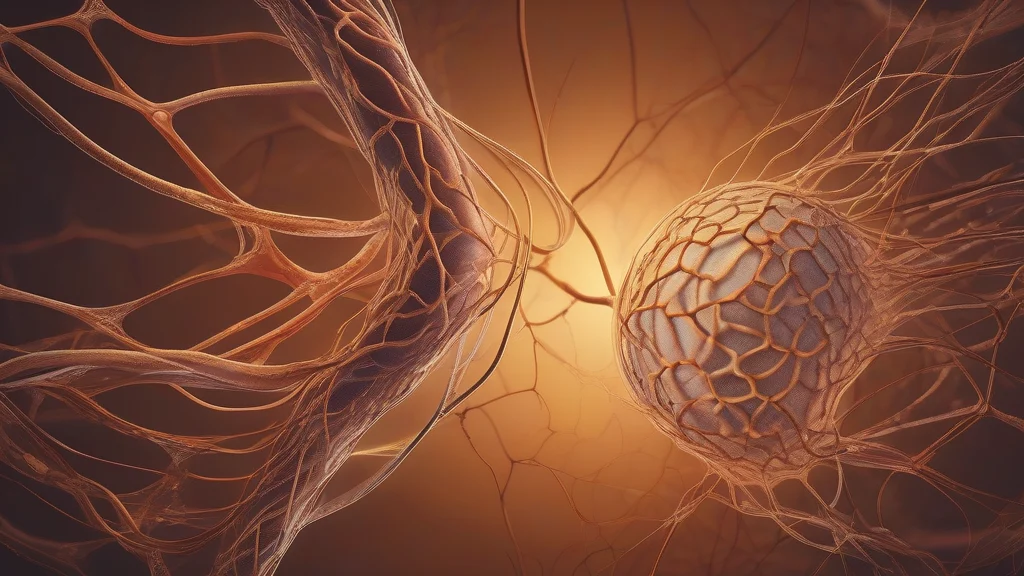
The cytoskeleton is the intricate internal framework of protein filaments that gives a living cell its shape and mechanical strength. Far from being static, it is a highly dynamic structure made up of three main components — actin microfilaments, microtubules, and intermediate filaments — which continuously assemble and disassemble as the cell grows, moves, divides, or transports materials internally. Biologists often compare it to scaffolding, but this analogy understates its activity: the cytoskeleton also serves as a track system for motor proteins, a driver of muscle contraction, and a key player in signalling. The word belongs firmly to the vocabulary of molecular biology and medicine, appearing frequently in research on cell motility, cancer, and neurodegenerative disease. Understanding the cytoskeleton is essential to grasping how something as small as a cell can maintain form, respond to its environment, and reproduce itself with such precision.
nounThe network of protein filaments and microtubules that gives a living cell its shape, provides mechanical support, and enables internal movement, division, and transport.
- The dynamic network of actin microfilaments, microtubules, and intermediate filaments within a eukaryotic cell that maintains its shape, anchors organelles, and drives movement, division, and intracellular transport.
"During cell division, the cytoskeleton reorganises itself to pull the chromosomes apart into two new cells."
"The drug disrupts microtubules in the cytoskeleton, preventing cancer cells from dividing."
"Under the fluorescence microscope, the cytoskeleton appeared as a delicate web of green-stained fibres stretching across each cell."
Each cell has its own cytoskeleton, so the plural is used when referring to the structures across many cells, as in comparative studies.
"Cytoskeletons were compared between healthy neurons and those affected by the mutation."
Every one of your cells is held in shape by a tiny internal scaffold of protein fibres — and it rebuilds itself constantly to let the cell move, divide, and react within seconds.
Reviewed by Deb Chak, Editor. AI-assisted content curated by RJS Tech Solutions LLP.
Etymology of cytoskeleton
The word cytoskeleton combines Greek 'kytos' (hollow vessel, later applied by biologists to mean 'cell') with 'skeletos', the Greek word for dried-up or skeletonised, which gave English 'skeleton'. It is a modern scientific coinage of the mid-twentieth century, adopted once electron microscopy revealed the filament networks inside cells. It shares the 'cyto-' root with other cell-biology terms such as cytoplasm, cytology, and cytokinesis, all tracing back ultimately to the Greek 'kytos'.
Related word forms
How cytoskeleton is actually used
A technical term used almost exclusively in biology, medicine, and biochemistry; it refers specifically to the protein filament network inside cells, not to whole-organism skeletons. The plural 'cytoskeletons' appears when discussing multiple cells.
Easily confused with cytoskeleton
An exoskeleton is the rigid external support structure of an organism such as an insect or crustacean, whereas the cytoskeleton is an internal microscopic protein framework inside individual cells.
An endoskeleton is the internal bony support of vertebrate animals, while the cytoskeleton is a far smaller protein-based scaffolding found within single cells.