What does dabber mean?
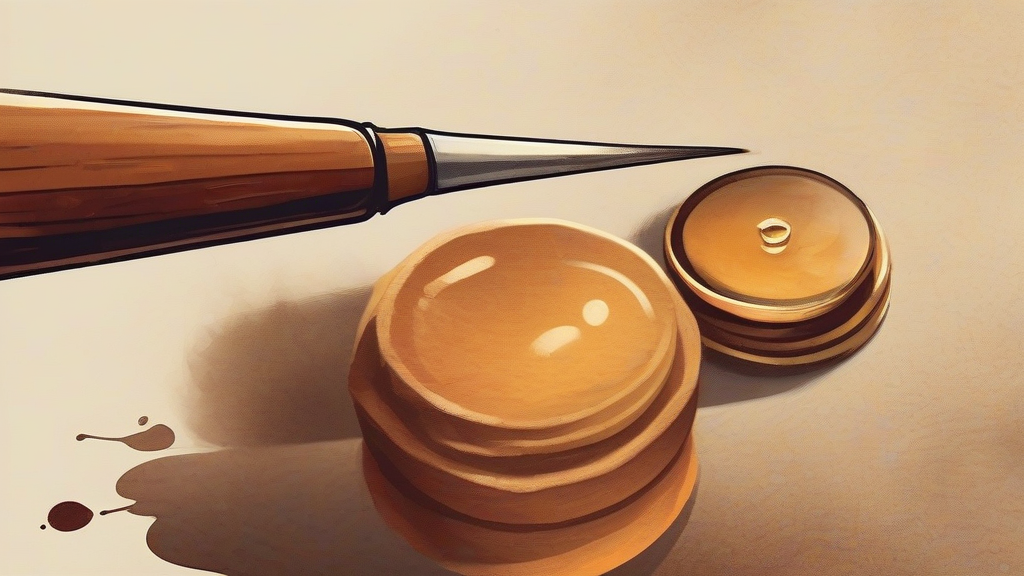
A dabber is a small tool designed for applying a substance — typically ink, paint, or dye — by means of light, repeated pressing motions rather than strokes. It usually takes the form of a round sponge or felt tip, sometimes mounted on a handle and sometimes attached to a squeeze bottle filled with ink. Crafters use dabbers with stencils to create soft, dotted effects, while in North America the best-known example is the bingo dabber, a foam-tipped marker used to blot called numbers on a playing card. As an agent noun derived from the verb "to dab," it can also denote a person who applies something in this way. The word carries no strong connotations: it is practical, everyday vocabulary, familiar chiefly in crafting, hobby, and gaming circles. Its variant form "dauber" reflects its kinship with "daub," meaning to smear or coat roughly. Simple, useful, and quietly ubiquitous, the dabber turns a humble motion into one of the most satisfying tools in the crafter's kit.
nounAn agent noun formed from "dab": one who or that which dabs, especially a small pad or implement used for applying something with light pressing strokes. It is also the common term for the felt-tipped marker used to daub numbers on bingo cards.
- A small pad, brush, or sponge-tipped implement used to apply ink, paint, or another substance with light pressing strokes.
- A felt- or foam-tipped marker bottle used to mark numbers on a bingo card (especially North America).
- A person who dabs — applies something with quick light strokes.
"She pressed the bingo dabber firmly over the number on her card, leaving a bright pink blot."
"Using a stencil and an ink dabber, she added a delicate pattern of dots along the card's border."
"He grabbed his lucky purple dabber before settling into his seat at the bingo hall."
Standard pluralization; commonly seen when referring to sets of craft tools or collections of bingo markers.
"The art room was stocked with sponges, brushes, and a drawer full of colorful dabbers."
The humble bingo dabber holds a Guinness World Record niche: enthusiasts have set records for the fastest game of bingo played using nothing but these ink-filled foam-tipped bottles.
Reviewed by Deb Chak, Editor. AI-assisted content curated by RJS Tech Solutions LLP.
Etymology of dabber
"Dabber" is an agent noun formed with the suffix "-er" from the verb "dab," which means to strike or press lightly and repeatedly. "Dab" itself emerged in English around the late Middle Ages; its ultimate origin is uncertain, though it may derive from Old Norse "dabba," meaning to hit or tap. The related verb "daub," borrowed from Old French, gave rise to the parallel variant "dauber," which shares the same sense and explains why both spellings persist. The specialized bingo-dabber sense developed in twentieth-century North America alongside the commercialization of bingo.
How dabber is actually used
Mostly informal to neutral register. In craft and scrapbooking contexts it names a small sponge applicator; in North America it is strongly associated with bingo halls, where it is often called a bingo dabber or bingo marker. The spelling "dauber" appears as a variant, particularly in older British texts.
Easily confused with dabber
"Dauber" is a variant spelling and pronunciation of the same agent-noun idea (one who daubs); the two are near-interchangeable, though "dabber" is now the standard form in American English and the usual term for bingo markers.
In some British regional usage "dabber" can refer to the flatfish called the dab; elsewhere it means only the implement or person that dabs.