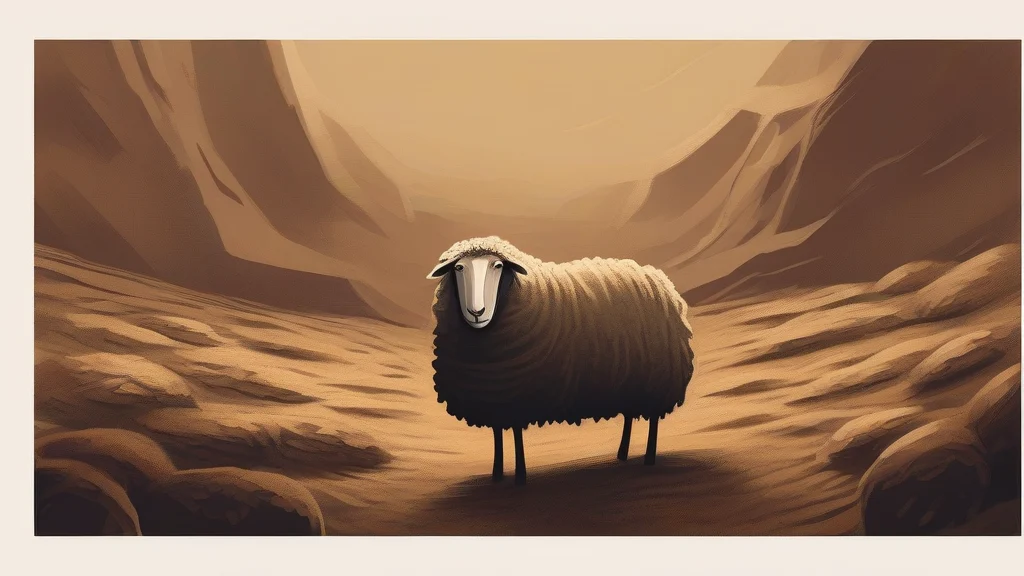
What does daglock mean?
A daglock is a clump of wool on a sheep that has become matted and caked with dung or mud, typically hanging from the fleece around the animal's hindquarters or tail. The word belongs to the vocabulary of British sheep farming, where it is used informally by shepherds, shearers, and wool handlers. Daglocks are considered a nuisance rather than a natural feature of a well-kept flock: they attract flies, can contribute to flystrike, and lower the value of the fleece, so farmers routinely clip them away during routine crutching or before shearing. The term is closely related to 'dag', which names the same fouled wool, and to 'taglock', another dialectal variant for a hanging tuft. Outside agricultural speech the word is rare, but within farming communities it is a familiar, unpretentious piece of working vocabulary that captures one of the less glamorous realities of livestock husbandry.
nounA daglock is a clump of dirty, matted wool fouled with dung and mud, left hanging on a sheep's fleece.
- A clump of wool on a sheep that is matted and fouled with dung or mud.
"Before shearing began, the farmhand trimmed away the worst of the daglocks from each ewe's hindquarters."
"The shepherd clipped the daglocks from around the ewes' tails to keep the flock free of flies."
"Wool graded as poor quality was often full of daglocks that had to be removed before sale."
Regular plural; commonly used when referring to multiple fouled clumps across a flock or on one animal.
"The flock came in from winter grazing covered in daglocks that needed trimming before shearing week."
Long before it ever touched a keyboard, 'daglock' named one of farming's least glamorous sights: the dung-caked tufts of wool that shearers must snip off a sheep before the good fleece can be taken.
Reviewed by Deb Chak, Editor. AI-assisted content curated by RJS Tech Solutions LLP.
Etymology of daglock
Daglock combines 'dag', an old English dialectal term for dung-fouled wool on a sheep, with 'lock', meaning a tuft or curl of wool or hair. The compound arose in British farming dialect, where related forms such as 'taglock' are also recorded. Its deeper origins trace back to the Norse-influenced vocabulary of northern English pastoral life, though precise dates of first attestation are not firmly established.
How daglock is actually used
Daglock is an informal agricultural and dialectal term, heard mainly in British sheep-farming regions such as Yorkshire, Lancashire, and other upland areas. It carries no strong connotation beyond its practical, earthy rural associations and would sound out of place in formal writing outside agricultural contexts.
Easily confused with daglock
A taglock is a similar hanging tuft of matted, dirty wool on a sheep, but 'tag' refers to the dung-fouled wool itself, while 'daglock' emphasizes the soiled lock or clump clinging to the fleece.
A padlock is a detachable lock fastened with a key or combination, whereas a daglock has nothing to do with locking devices — it is soiled, matted wool on a sheep.