
What does dairying mean?
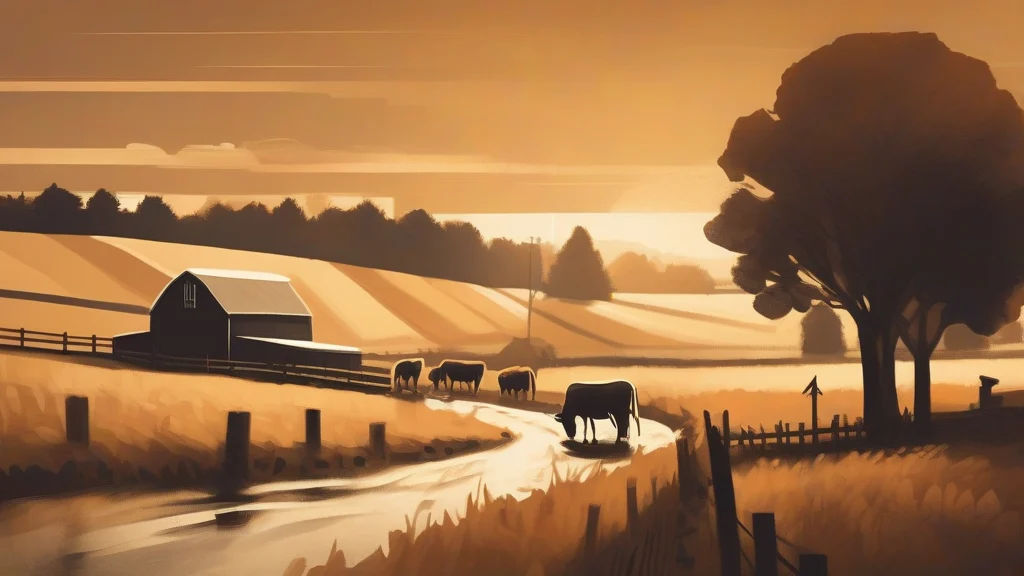
Dairying is the business or practice of raising animals—most commonly dairy cattle—for the production and processing of milk and its products, including butter, cheese, cream, and yogurt. As a term, it sits firmly within agricultural, economic, and regional discourse, appearing frequently in discussions of land use, farm management, and rural livelihoods rather than in casual conversation. Regions with strong pastoral economies, such as Wisconsin, New Zealand, Denmark, and the Netherlands, are often described in terms of their dairying industries, which can shape local identity and heritage. The word derives from "dairy," itself rooted in Old English, and carries no strong emotional connotations: it is simply descriptive. For readers interested in agriculture or food production, "dairying" offers a precise, established vocabulary for talking about one of the world's most widespread forms of farming.
nounThe business, occupation, or activity of producing milk and manufacturing milk products on a farm.
- The business or practice of keeping cows (or goats) for milk production and processing it into butter, cheese, and other dairy products.
"His family had been engaged in dairying for three generations before they sold the herd."
"Wisconsin's economy was built largely on dairying, earning it the nickname America's Dairyland."
"In many rural regions of New Zealand, dairying remains the dominant form of agriculture."
As a mass noun describing an activity or industry, dairying is not pluralized; use constructions like "forms of dairying" if variation is needed.
"Different regions have developed distinct styles of dairying over the centuries."
The word "dairy" traces back to an Old English word for a woman who kneaded dough — making "dairying" a distant cousin of both "dough" and "lady."
Reviewed by Deb Chak, Editor. AI-assisted content curated by RJS Tech Solutions LLP.
Etymology of dairying
Dairying derives directly from the noun "dairy," formed with the English suffix "-ing" to denote the activity associated with that place or trade. The Old English ancestor of "dairy" was "dæyge" (or "dæye"), meaning a female servant who made dough and bread, ultimately connected to the Germanic root behind "dough." Over time the word shifted from naming a person to naming the room where milk products were kept, and then to the trade itself. The suffixation into "dairying" reflects a standard English pattern of turning a trade noun into the name of its industry or practice.
Related word forms
How dairying is actually used
Primarily used in agricultural, economic, and regional contexts rather than everyday conversation. It often appears in discussions of farming systems, land use, and rural economies, especially in dairy-producing regions such as Wisconsin, New Zealand, and parts of Europe. The term is neutral in connotation and typically uncountable.
Easily confused with dairying
"Diary" is a daily record of events, while "dairying" refers to milk production — the two differ by one letter but are entirely unrelated in meaning.