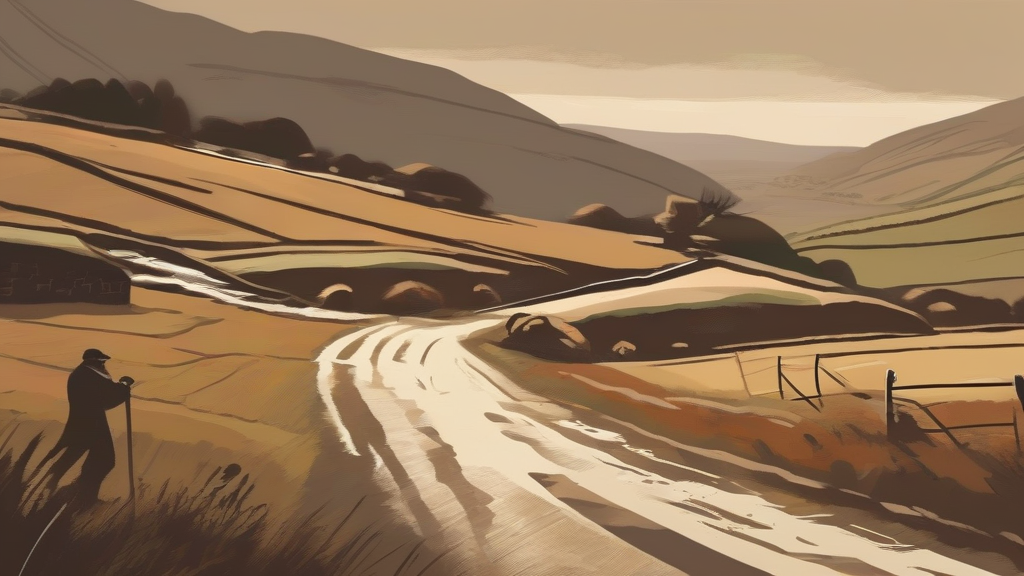
What does dalesman mean?
A dalesman is a man who lives in, or originates from, a dale — most characteristically one of the scenic valleys of northern England such as the Yorkshire Dales or the Lake District's Cumbrian valleys. The word combines "dale" (an Old English term for a valley, still current mainly in northern place names) with the suffix "-man" denoting a person. Dalesman carries strong regional flavour and rustic connotations: it conjures images of hill farmers, shepherds, and dry-stone-wall builders whose livelihoods are bound to the upland landscape. It appears chiefly in British writing, particularly journalism, literature, and heritage contexts that celebrate rural life, and it tends to be affectionate rather than neutral in tone. Related forms include "dalesmen" (plural) and "daleswoman." For readers interested in the vocabulary of the English countryside, dalesman is a compact and evocative example of how place and identity fuse into a single word.
nounA person who lives in, or comes from, a dale — that is, one of the valleys of northern England such as the Yorkshire Dales. The term typically evokes a rural dweller of the dales, especially in literary or regional contexts.
- A man who lives in or comes from a dale, particularly one of the valleys of northern England (e.g., the Yorkshire Dales).
"The old dalesman had tended sheep on those fellsides for over fifty years."
"The dalesman rose before dawn to check on his flock during lambing season."
"As a lifelong dalesman, he could read the weather from the clouds gathering over Ingleborough."
Standard plural, following the pattern of compounds ending in "-man." The feminine form is "daleswomen."
"For generations, the dalesmen of Wharfedale have grazed sheep on these same hillsides."
A single word for a shepherd of the Yorkshire Dales — proof that English can compress an entire landscape and way of life into eight letters.
Reviewed by Deb Chak, Editor. AI-assisted content curated by RJS Tech Solutions LLP.
Etymology of dalesman
Dalesman is formed from "dale," an Old English noun (dæl) meaning a valley, which shares its origin with the Old Norse "dalr" — a reflection of Scandinavian influence on northern English vocabulary. The suffix "-man" simply denotes a person associated with something. The compound arose to describe inhabitants of the valley regions of northern England, where Norse-derived "dale" remained part of everyday speech. Its cognates include the archaic "dell" and, more distantly, words like "vale" from Latin roots.
Related word forms
How dalesman is actually used
Chiefly British and strongly associated with Northern England — especially Yorkshire and Cumbria. It carries warm, rustic connotations and often appears in literary, journalistic, or heritage writing about rural life. The feminine equivalent is "daleswoman," and the plural is "dalesmen." Because it specifies gender, some modern writers prefer "dalesfolk" as a neutral alternative.
Easily confused with dalesman
"Dale" refers to the valley itself (or is a given name), while "dalesman" specifically denotes a male person who lives in or hails from the dale.
A villager lives in any village anywhere; a dalesman specifically inhabits the valleys (dales) of northern England, particularly Yorkshire or Cumbria.