What does daman mean?
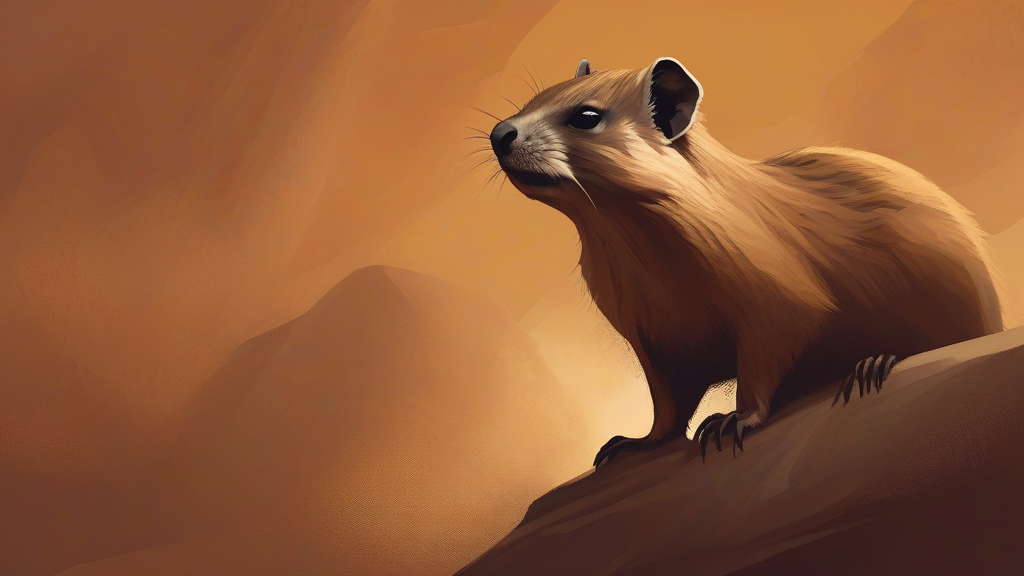
The daman is a small, stout-bodied mammal native to Africa and parts of the Middle East, better known today as the hyrax. Resembling a large guinea pig, it lives in rocky outcrops and cliffs, where its rubbery foot pads give it remarkable grip on sheer stone surfaces. Despite its rodent-like appearance, the daman belongs to an ancient lineage whose closest living relatives are, surprisingly, elephants and manatees. The name was used by early European naturalists and settlers, particularly in southern Africa, though it has largely been replaced in modern scientific and everyday language by 'hyrax' or the Afrikaans-derived 'dassie'. As a term, daman survives mainly in older zoological writing, offering a charming glimpse into the history of natural-history vocabulary.
nounA daman is a small, rodent-like African mammal; specifically, an old name for the hyrax (genus Procavia and related genera), the rock-dwelling animal whose nearest living relatives are elephants and manatees.
- A small gregarious herbivorous mammal of Africa and the Middle East; the hyrax, especially the rock hyrax (Procavia capensis), formerly called the daman.
"The naturalist spotted a daman basking on the sunlit ledge of the cliff."
"Colonies of the rock daman crowded into every crevice of the escarpment."
"Early European settlers in southern Africa called the animal a daman before the term dassie became common."
Regular plural; used when referring to more than one individual of the species.
"Damans huddled together on the warm rocks at dusk."
The humble daman looks like an oversized guinea pig, yet its closest living relatives are elephants and manatees.
Reviewed by Deb Chak, Editor. AI-assisted content curated by RJS Tech Solutions LLP.
Etymology of daman
The word daman entered English through early European accounts of southern African fauna, adopted from Dutch usage at the Cape. It was applied to the small rock-dwelling mammal now classified as the hyrax, long before anatomical studies revealed that hyraxes are not rodents but belong to their own order, Hyracoidea, allied distantly to elephants and sirenians. The term has since fallen out of common use, superseded by 'hyrax' in scientific contexts and 'dassie' in southern African English.
How daman is actually used
An older, somewhat dated zoological term; modern usage prefers 'hyrax' or, in southern Africa, 'dassie'. The plural is 'damans'.
Easily confused with daman
A demon is an evil spirit or supernatural being, while a daman is a small African mammal; they differ by one vowel sound but share nothing in meaning.