What does danker mean?
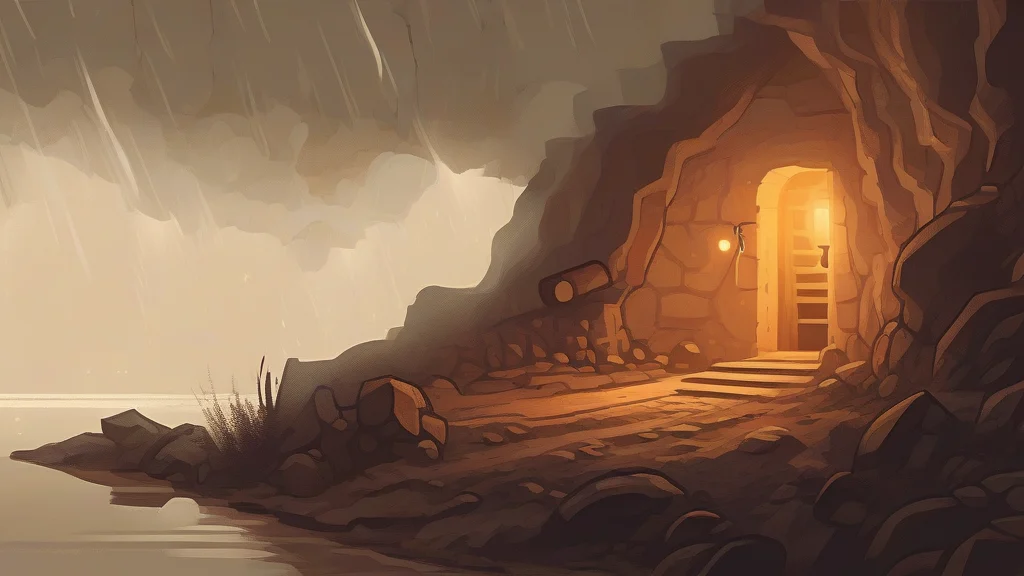
"Danker" is the comparative form of "dank," an adjective describing places that are unpleasantly damp, cold, and humid. A danker cellar is one that is wetter and clammier than another — the kind of space where stone walls sweat, air hangs heavy with moisture, and nothing ever quite dries out. The word is applied almost exclusively to environments: caves, tunnels, crypts, dungeons, basements, and neglected buildings. Its connotations are strongly negative, suggesting not just wetness but chill, mustiness, and decay, which is why it pairs so often with "dark" and "cold." The base adjective "dank" entered English in the Middle English period, though its ultimate origins remain uncertain. While "dank" acquired an ironic slang sense meaning excellent among internet users, "danker" remains firmly literal and descriptive. Writers reach for it to build atmosphere — gothic novels, adventure fiction, and horror all rely on its power to make a setting feel oppressive and alive with moisture.
adjectiveComparative form of the adjective "dank": unpleasantly damp, cold, and humid, typically describing places such as cellars, caves, or dungeons.
- Unpleasantly damp and cold (comparative degree): used of enclosed spaces such as cellars, caves, prisons, and ruins.
"The deeper they descended, the danker the tunnel became."
"The dungeon grew danker with every step below the waterline."
"Nothing stores well in that shed; each winter it seems to get even danker than before."
Before it described gloomy basements, "dank" was internet slang for exceptionally good memes — but "dankness" in the literal sense has been making people shiver for centuries.
Reviewed by Deb Chak, Editor. AI-assisted content curated by RJS Tech Solutions LLP.
Etymology of danker
"Danker" derives from the adjective "dank," which appears in Middle English from at least the early 14th century, originally meaning damp or marshy. The word's deeper origins are uncertain; one common suggestion connects it to Scandinavian sources, such as a Swedish dialectal term for a moist, low-lying place, but no definitive cognate lineage has been established. It developed steadily in English as a descriptor of cold, wet spaces and formed regular derivatives including "dankly" and "dankness."
Related word forms
How danker is actually used
"Danker" is the standard comparative of "dank," though "more dank" occasionally appears. The word carries an almost uniformly negative connotation, evoking chill, mustiness, and neglect; it applies almost exclusively to places and their atmospheres rather than to objects or people.
Easily confused with danker
"Darker" means having less light or a deeper shade, while "danker" means more unpleasantly damp and cold.