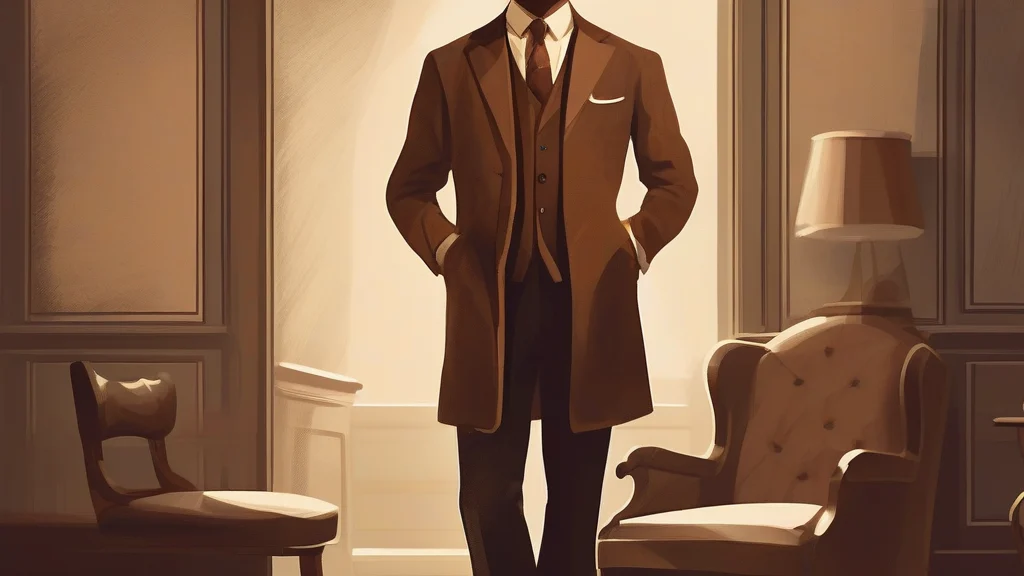
What does dapperness mean?
Dapperness is the noun form of 'dapper', describing the quality of being neat, trim, and elegantly dressed — particularly as applied to men whose appearance is crisp, polished, and carefully put together. Where 'dapper' functions as an adjective praising an individual's look, dapperness names the attribute itself, allowing speakers to discuss style as a quality someone possesses rather than simply calling them stylish. The word tends to appear in appreciative, often gently humorous contexts: a grandfather's immaculate tweed cap, a best man's flawless suit, a character whose every button is fastened. It carries warm, positive connotations rather than cold formality, suggesting charm as much as fashion sense. Though somewhat old-fashioned in flavor, it remains in active use in journalism and fiction wherever a touch of sartorial admiration is wanted. Its rarity gives it a distinctive, almost vintage appeal that plain terms like 'stylishness' lack.
nounThe quality or state of being dapper; neat, trim, and stylish elegance in dress and appearance, typically of a man.
- Neat, trim elegance in dress and appearance, especially of a man.
"His dapperness was legendary at the office, where not a hair was ever out of place."
"With his pressed waistcoat and polished boots, his dapperness turned heads at every gathering."
"The tailor's shop was a temple to dapperness, all sharp lapels and gleaming buttons."
Rarely used; dapperness is treated as uncountable since it names an abstract quality. A plural would only appear contrived outside of very formal or philosophical contexts.
Before it meant well-dressed, 'dapper' meant brave and lively — a word that traded courage for tailoring over four centuries.
Reviewed by Deb Chak, Editor. AI-assisted content curated by RJS Tech Solutions LLP.
Etymology of dapperness
Dapperness derives from 'dapper', an adjective borrowed from Middle Dutch or Middle Low German 'dapper', meaning bold, strong, or nimble, which itself traces back to Proto-Germanic roots related to bravery. When the word entered English in the fifteenth century it meant courageous and vigorous; by the late seventeenth century its sense had shifted to mean neat and spruce in appearance, likely influenced by the notion of a lively, alert bearing. The suffix '-ness' forms abstract nouns from adjectives, yielding dapperness as the name of the quality itself. Cognates survive in Dutch and German dialects, where related forms retain meanings of boldness and agility.
Related word forms
How dapperness is actually used
A somewhat literary or old-fashioned word, most often used affectionately or admiringly. It carries a slightly playful connotation and is applied far more often to men than to women.
Easily confused with dapperness
'Dapper' is the adjective describing someone neat and stylish, while 'dapperness' is the noun naming that quality itself.