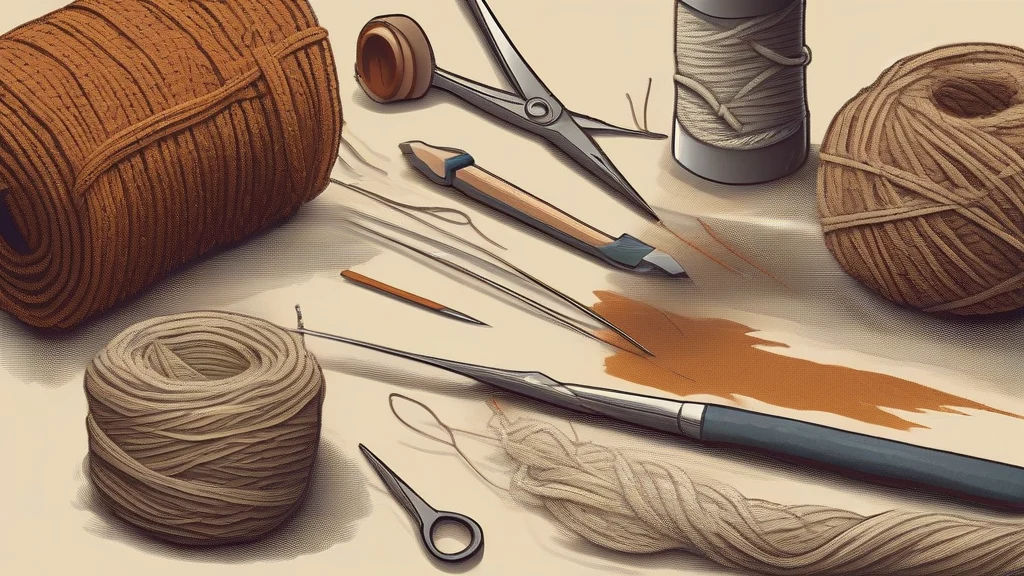
What does darning mean?
Darning is the traditional craft of repairing holes or worn patches in fabric—most typically knitted items like socks, sweaters, and gloves—by interweaving new thread across the damaged area using a blunt-tipped needle called a darning needle. Rather than simply patching over a hole, darning reconstructs a small section of woven or knitted structure, producing a repair that is both durable and often nearly invisible. The word also occasionally refers to the mended area itself. Historically a staple of domestic thrift, especially during wartime rationing when clothing was scarce and expensive, darning has connotations of patience, frugality, and care. Though less widely practised today in an age of inexpensive clothing, it has enjoyed renewed interest among those embracing sustainable fashion and visible mending, where repairs are deliberately decorative.
nounThe action or craft of repairing a hole or worn area in fabric, especially knitted material such as socks, by weaving threads across the gap with a needle. It can also refer to an item or area of cloth that has been mended in this way.
- The act or process of repairing holes or worn areas in knitted or woven fabric using a needle and thread.
- (Less common) A darned patch or repaired area on a garment.
"She spent the evening doing darning by the fire, repairing her son's school socks."
"My grandmother's darning kept our winter socks in service for years longer than they should have lasted."
"He noticed the neat darning along the elbow of his grandfather's old cardigan."
Very rare; the plural is used only when referring to multiple individual darned patches, and even then most speakers prefer 'darned patches' or simply describe them individually.
"The quilt was covered in dozens of small darnings from decades of wear."
Before you toss that holey sock, remember: for centuries, people turned darning into an art form so fine that Japanese boro textiles are now museum pieces.
Reviewed by Deb Chak, Editor. AI-assisted content curated by RJS Tech Solutions LLP.
Etymology of darning
Darning derives from the verb 'darn', which appeared in English around the early 17th century. Its ultimate origin is uncertain, though many etymologists link it to the French verb 'darner' (to mend), which itself may derive from 'darne' meaning a slice or piece—possibly suggesting the filling-in of a gap. The word has no widely attested cognates beyond this French connection, and its early history remains somewhat obscure.
Related word forms
How darning is actually used
Darning is most often used as an uncountable noun referring to the activity itself. The related verb 'to darn' is more commonly used in everyday speech ('I need to darn these socks') than the gerund form. The word carries a slightly old-fashioned, homely connotation associated with thrift and domestic handiwork.
Easily confused with darning
Yarning means telling long, rambling stories (from 'yarn'), while darning is the repair of fabric with thread.