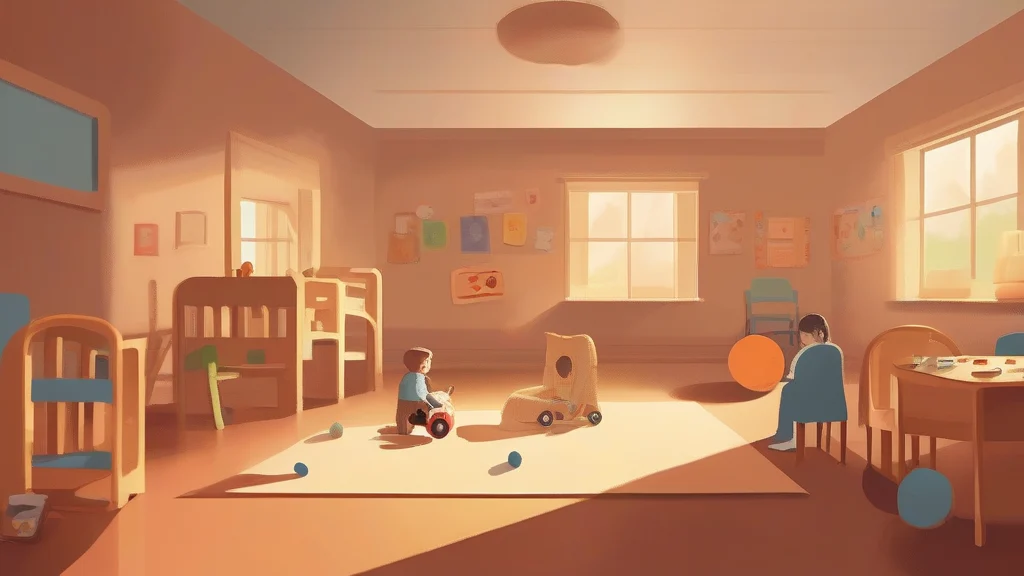
What does daycare mean?
Daycare refers to the supervised care of children — or, less commonly, of elderly or dependent adults — provided during the daytime, usually so that parents or carers can work. The word functions both as an uncountable noun describing this kind of provision ('the rising cost of daycare') and, informally, as a countable noun naming the place where it happens ('a daycare near the station'). In North America it is often written 'day care' in formal contexts, while British English more often favours terms like nursery or childminding. Daycare sits between informal babysitting and structured education: a good daycare offers play, routine, and socialisation rather than formal teaching, which distinguishes it from preschool. Because so many families rely on it, daycare has become a prominent word in public debate about childcare costs, parental leave, and early childhood development, making it both practically useful and culturally significant vocabulary.
nounDaycare is the provision of supervised care for children or, less commonly, for elderly or dependent adults during the daytime, typically while parents or guardians are at work. It also refers to the facility or service where such care is provided.
- Supervised care for children (or occasionally dependent adults) provided during the day, especially while parents work.
- A facility or establishment where such daytime care is provided.
"They enrolled their toddler in a daycare near the office."
"Affordable daycare remains one of the biggest challenges facing working parents."
"She runs a small daycare out of her home, looking after six children under four."
"Many employers now offer on-site daycare as part of their benefits packages."
The plural is used when referring to multiple facilities offering daycare, though many writers prefer 'daycare centers' or 'daycare providers' for clarity.
"Several new daycares have opened in the neighbourhood over the past year."
The word 'daycare' only entered widespread American usage in the mid-20th century — before then, most English speakers simply said 'nursery' or 'day nursery'.
Reviewed by Deb Chak, Editor. AI-assisted content curated by RJS Tech Solutions LLP.
Etymology of daycare
Daycare is a straightforward English compound formed from 'day' — deriving from Old English 'dæg' — and 'care', from Old English 'caru' meaning sorrow or burden, which later shifted to mean attention or concern. The compound emerged in American English in the first half of the 20th century, initially appearing as 'day-care' or 'day care' alongside the older phrase 'day nursery'. Its rise coincided with increasing numbers of women entering the workforce, particularly around the Second World War, which gave the word its modern currency.
How daycare is actually used
Daycare is a neutral, everyday term used widely in both American and British English, though 'childminding' and 'nursery' are more common in British contexts. In North America it is often written as two words ('day care') in formal writing, though 'daycare' as one word is now fully standard. The term carries no strong connotation of quality in itself — it describes a type of provision rather than a standard of care. It can also refer to daytime care for elderly people ('adult daycare'), though this use is secondary.
Easily confused with daycare
Childcare is the broader term covering any care of children including nannies and babysitters, while daycare specifically refers to care provided at a facility during the day.
Preschool is an educational program preparing young children for school, whereas daycare primarily provides supervision and care rather than structured education.