What does daylily mean?
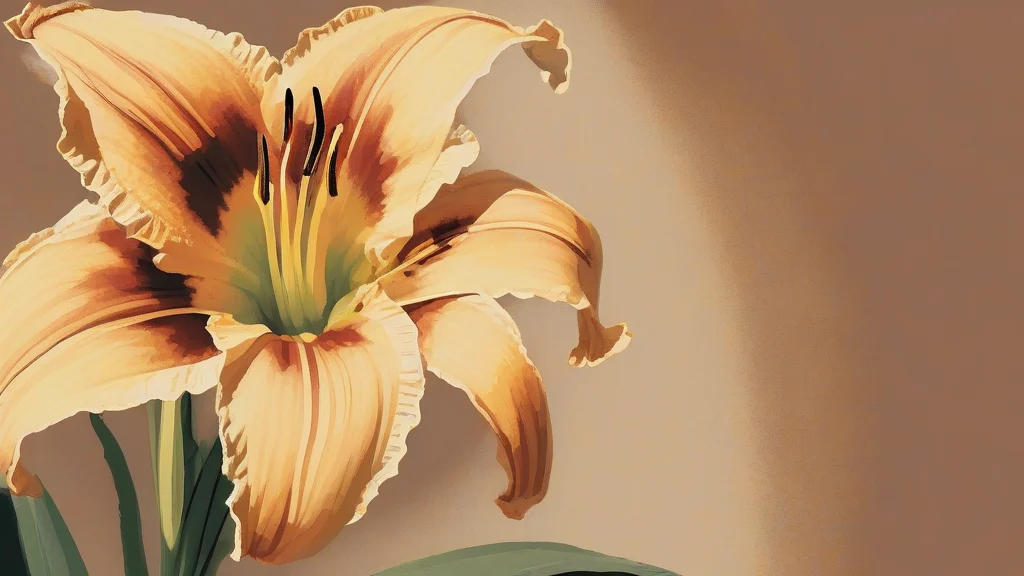
The daylily is a hardy perennial flowering plant belonging to the genus Hemerocallis, widely grown in temperate gardens for its striking, trumpet-shaped blossoms. Its common name reflects a remarkable trait: each flower typically opens in the morning and fades within a single day, though the plant compensates by producing an abundance of buds, giving weeks of successive blooms. Native to Asia, notably China, Korea, and Japan, daylilies have been cultivated for centuries for both ornament and food, and they have since become naturalized across much of Europe and North America. Thousands of cultivars now exist in a wide palette of colors, making the daylily one of the most popular and adaptable garden perennials, prized for tolerating poor soils, drought, and neglect while still delivering reliable midsummer color.
nounA perennial plant of the genus Hemerocallis, bearing large, trumpet-shaped flowers that typically each last only a single day; also the flower itself.
- A hardy perennial flowering plant of the genus Hemerocallis, grown for its showy, short-lived flowers.
- The flower of this plant.
"The orange daylilies along the roadside bloom in waves throughout midsummer."
"She planted a border of yellow daylilies along the sunny side of the house."
"The tawny daylily, naturalized across much of North America, brightens roadsides every July."
Standard plural; the singular may be used attributively, as in "daylily garden."
"The hillside was covered in wild orange daylilies."
Each individual daylily flower opens at dawn and withers by nightfall — yet the plant produces so many buds that it can bloom for weeks on end.
Reviewed by Deb Chak, Editor. AI-assisted content curated by RJS Tech Solutions LLP.
Etymology of daylily
The word daylily combines the native Germanic word "day," from Old English dæg meaning the period of daylight, with "lily," borrowed into Old English as lilie from Latin lilium, which in turn derives from Greek leirion. The compound arose to describe Hemerocallis flowers because each blossom famously lasts just one day before withering. Despite the shared name, botanists distinguish the daylily from true lilies of the genus Lilium.
How daylily is actually used
Commonly used in gardening contexts and often treated as a mass or count noun; both "daylily" and the closed form "day lily" appear in print, with "daylily" increasingly standard in horticultural usage. The word carries pleasant connotations of easy-care summer gardens rather than formality.
Easily confused with daylily
Despite the name and similar flowers, the daylily belongs to the genus Hemerocallis and is not a true lily of the genus Lilium.