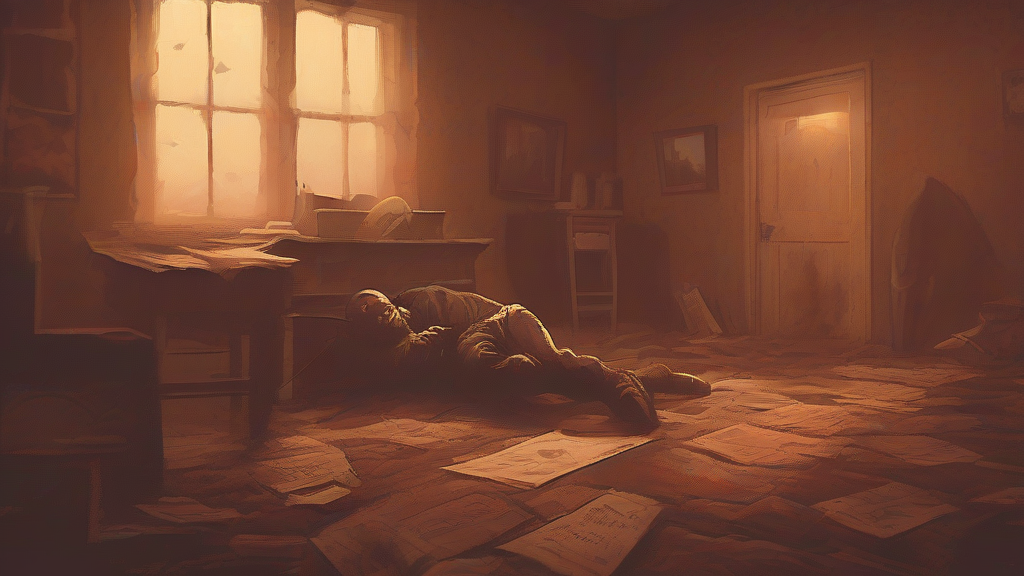
What does deader mean?
'Deader' serves two distinct roles in modern English. Most commonly it appears as an informal noun meaning a dead person or corpse, a usage especially at home in crime fiction, police procedurals, and hard-boiled American slang, where a detective might refer grimly to 'another deader' at the scene. It also functions as the comparative form of the adjective 'dead', as in 'the battery is deader than yesterday' — technically illogical, since death admits no degrees, but widely accepted in casual speech and often deployed for humorous or dramatic effect. The word carries a blunt, unsentimental connotation; it lacks the dignity of terms like 'the deceased' and suits contexts where directness or dark humor prevails. Derived from the ancient Germanic root behind 'dead' and 'death', 'deader' is a small but colorful piece of English vocabulary, valued less for precision than for its punchy, colloquial force in everyday and literary use.
Informal: a dead person or corpse.
"The tabloid ran a grainy photo of the alleyway deader on its front page."
Colloquial and somewhat callous in tone; avoided in formal or medical writing.
Comparative of 'dead': more thoroughly or unmistakably dead; completely without life or function.
"This phone isn't just off — its battery couldn't be any deader."
Strictly speaking, absolute adjectives like 'dead' resist comparison, so this use is informal and often deliberately hyperbolic.
Used only in the noun sense; rare and informal.
"The morgue was full that night — three fresh deaders before midnight."
In old Hollywood slang, a box-office flop wasn't just a failure — it was 'deader than last week's newspaper.'
Reviewed by Deb Chak, Editor. AI-assisted content curated by RJS Tech Solutions LLP.
Etymology of deader
'Deader' derives from 'dead', an adjective inherited directly from Old English 'dēad', which traces back through Proto-Germanic '*daudaz'. The same ancient Germanic root produced 'death' (Old English 'dēath') and is related to verbs of dying such as Old Norse 'deyja'. The comparative form arose naturally within English morphology, while the noun sense developed as informal American slang, gaining currency in twentieth-century crime and detective writing.
Related word forms
How deader is actually used
As a noun, 'deader' is distinctly informal and colloquial, common in hard-boiled fiction, crime writing, and casual speech rather than formal contexts. As a comparative adjective it is grammatically irregular in feel — since 'dead' denotes an absolute state, purists argue something cannot be 'more dead,' yet informal English embraces 'deader' and even 'deadest' for emphasis or humor.
Easily confused with deader
'Dead' is the base adjective meaning no longer alive, while 'deader' is either its comparative form (more completely dead) or an informal noun meaning a corpse.