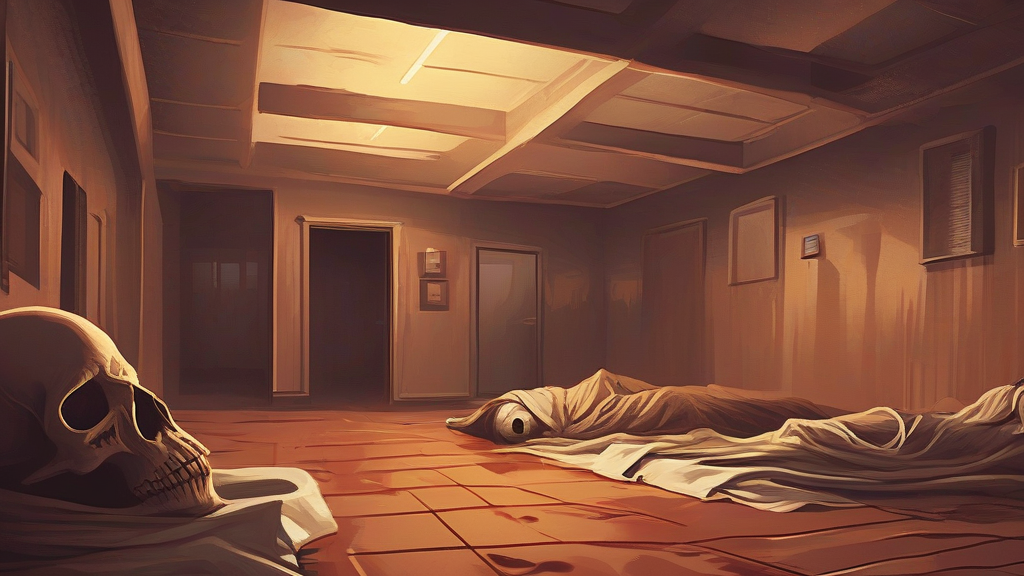
What does deadhouse mean?
A deadhouse is a building or designated room where dead bodies are kept temporarily before burial, identification, or transfer elsewhere. The word was especially common in nineteenth-century Britain, when workhouses, prisons, hospitals, and parishes maintained small deadhouses — often plain, outbuildings near the chapel or graveyard — to hold the poor and unclaimed dead until a pauper's funeral could be arranged. In function it corresponds closely to what would today be called a mortuary or morgue, though those terms now dominate institutional use, leaving deadhouse largely confined to historical writing, genealogical records, and fiction set in earlier eras. Its tone is blunt and unsentimental, reflecting a time when death among the destitute was handled with minimal ceremony. For readers of Victorian social history or novels such as those of Dickens and his contemporaries, the word recurs as an evocative marker of institutional poverty, making it a useful term for understanding how past societies housed their dead.
nounA building or room in which dead bodies are temporarily kept before burial or identification; a morgue or mortuary.
- A place, typically attached to a workhouse, hospital, prison, or cemetery, where dead bodies are stored until burial or removal.
"The unclaimed body lay for three days in the city deadhouse."
"The pauper's coffin rested overnight in the workhouse deadhouse until the parish cart arrived at dawn."
"The coroner ordered that the body be taken to the prison deadhouse pending an inquest."
Standard pluralization; rare in modern usage since the word itself is infrequently used.
"Several of the old workhouse deadhouses still stand as listed buildings."
Before hospitals had 'morgues,' English towns kept their unclaimed dead in a plain little building called the deadhouse — often right beside the workhouse or churchyard wall.
Reviewed by Deb Chak, Editor. AI-assisted content curated by RJS Tech Solutions LLP.
Etymology of deadhouse
The word deadhouse is a straightforward English compound of 'dead' and 'house', literally meaning a house for the dead. It emerged in vernacular usage by the early modern period and became widespread in institutional contexts during the eighteenth and nineteenth centuries, particularly in British workhouses and prisons. The element 'dead' derives from Old English 'dēad', of Germanic origin, shared with German 'tot' and Dutch 'dood'.
How deadhouse is actually used
The word is now largely historical or regional, surviving chiefly in records of Victorian-era workhouses, prisons, and hospitals, and in literary or period contexts. It carries no particular formality and can sound stark or archaic to modern ears.
Easily confused with deadhouse
A morgue is the modern institutional term for a facility holding bodies (often for forensic examination), whereas a deadhouse is an older, more colloquial word for any structure where the dead are kept awaiting burial.