
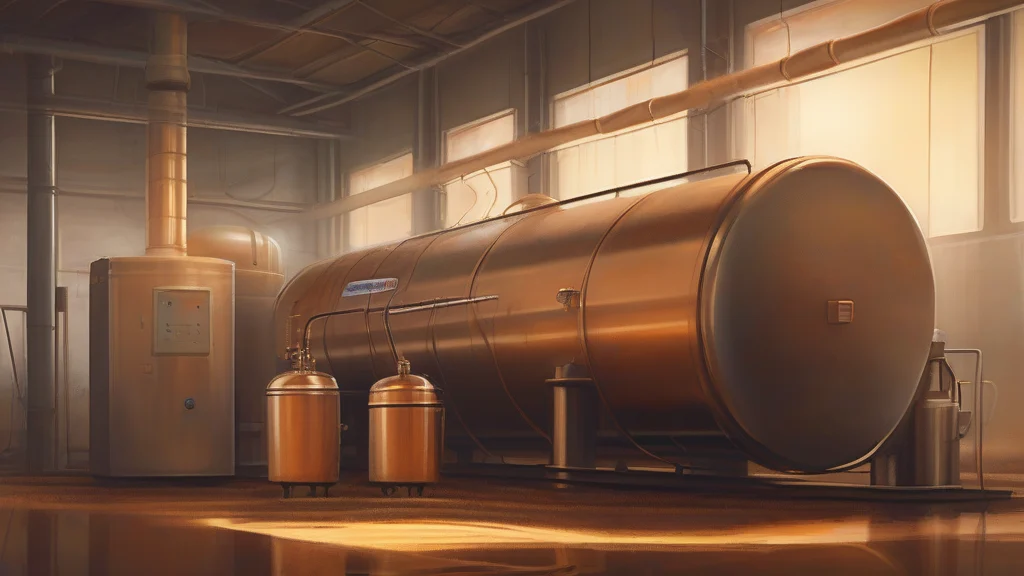
What does deaerator mean?
A deaerator is an engineering vessel or device that removes dissolved gases from a liquid. Its best-known application is in boiler systems, where it treats feedwater to reduce dissolved oxygen and other gases that can contribute to corrosion and operational problems. In this setting, a deaerator may heat and spray the water or use controlled venting, allowing dissolved gases to separate before the water enters the boiler. The term is also used more broadly in water treatment and industrial processes where unwanted gas must be stripped from a fluid. Because its function is technical and specialized, “deaerator” is uncommon in general conversation, although it is standard vocabulary among boiler, power, and process engineers. The word clearly signals removal through the prefix “de-,” while “aerator” points to its air-related purpose. Together, these features make it a concise label for equipment that makes steam generation and liquid handling safer and more reliable.
nounA device or vessel used to remove dissolved gases, especially oxygen, from a liquid. Deaerators are used chiefly to condition boiler feedwater and in some industrial water-treatment processes.
- A device or vessel for removing dissolved gases, especially oxygen, from a liquid, most commonly as part of a boiler feedwater system.
"The boiler deaerator removes dissolved oxygen from the feedwater before it enters the steam-generating system."
"A faulty deaerator allowed excess oxygen to remain in the boiler feedwater."
"The refinery uses a deaerator to remove dissolved gases from water before it enters the cooling circuit."
The regular plural is “deaerators.” The unmodified singular is preferred when naming a general class of device.
"Several deaerators are installed across the plant."
A boiler deaerator performs an invisible safety trick: it takes dissolved gases back out of feedwater before they can contribute to corrosion.
Reviewed by Deb Chak, Editor. AI-assisted content curated by RJS Tech Solutions LLP.
Where does deaerator come from?
The word was formed in English by joining the Latin-derived prefix de-, meaning removal or reversal, to aerator, a device that supplies or circulates air. Aerator in turn belongs to the family of aerate, ultimately from Latin aer, “air,” the same source as the English word air. The compound developed as a technical term for equipment that removes gases from liquids. Its relatives aeration, aerate, and air preserve the same Latin root.
How deaerator is actually used
This is a specialized engineering term, used mainly in boiler, power-generation, and water-treatment contexts. It is uncommon in general conversation.
Easily confused with deaerator
An aerator introduces air or oxygen into a substance, whereas a deaerator removes dissolved gases from it.