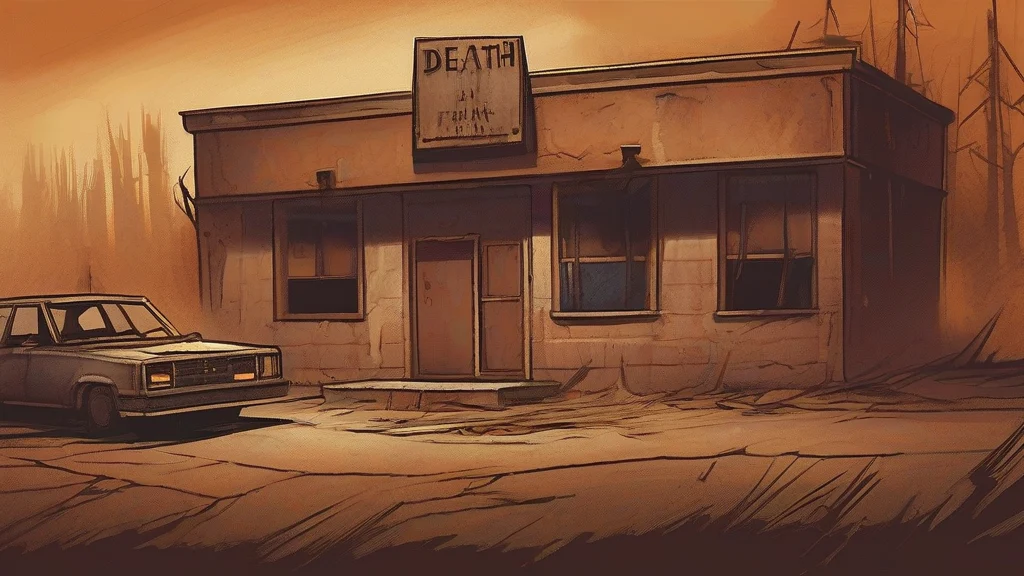
What does deathtrap mean?
A deathtrap is a place—most often a building, but sometimes a vehicle or other structure—that is so hazardous that anyone inside it risks serious injury or death, particularly in an emergency such as a fire. The term typically evokes hazards like blocked exits, faulty wiring, crumbling stairs, or locked doors that would prevent escape. Inspectors, journalists, and courts frequently use the word when condemning unsafe premises, giving it an authoritative, accusatory force: to call something a deathtrap is to declare it unfit for human occupancy or use. Beyond architecture, it can figuratively describe any situation riddled with mortal danger, such as a poorly planned expedition. The word is vivid and emotive rather than technical, appearing commonly in news reports, fiction, and theatre (where 'deathtrap' also names a well-known thriller play). Its strength lies in its immediacy—it condenses a catalogue of dangers into a single, unforgettable image of a place waiting to kill.
nounA building, vehicle, or other place that is so dangerous — typically because of fire hazards, structural decay, or unsafe conditions — that anyone in it is likely to be injured or killed, especially in an emergency.
- A dangerously unsafe building, vehicle, or structure likely to cause death, especially by fire or collapse.
- Figuratively: any situation or scheme fraught with lethal danger (e.g. 'the expedition became a deathtrap').
"The inspectors condemned the old tenement as a deathtrap, citing blocked stairwells and frayed wiring."
"Firefighters warned that the overcrowded warehouse was an absolute deathtrap."
"Without proper ropes and anchors, the ice climb turned into a deathtrap."
Standard plural; used when referring to multiple unsafe structures or situations.
"The report identified several deathtraps scattered across the city's aging housing stock."
The word 'deathtrap' has been damning unsafe buildings since the 1800s — and it's still the phrase inspectors reach for when a structure is one spark away from disaster.
Reviewed by Deb Chak, Editor. AI-assisted content curated by RJS Tech Solutions LLP.
Etymology of deathtrap
Deathtrap is a straightforward English compound formed from 'death,' from Old English 'dēath,' and 'trap,' from Old English 'træppe.' Both elements are native Germanic words, making the compound thoroughly Germanic in origin. The term arose in the nineteenth century amid growing public concern over unsafe urban buildings and industrial accidents, and it spread through journalistic and regulatory language on both sides of the Atlantic. As a transparent compound, it has no true cognates beyond other English compounds built from the same two roots.
How deathtrap is actually used
Deathtrap carries strong negative connotation and is common in journalism, safety reports, and everyday speech; it often appears in legal and regulatory contexts where buildings are formally condemned. It can also be used figuratively for perilous situations, though this is less frequent than its literal architectural use.
Easily confused with deathtrap
A firetrap is dangerous specifically because of fire risk, while a deathtrap is a broader term for any place likely to cause death, whether from fire, collapse, or other hazards.