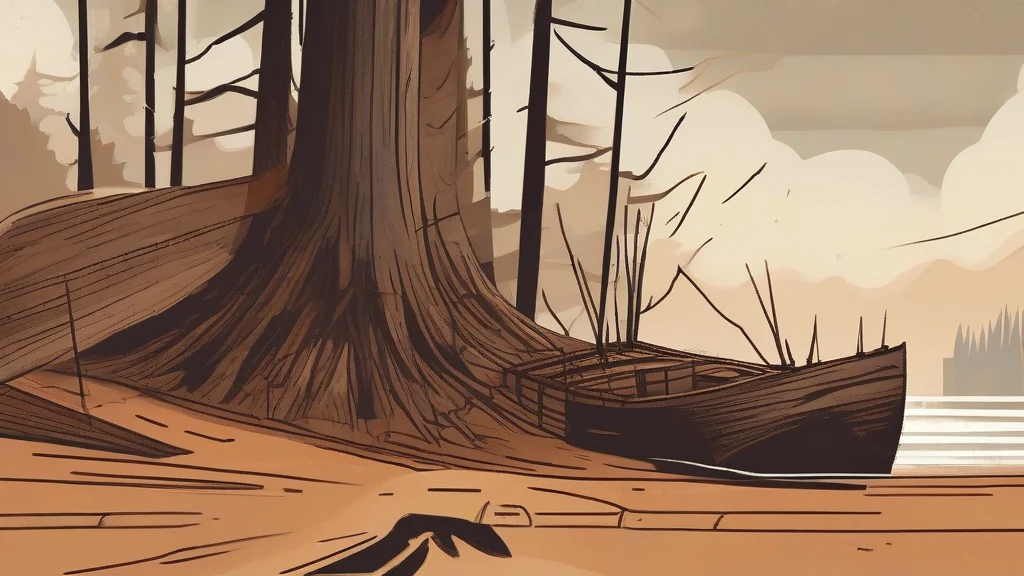
What does debark mean?
Debark is a verb meaning to leave a ship, aircraft, or other vehicle after a voyage, whether as a passenger stepping ashore or as cargo being unloaded from a hold. It is closely related to disembark but carries a somewhat more formal register, appearing most frequently in maritime, military, aviation, and commercial shipping contexts rather than casual conversation. The word also has an entirely distinct second life in forestry, where to debark a log means to strip away its outer bark before processing — making it one of those unusual English words that serves two unrelated trades. Derived from the French débarquer, built on barque (a ship), it belongs to the same family as embark, its natural opposite. A traveler might debark at a bustling port after weeks at sea, while a mill worker debarks timber destined for furniture. Understanding both senses makes the word useful across travel writing, logistics, and industrial vocabulary alike.
verbTo leave a ship, aircraft, or other vehicle after a voyage or journey; to unload passengers or cargo from a vessel. In forestry, it also means to strip the bark from a log or tree trunk.
- To leave a ship, aircraft, or other vehicle after a journey; to unload passengers or cargo from a vessel.
- (Forestry) To remove the bark from a log or tree trunk.
"Passengers began to debark once the ferry was safely moored at the terminal."
"The cruise liner docked at dawn, and hundreds of passengers debarked onto the pier."
"At the sawmill, logs are debarked before they are cut into planks."
"Debark" does double duty at sea and in the sawmill — it's one of the rare words that can mean stepping off a ship or stripping a tree of its skin.
Reviewed by Deb Chak, Editor. AI-assisted content curated by RJS Tech Solutions LLP.
Etymology of debark
Debark derives from the French débarquer, formed from de- (down from) and barque, meaning a small ship or boat, itself ultimately traced back through late Latin and possibly further Mediterranean origins shared with the English words barque and barge. The word entered English in the early modern period alongside other nautical borrowings from French, and its counterpart embark followed the same pattern with the prefix em-. In time, English speakers extended the verb to the lumber industry, where removing a log's bark offered a convenient second sense.
How debark is actually used
Debark is more formal than its near-synonym "disembark" and appears most often in maritime, military, aviation, and shipping contexts. Its separate forestry sense (removing bark from timber) is well established within the lumber industry. The word is not used for ordinary situations like getting out of a car.
Easily confused with debark
Disembark is the more common everyday term for leaving a ship or aircraft, while debark carries the same meaning but is more formal and also has a distinct forestry sense of removing bark from logs.
Embark means to go aboard a vessel or begin a journey, the opposite of debark, which means to leave it.