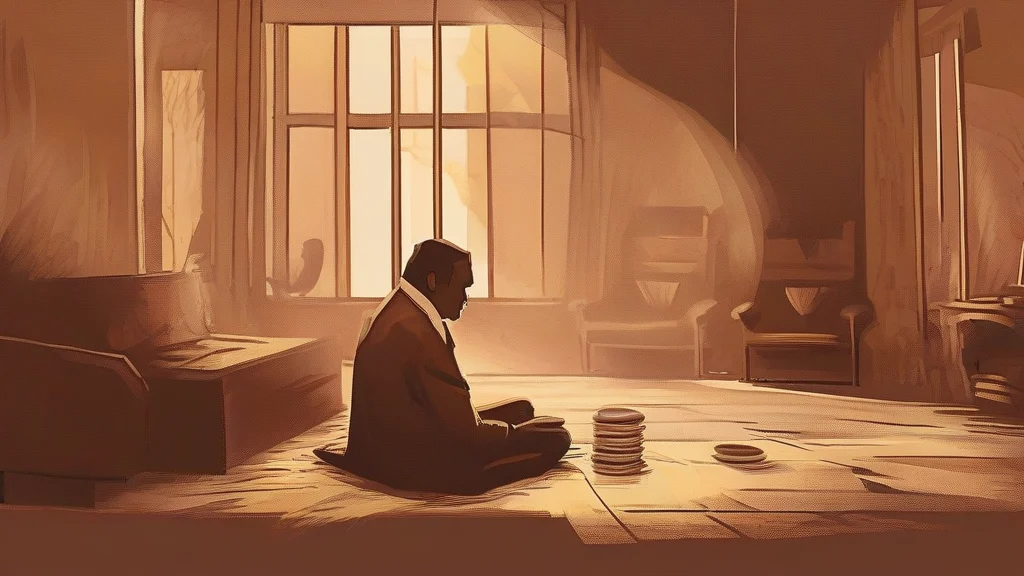
What does decadency mean?
'Decadency' refers to the condition or process of decline, particularly a moral or cultural falling-away marked by self-indulgence, laxity of standards, and loss of former vigour. It functions as a somewhat less common synonym of 'decadence', appearing most often in formal, historical, or literary contexts — for example, when commentators attribute the weakening of an empire or institution to the decadency of its elite. The word almost always carries a disapproving tone: to speak of decadency is to judge that something has sunk below what it once was, whether in conduct, art, or public life. Its plural, 'decadencies', occasionally denotes individual instances of such decline. Writers choosing between the two forms should note that 'decadence' is now overwhelmingly preferred, while 'decadency' lends a slightly archaic or elevated flavour. Etymologically it descends from Late Latin 'decadentia', built on the verb 'decadere', meaning 'to fall away or down' — the same root that gives us 'decay' and 'cadence', making the word's sense of downward movement literal at its core.
nounThe state or process of moral or cultural decline and deterioration; a condition of low standards, self-indulgence, or decay. It is a less common variant of the word 'decadence'.
- A process or state of moral, cultural, or social decline and self-indulgent deterioration.
- An instance or manifestation of such decline, especially in behaviour or standards.
"Critics blamed the empire's fall on the decadency of its ruling class."
"Historians have long debated whether lavish spending signalled the decadency of late Roman society."
"In his later novels, he chronicled the quiet decadency of an aristocratic family clinging to vanished privileges."
The plural is rare and typically refers to distinct instances or episodes of decline rather than the general condition.
"The chronicle records the various decadencies that preceded the dynasty's collapse."
'Decadency' literally means 'a falling down' — it shares its Latin root with 'cadence', 'accident', and even 'chance'.
Reviewed by Deb Chak, Editor. AI-assisted content curated by RJS Tech Solutions LLP.
Etymology of decadency
'Decadency' derives from the Late Latin 'decadentia', formed from 'decadere', meaning 'to fall away' or 'to decline', itself combining the prefix 'de-' ('down') with 'cadere' ('to fall'). This root 'cadere' is remarkably productive in English, also yielding words such as 'cadence', 'accident', 'incident', and 'occasion'. The word entered English via French during the early modern period as a parallel formation to 'decadence', which has since become the dominant term.
Related word forms
How decadency is actually used
'Decadency' is markedly rarer than 'decadence' in modern usage and can sound slightly old-fashioned or literary. It is largely confined to formal writing and historical commentary, and some modern dictionaries treat it simply as a variant form of 'decadence'. The word typically carries a negative, often moralising connotation.
Easily confused with decadency
'Decadence' is the standard, far more common form of the word; 'decadency' carries the same meaning but appears chiefly in older or more formal British writing.
Despite the similar spelling, 'decency' means proper, respectable behaviour — nearly the opposite of the indulgent decline that 'decadency' describes.