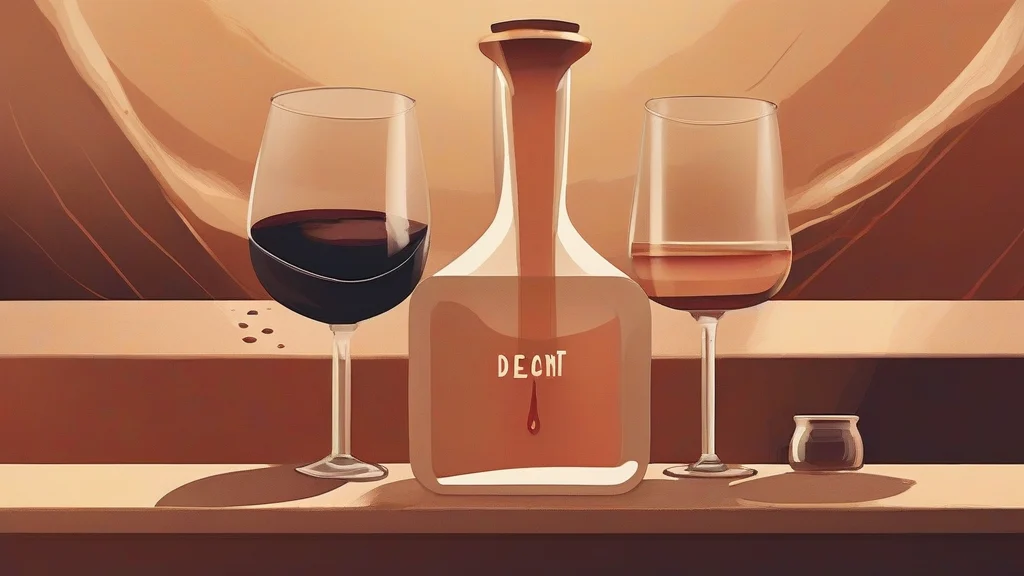
What does decant mean?
To decant is to pour a liquid — most famously wine — slowly and carefully from one container into another, leaving any sediment behind and, ideally, allowing the liquid to breathe. In formal wine service, decanting an older bottle separates it from the bitter dregs that settle over years of ageing, while decanting a younger wine exposes it to oxygen and softens harsh tannins. Beyond the cellar, the verb has a broader, more technical use: it can describe transferring people or goods from one vehicle, vessel, or container to another, as when passengers are decanted from a stranded train. The word carries connotations of care, patience, and ritual, and is at home in both refined and practical contexts. Its companion noun, 'decanter', names the ornate glass vessel from which wine is served. Derived from Latin cantare, 'to sing', via French décanter, it entered English in the seventeenth century and remains a staple of culinary and everyday vocabulary alike.
verbTo gradually pour a liquid from one container into another, especially to separate it from sediment or to aerate it, as with wine. More broadly, to transfer people or things from one place or container to another.
- To pour a liquid (especially wine) gently from one container into another so as not to disturb sediment, often to aerate it.
- To transfer people, cargo, or contents from one vessel or place to another.
"She let the vintage rest before carefully decanting it into a crystal carafe."
"The sommelier decanted the Bordeaux half an hour before serving to soften its tannins."
"Rescue workers decanted the passengers from the ferry onto waiting lifeboats."
Every time you decant wine, you're performing an act whose name comes from the same Latin root as 'chant' and 'enchant' — singing and pouring were once linguistic neighbours.
Reviewed by Deb Chak, Editor. AI-assisted content curated by RJS Tech Solutions LLP.
Etymology of decant
Decant derives from the Latin cantare, meaning 'to sing', through the Old French décanter, which originally referred to the pouring off of wine from its lees. It entered English around the early seventeenth century, retaining the sense of carefully drawing off liquid. It shares its ultimate root with words such as chant, enchant, incantation, and canticle, all stemming from the Latin verb for singing.
Related word forms
How decant is actually used
Primarily associated with wine service and formal register in its first sense; the second sense is more general and slightly technical or formal. The noun 'decanter' refers specifically to the glass vessel used for decanting wine.
Easily confused with decant
Descend means to move downward, while decant means to pour a liquid from one container to another; they share a Latin root but differ entirely in meaning.