What does decarbonize mean?
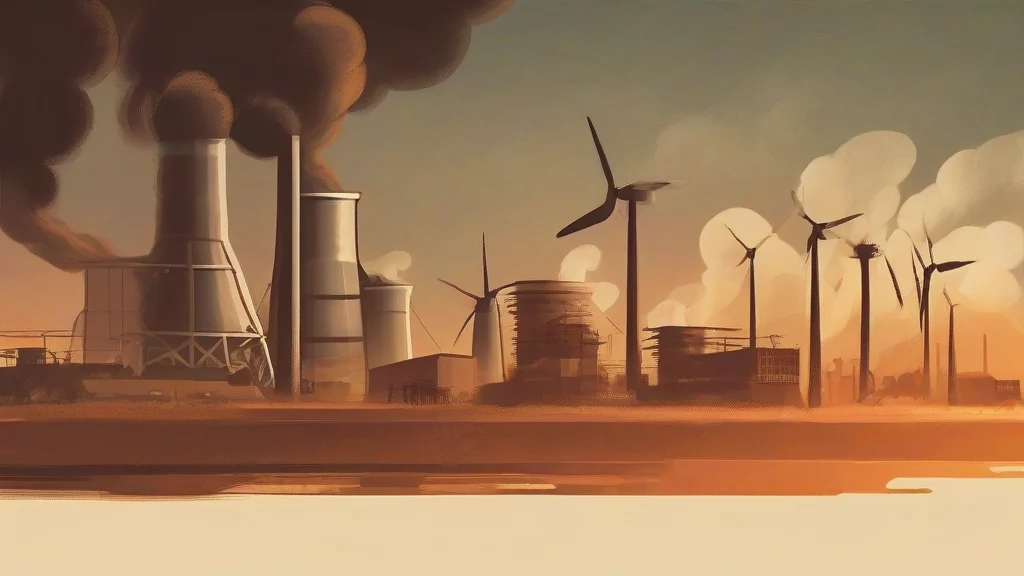
Decarbonize is a verb meaning to remove or reduce carbon — particularly carbon dioxide emissions — from a process, industry, or entire economy. In its dominant modern sense, it describes the transition away from fossil fuels toward cleaner sources of energy and lower-emission practices, so we speak of countries seeking to decarbonize their grids, their transport systems, or their manufacturing sectors. The word also retains an older, narrower chemical sense: to strip carbon or carbon compounds out of a substance, such as removing carbon deposits or dissolved carbon dioxide. Formed from the prefix de- (indicating removal) plus carbon plus the verb-forming suffix -ize, it emerged in nineteenth-century scientific writing before gaining enormous currency in twenty-first-century climate policy. It appears chiefly in formal and technical contexts — government targets, corporate reports, and environmental journalism — and its noun form is decarbonization. Because it compresses a vast, complex undertaking into a single action word, decarbonize has become central vocabulary in discussions of energy transition and climate strategy worldwide.
verbTo remove carbon, especially carbon dioxide emissions, from an activity, process, or economy; to reduce the amount of carbon released by something such as energy production, industry, or transport.
- To reduce or eliminate carbon dioxide emissions from an economy, sector, process, or organization, especially through shifting away from fossil fuels.
- (Chemistry, older/technical) To remove carbon or carbon compounds from a substance, such as removing carbon deposits or dissolved carbon dioxide.
"Many governments have pledged to decarbonize their electricity grids by 2050."
"The utility company plans to fully decarbonize its power generation by 2040."
"Steelmakers are investing heavily in new technologies that could decarbonize one of the world's most carbon-intensive industries."
Coined in the 19th century for chemistry labs, 'decarbonize' was repurposed in the 21st century as one of the most politically charged words on Earth.
Reviewed by Deb Chak, Editor. AI-assisted content curated by RJS Tech Solutions LLP.
Etymology of decarbonize
Decarbonize derives from the prefix de-, indicating removal or reversal, combined with carbon and the verb-forming suffix -ize. The element carbon itself comes from Latin carbo, meaning charcoal. The verb first appeared in nineteenth-century scientific and industrial English, where it described the literal removal of carbon or carbon compounds from materials such as metals or gases. Its modern, far more widespread sense — reducing carbon dioxide emissions across economies and industries — developed in the late twentieth century alongside growing awareness of climate change, becoming especially prominent from the 2000s onward. The British variant spelling decarbonise follows standard British conventions for -ize/-ise endings.
Related word forms
How decarbonize is actually used
Predominantly formal and technical register, appearing most often in policy documents, journalism about climate change, corporate sustainability reports, and academic literature. The British spelling is decarbonise with an s. The word carries a broadly positive, aspirational connotation in climate discourse, implying progress toward environmental goals.
Easily confused with decarbonize
Carbonize means to convert or become converted into carbon (as in charring organic material), while decarbonize means to remove carbon or reduce carbon emissions — nearly opposite processes.
Decarbonate specifically means to remove carbon dioxide from a substance (such as removing CO2 from water), whereas decarbonize usually refers to reducing carbon emissions at a systemic level.