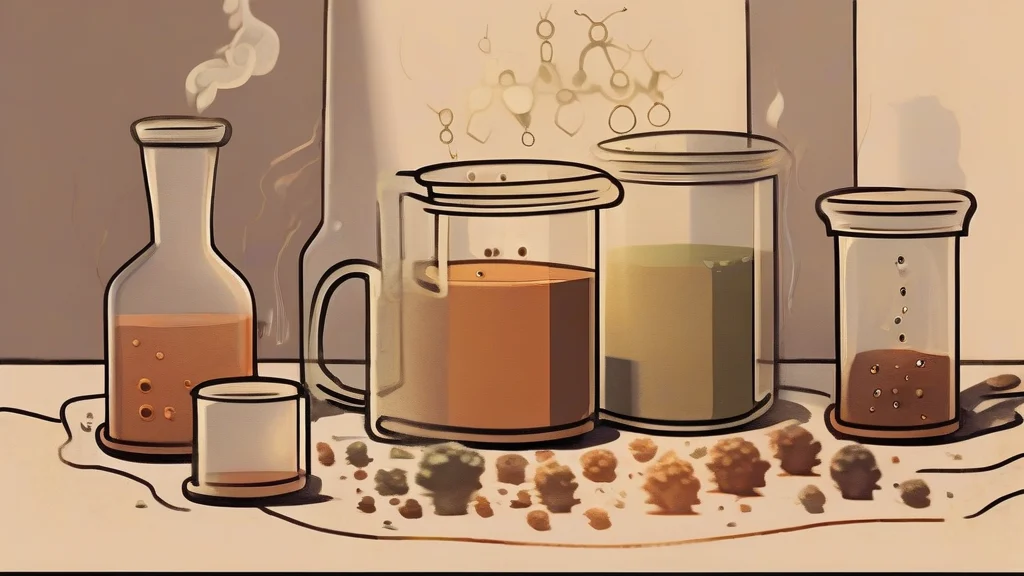
What does decarboxylation mean?
Decarboxylation is the chemical process by which a carboxyl group (–COOH) is removed from a molecule, usually with the release of carbon dioxide. It occurs throughout nature and industry: in cellular respiration, where enzymes strip carboxyl groups from metabolic intermediates; in the baking and roasting of foods; in the brewing and distilling of spirits; and in laboratory organic synthesis. The term derives from 'de-' (removal), 'carboxyl' (the functional group itself, from carbon and oxygen), and '-ation', denoting a process. Though firmly technical in register, it has entered wider usage through discussions of cannabis chemistry, where heating converts inactive acidic cannabinoids into their active forms via decarboxylation. Related terms include carboxylation (the reverse process) and decarboxylase (an enzyme that catalyzes it). Understanding this word offers insight into how chemists describe the gain, loss, and transformation of molecular building blocks across biology, cooking, and medicine.
nounA chemical reaction in which a carboxyl group (–COOH) is removed from a molecule and released as carbon dioxide. It is a fundamental process in organic chemistry, biochemistry, and cooking (notably in preparing cannabis and baking).
- In chemistry: the removal or elimination of a carboxyl group from an organic compound, typically releasing carbon dioxide.
- In food science and herbalism: the heat-driven activation of acidic cannabinoids (e.g., converting THCA to THC) by removing a carboxyl group.
"The decarboxylation of pyruvate is a key step in cellular respiration."
"The enzyme catalyzes the decarboxylation of oxaloacetate to form pyruvate."
"Proper decarboxylation of the plant material requires gentle heating at around 110 °C for 30–40 minutes."
Used when referring to multiple distinct instances or types of decarboxylation reactions; uncommon in everyday speech.
"Several decarboxylations occur during the citric acid cycle."
Every time bread browns in the oven or your body burns glucose, decarboxylation is quietly releasing carbon dioxide — the same gas that gives soda its fizz.
Reviewed by Deb Chak, Editor. AI-assisted content curated by RJS Tech Solutions LLP.
Etymology of decarboxylation
Decarboxylation combines the prefix 'de-', indicating removal, with 'carboxyl', the name of the –COOH functional group coined in the 19th century from 'carbon' and 'oxygen', plus the suffix '-ation' denoting a process or action. The underlying root traces to Latin 'carbo' (charcoal, coal) and Greek 'oxys' (sharp, acid). It emerged as organic chemistry formalized its terminology in the mid-to-late 19th century, alongside related coinages such as carboxylation and carboxylate.
Related word forms
How decarboxylation is actually used
Strictly technical register; used almost exclusively in chemistry, biochemistry, pharmacology, and food science. In everyday contexts (especially cannabis preparation) it is often shortened informally but remains the standard term for the process. Plural 'decarboxylations' refers to multiple instances or types of the reaction rather than being common in casual use.
Easily confused with decarboxylation
Carboxylation is the addition of a carboxyl group to a molecule, whereas decarboxylation is its removal.