What does decipherer mean?
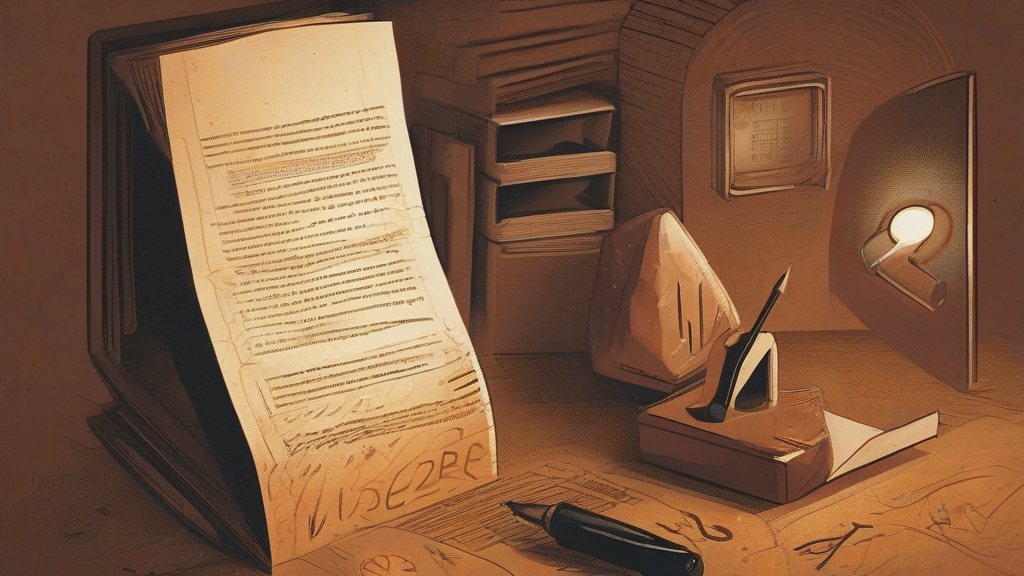
A decipherer is a person who deciphers — that is, one who succeeds in working out the meaning of writing that is otherwise obscure, encoded, or unreadable. The word applies most naturally to three overlapping pursuits: cryptography, where a decipherer breaks an encrypted message; epigraphy and archaeology, where a decipherer unlocks an ancient script such as Linear B or Egyptian hieroglyphs; and ordinary reading of handwriting so poor that only patient effort can make it out. The term is somewhat formal and literary, and it carries a distinctly positive connotation: to be called a decipherer suggests intellectual brilliance and persistence, since genuine decipherment requires solving problems others have failed at. Famous decipherers include Jean-François Champollion, who decoded the Rosetta Stone's hieroglyphs, and Michael Ventris, who cracked Linear B. In casual speech, people may simply say someone "cracked" or "broke" a code, but decipherer remains the precise term for the person behind such breakthroughs.
nounA person who deciphers something; someone who succeeds in making out the meaning of writing that is obscure, coded, or in an unknown script.
- A person who deciphers text, codes, inscriptions, or scripts that are difficult or impossible for others to read.
"The young scholar earned fame as the decipherer of the ancient tablet's inscriptions."
"As chief cryptographer, she was the decipherer who finally broke the enemy's naval code."
"Champollion is remembered as the great decipherer of the Rosetta Stone's hieroglyphic script."
Regular plural; used when referring to multiple people engaged in deciphering.
"For decades, rival decipherers competed to unlock the Minoan script."
Jean-François Champollion, history's most celebrated decipherer, unlocked Egyptian hieroglyphs in 1822 and reportedly ran through Paris shouting 'Je tiens l'affaire!' — 'I've got it!'
Reviewed by Deb Chak, Editor. AI-assisted content curated by RJS Tech Solutions LLP.
Etymology of decipherer
Decipherer is formed from the verb decipher plus the agentive suffix -er. Decipher itself arose in English in the 16th century as de- plus cipher, with cipher coming from Old French cifre, ultimately from the Arabic ṣifr, meaning empty or zero — the same Arabic root that gives us the word zero. Thus every decipherer works, etymologically speaking, with the mathematics of nothing.
Related word forms
How decipherer is actually used
A somewhat formal or literary word; in everyday contexts, speakers often prefer simpler phrasings such as "someone who cracked the code." It carries a connotation of intellectual achievement, since decipherment implies solving something genuinely difficult.
Easily confused with decipherer
Decipher is the verb meaning to work out the meaning of something, while a decipherer is the noun for the person who does it.